
A drain survey checks the condition of underground drainage pipes without digging them up. It is particularly useful when buying an older property, investigating recurring blockages, or planning an extension that could affect existing drains.
The cost depends on how much pipework needs inspecting, how easily the engineer can access it, and whether you need a formal report. A basic camera inspection may identify a blockage, but a homebuyer survey usually needs footage, defect records and a clear explanation of the drainage system’s condition.
In London, Victorian terraces and properties with previous extensions can have complicated underground drainage arrangements. Knowing what a CCTV survey covers helps you choose the right inspection before committing to a purchase or building work.
How Much Does a Drain Survey Cost?
A CCTV drain survey in the UK typically costs £85 to £350, depending on the type of inspection. A basic camera survey costs around £85 to £235, while a full survey with a written report generally costs £200 to £350. Larger properties can cost £350 to £450 or more.
For a house purchase, budget approximately £230 to £400 for a homebuyer drain survey. Drain tracing, cleaning and specialist access may cost extra. London prices can be higher where the drainage layout is complex, or access is difficult.
CCTV Drain Survey Prices
Drainage companies price surveys differently. Some offer a camera inspection of one drain run, while others provide a full condition report covering several accessible pipes. The cheapest quotation is not necessarily suitable for a property purchase or construction project.
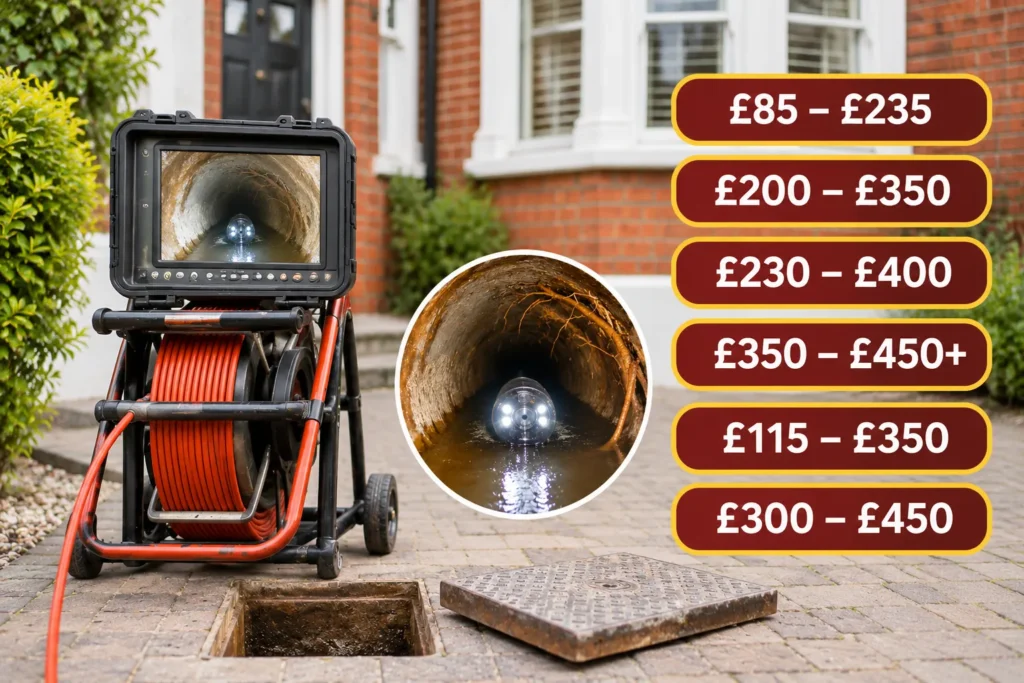
| Survey type | Typical UK cost | What is included |
|---|---|---|
| Basic CCTV camera inspection | £85 to £235 | Camera check, usually without a detailed report |
| Full CCTV drain survey | £200 to £350 | Inspection, written findings and recorded footage |
| Homebuyer drain survey | £230 to £400 | Pre-purchase inspection and condition report |
| Larger property survey | £350 to £450+ | Longer or multiple drainage runs |
| Drain tracing and mapping | £115 to £350 extra | Locating underground drainage routes |
| Specialist build-over survey | £300 to £450 per survey | Inspection to a specified construction requirement |
These are indicative 2026 market prices, not fixed EBT Build charges. Some suppliers quote excluding VAT, and the scope of reports and mapping varies. Build over application fees may already include required inspections, so check before commissioning a separate survey.
A typical terraced house with accessible inspection chambers will generally be cheaper to survey than a large property with several drainage connections. Before booking, confirm whether the price covers all relevant foul and surface water drains or only one identified pipe.
What Affects the Cost of a CCTV Drain Survey?
The number of drain runs, access arrangements and reporting requirements have the greatest influence on price. Two houses of similar size can have very different drainage layouts, particularly where extensions or previous repairs have altered the original pipework.

Property Size and Drainage Layout
A straightforward drainage system with one or two accessible runs takes less time to inspect. Larger houses may have separate foul and surface water drainage, additional inspection chambers and longer connections to the sewer.
In older London properties, drains sometimes run beneath rear gardens or neighbouring land. Where the route is uncertain, the engineer may need tracing equipment to locate the pipework. This is normally an additional service rather than part of a basic CCTV inspection.
Access to the Drains
A CCTV camera is normally inserted through an inspection chamber, rodding point or another suitable access location. If the chamber is buried beneath paving, hidden under decking or difficult to open, the engineer may need additional time or equipment.
A blocked drain can also prevent the camera from completing the inspection. High-pressure jetting may be needed to remove debris before the pipe can be examined properly. Ask whether clearance is included, as it can increase the final bill.
Survey Report and Footage
A basic camera check may be enough to investigate a known blockage. For a property purchase, a written report is usually worth the additional cost because it records the defects and can be shared with a surveyor, solicitor or repair contractor.
More detailed reports may include photographs, recorded footage, pipe measurements and a drainage plan. The quotation should identify exactly what documentation you will receive and whether inaccessible sections will be recorded.
What Does a CCTV Drain Survey Include?
A drainage engineer feeds a specialist camera through accessible underground pipes to inspect their internal condition. The equipment records visible damage and restrictions, allowing problems to be investigated without immediately excavating the ground.
A typical inspection can identify:
- Cracked or fractured pipes: Damage that may allow water to escape or surrounding material to enter.
- Displaced joints: Misaligned pipe connections that can catch waste and contribute to blockages.
- Tree root intrusion: Roots entering through damaged joints or existing openings.
- Debris and deposits: Grease, silt or other material restricting the flow of wastewater.
- Collapsed or deformed sections: Damage that may require further investigation or repair.
- Standing water: A possible sign of poor drainage, falls, restrictions or localised settlement.
The engineer records the position of visible defects, often using the camera’s distance measurement. A written condition report should explain the findings, identify which pipes were inspected and state whether further investigation is necessary.
CCTV inspection has limitations. It cannot prove that every pipe is watertight or establish an accurate underground drainage layout without suitable tracing or measuring equipment. A complete report should identify any sections that could not be inspected.
Drain Survey Cost Before Buying a House
A homebuyer drain survey generally costs around £230 to £400, depending on the property’s size and the level of reporting. It provides information about underground drainage that a standard visual building survey would not normally reveal.

A RICS home surveyor may inspect visible drainage features and recommend specialist investigation if there are warning signs. However, an ordinary house survey does not usually include a CCTV camera inspection of buried pipes.
For buyers, the main advantage is discovering significant defects before exchanging contracts. If the survey identifies a damaged drain, there is time to obtain a repair quotation and understand whether the problem could affect the purchase.
When Is a Homebuyer Drain Survey Worth Paying For?
A pre-purchase drain survey is particularly worth considering when a property has a history of blockages, unexplained sewage smells, damaged inspection chambers or concerns raised during the building survey.
Older houses can also have drainage systems that have been altered during previous building work. Victorian and Edwardian properties may retain original clay pipes alongside later plastic replacements. Clay drains can remain serviceable for decades, but displaced joints and root intrusion are possible defects worth investigating when there is evidence of a problem.
A survey is not compulsory for every house purchase. Where there are no drainage concerns, the decision depends on the buyer’s risk tolerance and the property’s circumstances.
What Happens If the Survey Finds a Problem?
The buyer can ask a drainage contractor to assess the defect and provide a repair quotation. Significant findings may form part of negotiations with the seller, although a survey does not automatically entitle the buyer to a price reduction.
Responsibility also matters. A private drain serving one property is generally the homeowner’s responsibility, while public sewers and public lateral drains normally fall under the relevant sewerage undertaker. A conveyancing solicitor can help establish the position where ownership or liability is unclear.
Drain Surveys Before Extensions and Building Work
A drain survey before an extension helps establish whether underground pipework could interfere with the proposed foundations or building layout. This is especially relevant to rear and side-return extensions, where drains may cross the area being excavated.
If an existing drain is discovered after construction begins, the design may need changing. Foundations might need to be repositioned, drainage access preserved, or pipework diverted. Identifying these issues during the design stage can reduce delays and unexpected costs.
For homeowners considering a rear extension, checking the drainage layout early helps establish whether the proposed footprint affects existing pipes. The same consideration applies to side-return extensions, particularly in terraced houses with drainage running along the side passage.
When Is a Build Over Agreement Required?
In Thames Water’s service area, building within 3 metres of a public sewer or within 1 metre of a public lateral drain can require a build over agreement. The agreement protects the sewer and maintains suitable access for future maintenance. Planning permission does not replace this approval.
For certain applications, Thames Water arranges CCTV surveys before and after construction. Its Class 2 build over process includes these inspections within the application arrangements, so homeowners should not assume they need to pay an independent contractor for both surveys.
Building regulations also apply to drainage work. Approved Document H covers drainage arrangements, pipe protection and access for inspection. A CCTV survey helps establish existing conditions, but it does not replace drainage design or building control approval.
Not every extension requires a CCTV inspection. The need depends on the proposed work, existing pipe locations and any requirements imposed by the relevant authority.
Drain Survey Costs in Victorian and Edwardian Houses
Victorian and Edwardian houses in North London can have drainage arrangements that are less straightforward than those in newer properties. Original clay drains may have been repaired or extended over time, and inspection chambers are sometimes hidden beneath later paving or building work.
In terraced streets, several properties may connect to shared underground pipework. The position of these connections matters when buying a house or planning foundations, particularly if the drainage route crosses neighbouring land.
A CCTV survey can establish the visible condition of accessible pipes, while drain tracing can help locate their route. Neither should be treated as proof of legal ownership. If the inspection identifies a shared connection, responsibility should be checked with the relevant sewerage undertaker before repairs are authorised.
Our guide to Victorian terrace repairs covers the wider maintenance issues found in these properties. For drainage specifically, the important decision is whether the existing system needs inspection, repair or further investigation before building work begins.
How Long Does a Drain Survey Take?
A straightforward domestic CCTV drain survey generally takes one to two hours on site, although a larger property with several drain runs can take considerably longer. The inspection may also be delayed if chambers are difficult to access or the pipes need clearing before the camera can pass through.
The engineer can often explain the main findings during the visit. A formal report, photographs and recorded footage may follow within a few working days, depending on the contractor.
For a house purchase, arrange the survey early enough for the solicitor and surveyor to review any significant findings before exchange. For an extension, the inspection should take place before the drainage layout and foundation design are finalised.
What If the Survey Finds Damaged Drains?
A CCTV report should distinguish between defects that need attention and minor observations that do not necessarily justify immediate work. A small deposit of silt is different from a displaced joint restricting the pipe or a collapsed section preventing wastewater from flowing.
Some problems can be addressed through cleaning or localised repairs. Others may require pipe lining, excavation or replacement. The appropriate method depends on the pipe material, location, severity of damage and whether the affected section is suitable for repair without excavation.
Where a defect is identified, ask for a quotation based on the actual survey findings rather than agreeing to replace the entire drainage run without explanation. EBT Build’s drainage repairs service covers the building and repair work associated with drainage problems.
How to Get an Accurate Drain Survey Quote
Drain survey quotations are easier to compare when every contractor is pricing the same inspection. Before requesting a price, explain the type of property, why the survey is needed, and whether you already know the location of the inspection chambers.
Ask each contractor to confirm:
- Which foul and surface water drain runs will be inspected.
- Whether the quotation includes a written condition report and CCTV footage.
- Whether a drainage plan or underground pipe tracing is included.
- Whether VAT, travel, and parking charges are included.
- What happens if a blockage prevents the camera from completing the survey.
- Whether additional cleaning, excavation or repeat visits cost extra.
- When the completed report will be available.
For a homebuyer survey, the report should clearly identify significant defects and any sections that could not be inspected. For building work, confirm whether the designer or sewerage undertaker requires a particular survey specification before booking.
A basic camera inspection may be sufficient for a single drainage concern. When buying a house or planning an extension, spending more on the correct report can be worthwhile because it provides information needed before making an expensive commitment.
Frequently Asked Questions
How much does a CCTV drain survey cost in London?
A domestic CCTV drain survey in London commonly costs around £150 to £400, depending on the pipework, access and reporting requirements. Complex properties or surveys requiring additional tracing may cost more.
Is a drain survey included in a house survey?
No. A standard RICS home survey does not normally include a CCTV inspection of underground drainage. The surveyor may recommend a separate drainage investigation if there are signs of a problem.
Do you need a drain survey before buying a house?
It is not compulsory, but it can be worthwhile for older properties, houses with recurring drainage problems, or purchases where the building survey raises concerns about underground pipes.
Can a CCTV drain survey detect leaks?
A camera can identify visible cracks, damaged joints and other defects associated with leakage. However, CCTV alone cannot prove that a drainage system is watertight. Additional testing may be necessary.
Do I need a CCTV drain survey before an extension?
Not always. A survey may be required where the extension affects existing drainage or a public sewer. The designer, building control professional or relevant sewerage undertaker can confirm what information is needed before construction.
