
Protect your home with professional smoke alarm installation from EBT Build. We install smoke detectors, heat alarms and interlinked systems across North London, with careful attention to alarm positioning, electrical connections and reliable operation. Whether you need a new system or smoke alarm replacement, we assess your property and recommend a suitable solution. Our wider electrical services can also be coordinated where required.
Serving North London · Islington · Camden · Hackney · Haringey
Certified engineers for all gas work, safety checks, boiler installations, and compliance.

Electrical work carried out, tested, and certified to current UK regulations.
Public & employer liability insurance in place for complete peace of mind.
Consistently rated for workmanship, reliability, and project management.
Delivering home refurbishment and roofing projects with controlled processes, certified trades, and accountable project management.
When an alarm keeps beeping, gives repeated false alerts or fails during a test, it can be difficult to know what needs attention. We identify the cause and recommend the right repair, replacement or upgrade.
Repeated warning sounds may point to a low battery, ageing unit or fault.
Frequent false alarms from cooking, dust or other triggers can become frustrating.
If one alarm sounds but others do not respond, the interlinking system may need checking.
Older units can become less dependable and may need suitable replacement.
Poor positioning can affect detection and may cause unnecessary activations.
A unit that does not respond correctly during testing should be inspected.
If the issue may involve the wider electrical installation, an EICR inspection can help identify underlying electrical concerns. For older wiring that needs more extensive attention, see our house rewiring service .
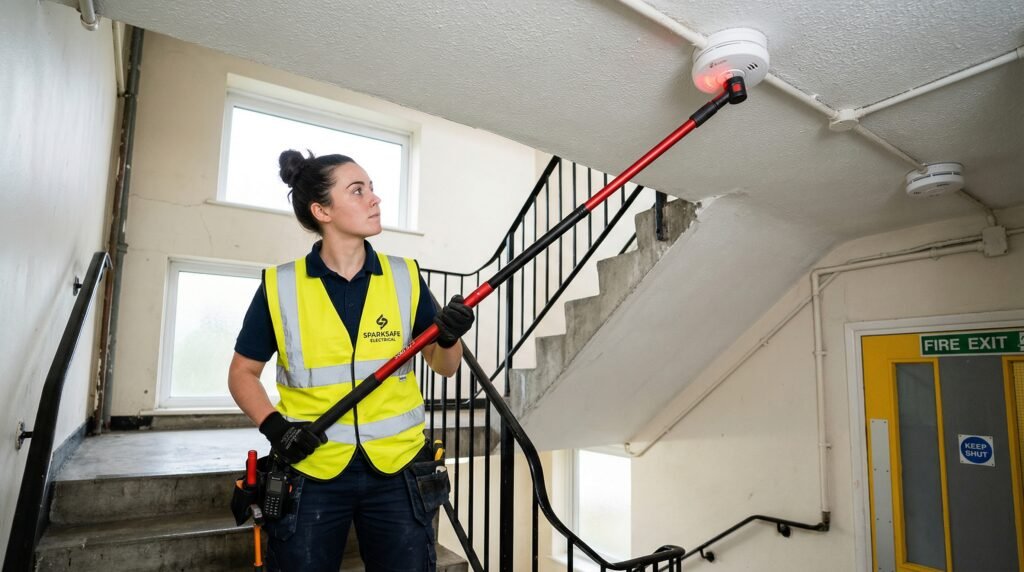
We assess the property and plan the alarm layout around the rooms, ceiling positions and existing setup. From choosing suitable detection for different areas to configuring the system and checking its operation, we handle the key stages of the installation. Our North London electrical services can also cover related work where the alarm installation forms part of a wider property project.
We install alarm systems suited to different property layouts, power arrangements and detection needs. The right option depends on the room, how the alarms need to communicate and whether a wired or wireless setup is more practical.
Permanent power with suitable battery backup.
Multiple units communicate to provide coordinated alerts.
Flexible where wired interconnection is less practical.
Suitable for kitchens and areas where smoke alarms may trigger unnecessarily.
Dual detection in a suitable combined unit.
Practical for suitable locations without a mains connection.
The right location depends on the room, layout and potential fire risks within the property. We consider sleeping areas, escape routes and higher-risk spaces when planning alarm placement, whether you live in a Victorian terrace, Edwardian home or converted flat. For larger property projects, our full house refurbishment service can coordinate electrical and other works together.
Important escape routes where early warning can help occupants respond quickly.
Detection near sleeping areas can provide an earlier warning when people are asleep.
Suitable detection for commonly occupied areas where fires can potentially start.
A heat detector can be more suitable where cooking fumes could trigger a smoke detector.
Extra consideration may be needed around appliances, chargers and other equipment.
Victorian terraces and converted flats may need their layout reviewed before placement.
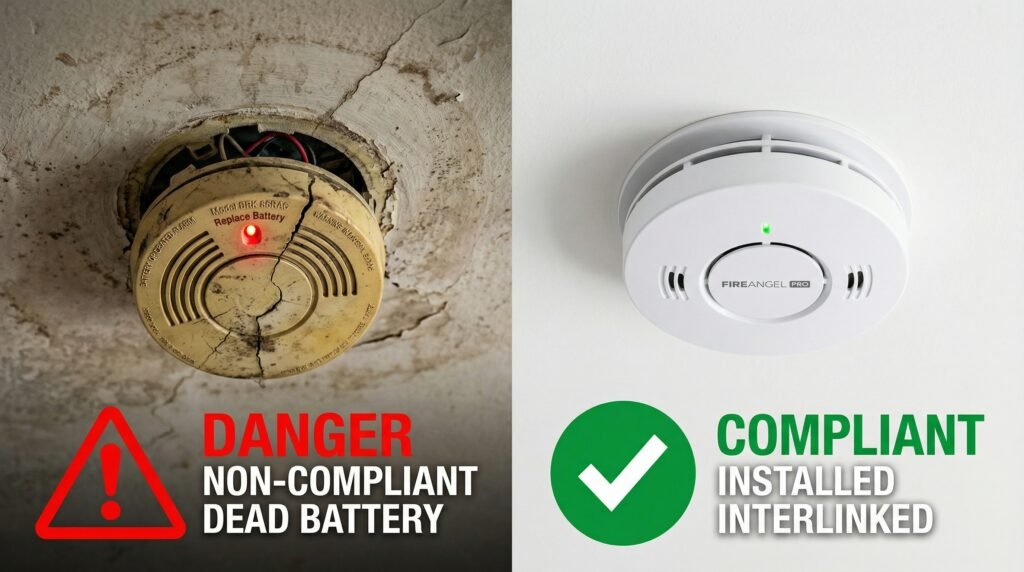
A smoke and heat alarm system needs more than simply fitting units to the ceiling. We look at how the property is laid out, how the alarms need to communicate and what type of detection suits each area. From the initial assessment to final checks, we keep the work straightforward and make sure you understand the system installed in your home.


 Trustindex verifies that the original source of the review is Google.
 Trustindex verifies that the original source of the review is Google.
 Trustindex verifies that the original source of the review is Google.
 Trustindex verifies that the original source of the review is Google.
 Trustindex verifies that the original source of the review is Google.
 Trustindex verifies that the original source of the review is Google.
 Trustindex verifies that the original source of the review is Google.
 Trustindex verifies that the original source of the review is Google.
 Trustindex verifies that the original source of the review is Google.
 Trustindex verifies that the original source of the review is Google.
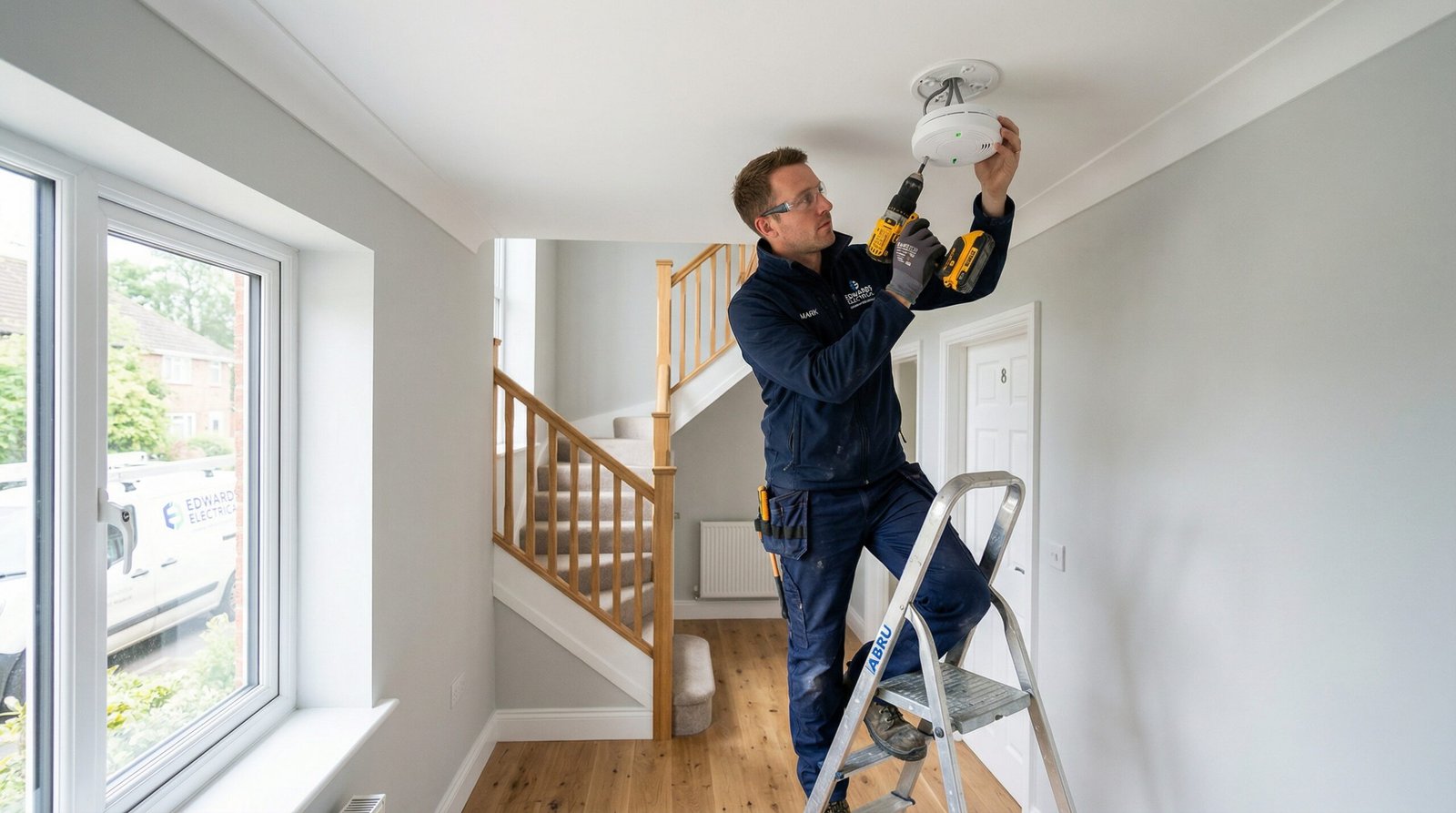
Every project begins with a detailed inspection of the property. We assess the number of floors, confirm optimal placement, and determine system type before removing outdated alarms. This stage ensures compliance with fire safety regulations before installation begins.
Includes: Initial inspection, Compliance review, Removal of old alarms, Position marking
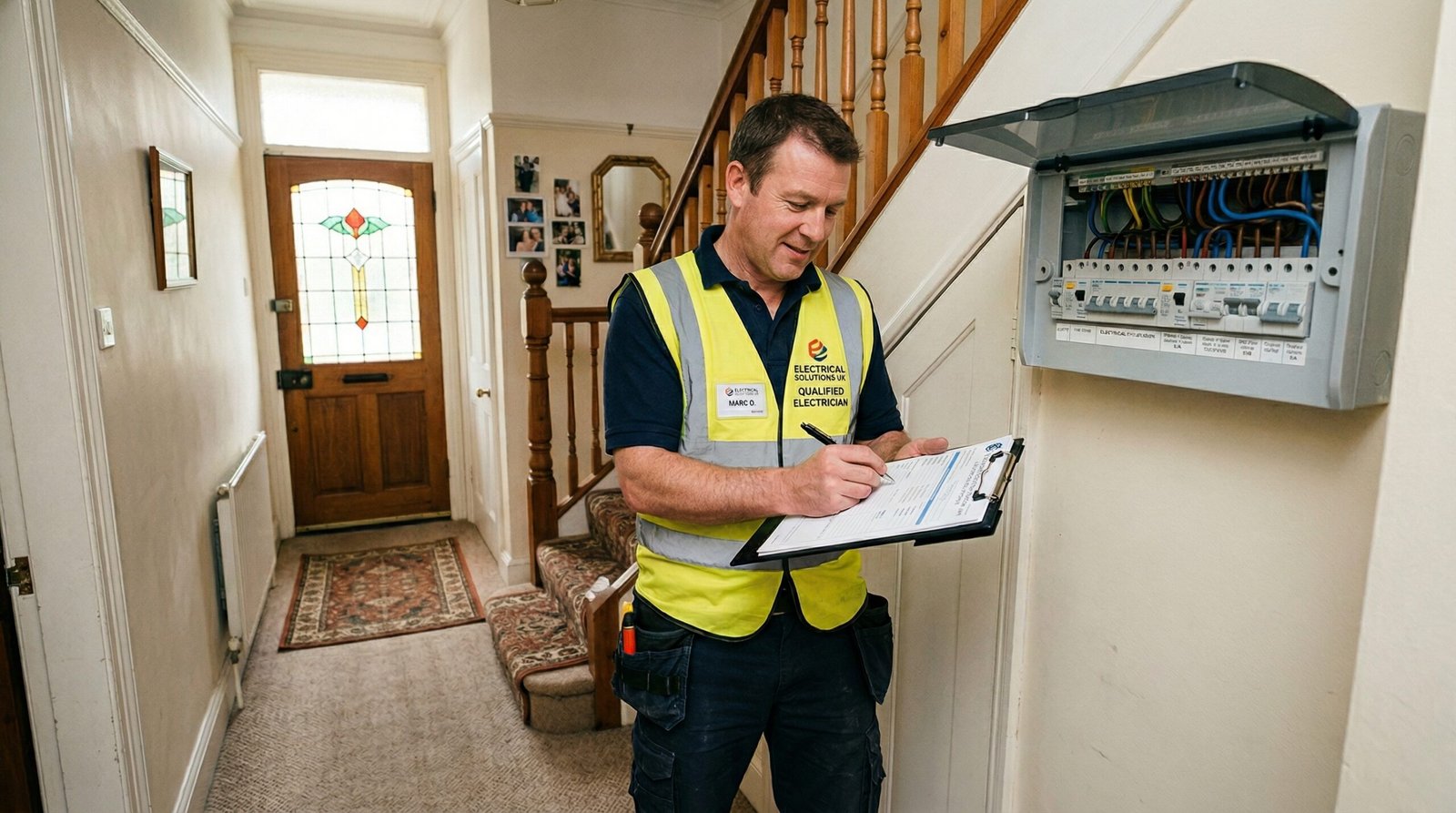
Once preparation is complete, our electricians install the selected alarm system. This may involve wiring a mains-powered smoke alarm to the lighting circuit or configuring wireless interlinked smoke alarms for seamless communication.
Includes: Alarm mounting, Wiring configuration, Interlink setup, Battery backup installation, Compliance checks
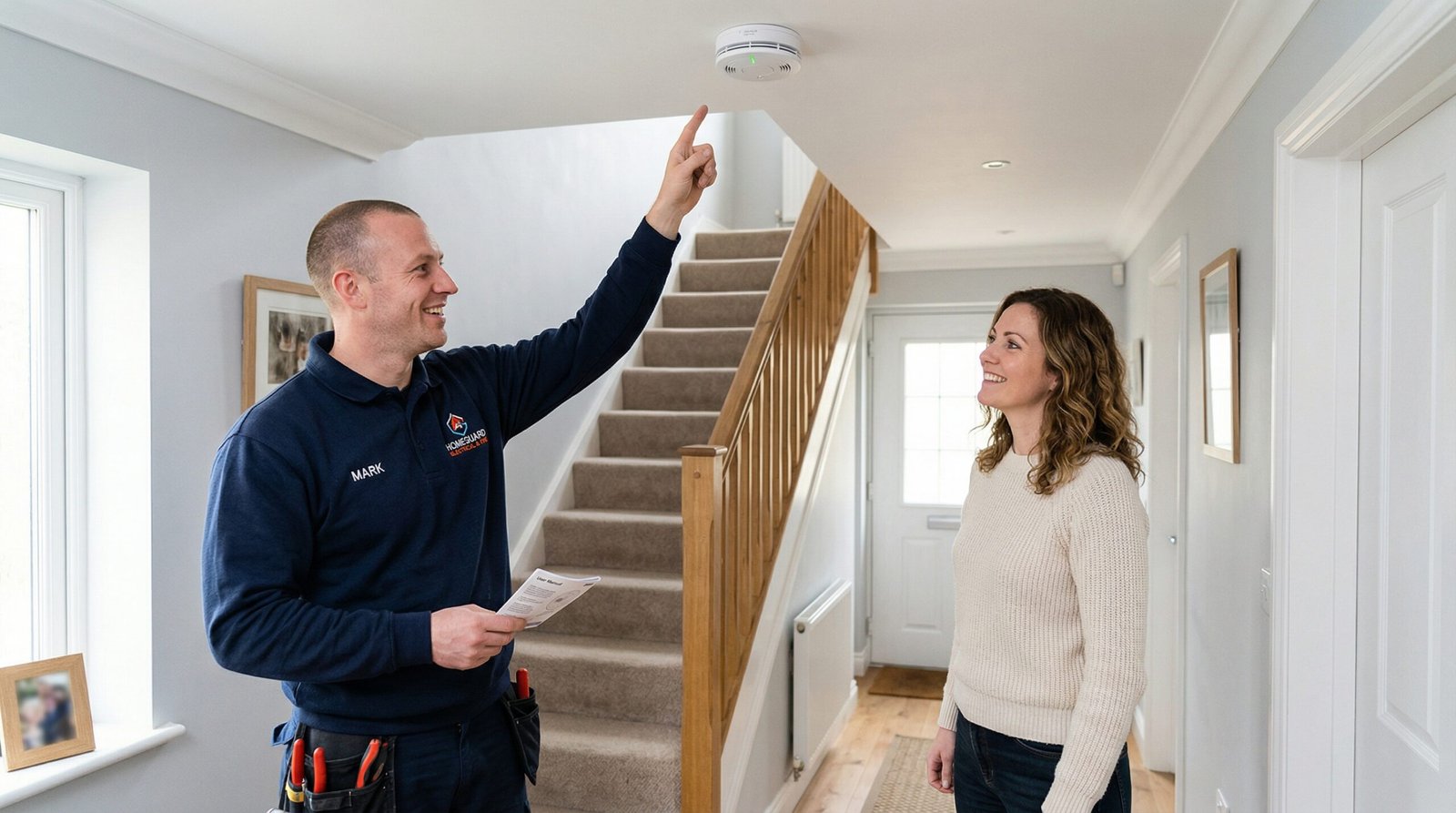
The final phase focuses on full operational testing and documentation. All alarms are activated to verify performance, interlink communication, and heat sensor response where applicable.
Includes: Functional testing, Interlink verification, Sound level checks, System labelling, Certification
Site visit and scope assessment
Transparent costs and timelines
Trades coordinated and managed
Snagging cleared, project closed
Some systems can use wireless interconnection, but compatibility depends on the alarm manufacturer and system design. The existing units should be checked before combining different alarm types.
A heat alarm is generally more suitable for kitchens because cooking smoke and steam can trigger smoke alarms unnecessarily. Heat alarms respond to rapid temperature increases instead.
Interlinked alarms can provide an alert throughout the property when one unit detects a fire. GOV.UK specifically notes their usefulness in larger homes and properties across several levels.
Often, yes, but the existing location, wiring, mounting arrangement and replacement unit need to be assessed first. Manufacturer instructions should also be followed when fitting the new alarm.
GOV.UK advises testing smoke alarms regularly, with its current home fire-safety guidance recommending at least monthly testing. The manufacturer’s instructions should also be followed for the specific alarm.
A recurring beep can indicate a battery or alarm fault. For sealed 10-year units, replacing the entire alarm may be necessary when it reaches the end of its service life rather than simply changing a battery.
Mains-powered alarms normally use a backup battery so the alarm can continue operating if there is a power cut. The specific backup arrangement depends on the alarm selected.
Requirements depend on the property and circumstances. For rented homes in England, GOV.UK guidance says landlords must have at least one smoke alarm on every storey used as living accommodation and recommends alarms compliant with BS 5839-6.
Reliable home refurbishment and roofing specialists delivering compliant, fully managed building work across the UK.
© 2026 EBT Build. All rights reserved.