
Replastering problems in North London properties are rarely straightforward. Original lime and lath plaster in a Victorian terrace in Islington that has been damp for years, a ceiling in Camden with sections dropped and the remaining plaster hollow, or walls stripped during renovation in Hackney that have exposed a substrate that cannot accept a new finish coat directly. Each requires a different assessment and a different backing system before any new plaster is applied. At EBT Build, we carry out full replastering for homeowners, landlords, and property managers covering walls, ceilings, and full room replastering under one managed job.
Every job starts with a site assessment to confirm substrate condition, moisture levels, and the correct backing system before any existing plaster is removed or any price is agreed. All work is carried out by our own plasterers with no subcontracting, priced in writing after the site assessment, and handed over paint-ready on completion. Full wall and ceiling restoration is usually carried out as part of wider plastering and decorating services during major renovation projects.
Certified engineers for all gas work, safety checks, boiler installations, and compliance.

Electrical work carried out, tested, and certified to current UK regulations.
Public & employer liability insurance in place for complete peace of mind.
Consistently rated for workmanship, reliability, and project management.
Delivering home refurbishment and roofing projects with controlled processes, certified trades, and accountable project management.
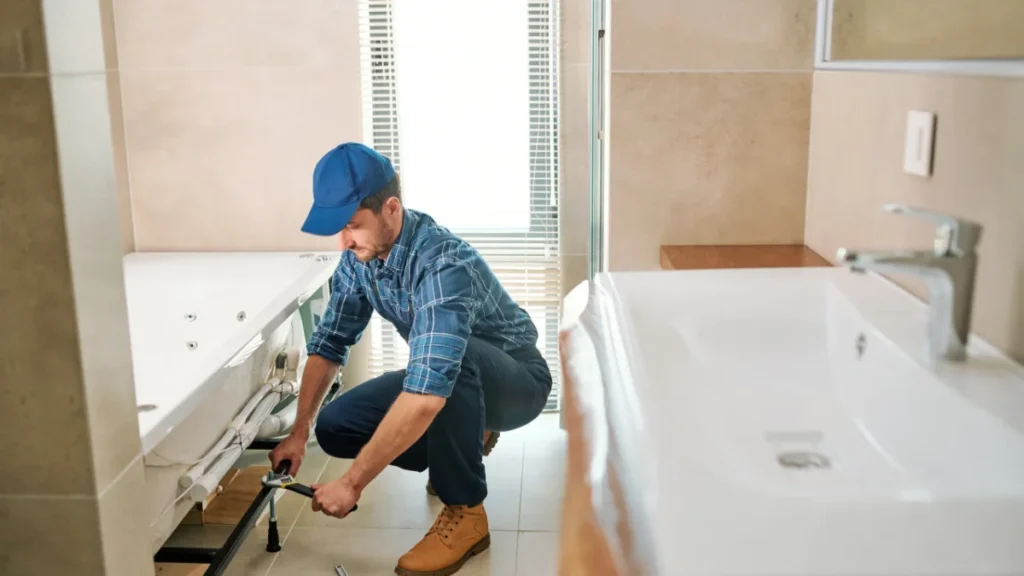
Our complete replastering service starts with removing damaged plaster and preparing the wall surface. A bonding coat is applied where needed, followed by a smooth skimming finish.
We use materials from British Gypsum and Knauf, with all work carried out to standards recognised by the Federation of Master Builders and The Guild of Master Craftsmen.
In some refurbishment projects, damaged walls may first require drywall installation before final plaster finishes are applied.
Replastering problems in North London properties are almost always identified too late — after a skim coat has been applied over plaster that was already failing, after damp has been treated but the salt-contaminated plaster left in place, or after a renovation strip-out has exposed lath and backing plaster that cannot hold a new finish coat. Victorian and Edwardian terraces were built with lime-based backing plaster on timber lath that deteriorates differently from modern sand and cement renders and requires a different approach before any new plaster is applied. EBT Build carries out full replastering across Islington, Angel, Camden, Hackney, and Haringey for homeowners, landlords, and property managers, covering walls, ceilings, and full room replastering under one managed job. Once replastering is complete and surfaces are fully cured, walls and ceilings are finished with professional skimming to a paint-ready standard.

A full room replaster involves removing all existing plaster back to the substrate; brick, block, or lath, and applying new backing coats and a finish skim across all wall and ceiling surfaces in sequence. We carry out full room replastering across Islington, Angel, Camden, Hackney, and Haringey where existing plaster has failed across multiple surfaces, is contaminated with damp salts, or is too uneven and hollow to accept a skim coat. Every room is assessed before any work is quoted, we confirm the substrate condition, identify any damp or movement, and specify the correct backing system before any plaster is removed or any price is agreed.

A single wall that has failed, hollow sections, active cracks, salt contamination from previous damp, or plaster pulling away from the substrate, cannot be repaired with a skim coat alone. The existing plaster must be removed back to the brick or block, the substrate treated where required, a bonding or backing coat applied to the correct thickness, and a finish skim applied once the backing coat has cured sufficiently. We carry out wall replastering on individual and across multiple surfaces within the same room, specifying the correct backing system, bonding coat on dense substrates, browning on brick and block, Thistle on plasterboard based on what the substrate requires rather than what is quickest to apply.

Ceilings in Victorian properties are frequently original lath and plaster construction, timber laths fixed across joists with lime plaster keyed through the gaps. When this system fails, sections drop without warning and the remaining plaster is often hollow across large areas. We assess ceiling condition before any work is agreed and carry out full ceiling replastering where the existing construction has failed beyond repair. Where original lath and plaster is being replaced, we confirm the correct specification, plasterboard fixed to joists followed by a skim finish, or solid backing coat and skim on concrete or beam and block ceilings, before any work begins.
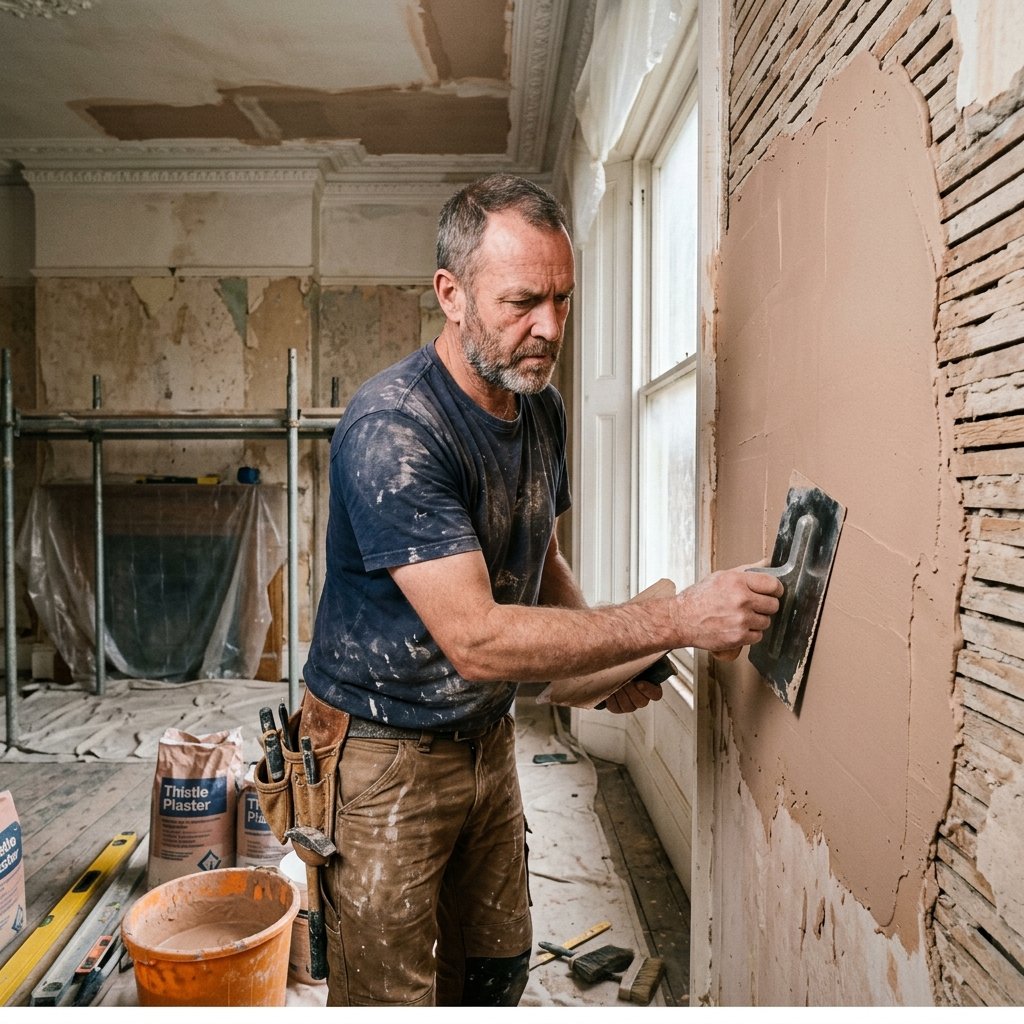
Victorian and Edwardian properties across present replastering conditions that differ significantly from modern construction. Original lime mortar backing plaster on timber lath, horsehair reinforced finish coats, and solid brick walls with no cavity or moisture barrier all require a different specification from the sand and cement or gypsum systems used on post-war properties. Applying modern gypsum plaster directly over a solid brick wall without a suitable backing coat or moisture treatment produces a finish that fails within one to two seasons as moisture migrates through the wall.

Plaster that has been affected by rising damp, penetrating damp, or condensation absorbs hygroscopic salts that continue to draw moisture from the air even after the source of damp has been resolved. Skimming over salt-contaminated plaster produces a finish that remains damp to the touch, produces white crystalline deposits on the surface, and fails within months. The correct sequence is to remove all contaminated plaster back to the substrate after damp treatment is complete, apply a renovating plaster or salt-resistant backing system, and skim once the new backing coat has fully cured.
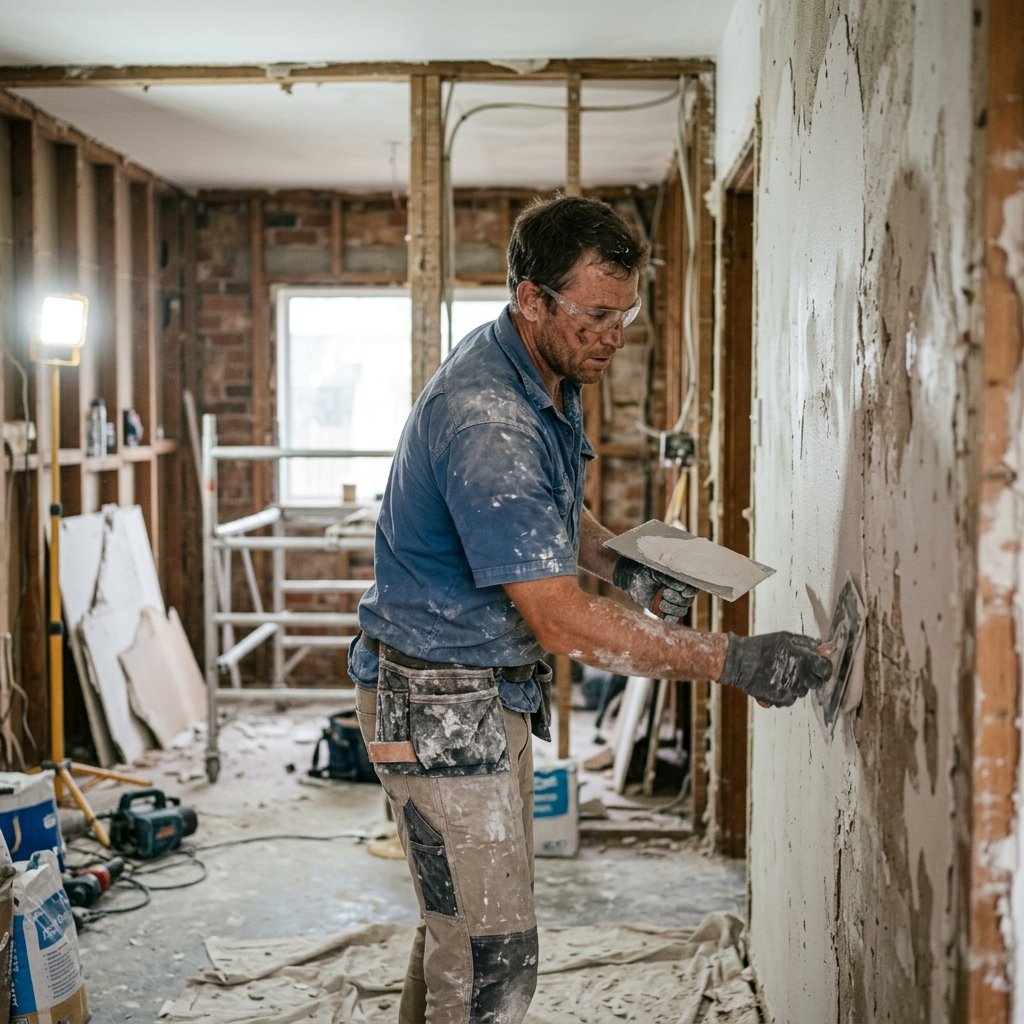
Renovation and strip-out work; removing partitions, chasing walls for new services, cutting back damaged sections, or stripping a property back to shell, leaves wall and ceiling surfaces in a condition that requires replastering before any decoration can begin. Patching individual areas after a strip-out produces a finish with visible joins and uneven suction across the surface that is impossible to decorate to a consistent standard. We carry out replastering after renovation and strip-out work, coordinating directly with the preceding trade to confirm surface condition before any plaster is ordered.
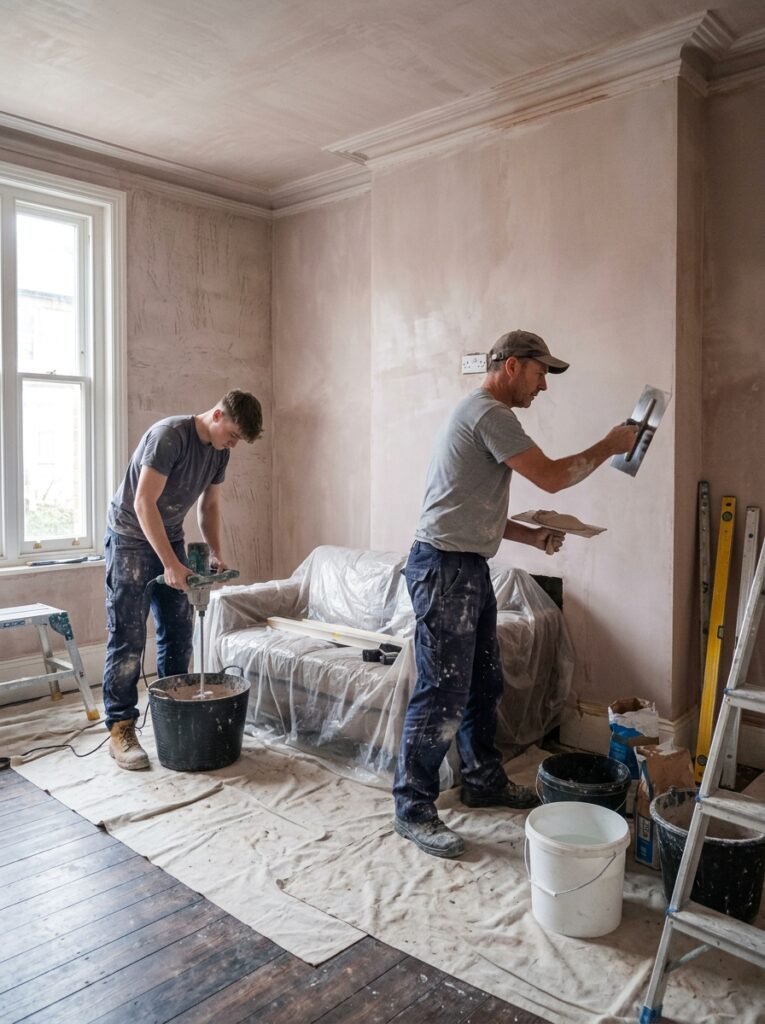
Replastering that fails does not always fail during the job — it fails three months later when the finish coat cracks along every backing coat joint, or six months later when salt contamination pushes through a skim applied over plaster that was never fully removed. A bonding coat applied to a substrate with active moisture loses adhesion as the wall dries and moves. A skim coat applied before the backing coat has cured sufficiently shrinks and pulls away from the surface. Gypsum plaster applied directly to a solid brick wall in a Victorian terrace without a suitable backing system absorbs moisture through the wall and fails regardless of the finish quality. At EBT Build, every replastering job starts with a substrate assessment to confirm wall construction, moisture levels, and the correct backing system before any existing plaster is removed or any price is agreed.
We carry out full replastering across Islington, Angel, Camden, Hackney, and Haringey for homeowners, landlords, and property managers in Victorian terraces, converted flats, and commercial properties. Every job is handled by our own plasterers with no subcontracting, every substrate is assessed and treated correctly before any new plaster is applied, and every project is priced in writing after a site visit with no costs added once work starts. Where replastering is part of a wider renovation, it is coordinated alongside damp treatment, partition work, and finishing trades under one managed job. Completed rooms are handed over paint-ready and ready for coving and moulding installation or decoration immediately on completion.
EXCELLENTTrustindex verifies that the original source of the review is Google. EBT build are one of the companies out there. Tili and EBT build team are very hard working people and reliable. They refurbished my flat in Chalk Farm, including a new kitchen, bathroom, doors, skirting, plastering, painting and decorating. Everything was completed to a very high standard. I really appreciate they workmanship and professionalism, and i highly recommend them to anyone looking for a reliable companyPosted on GoogleTrustindex verifies that the original source of the review is Google. Punctual, tidy, responsive, fast and did a great job, fixed exactly what we needed them to.Posted on GoogleTrustindex verifies that the original source of the review is Google. Fantastic! Highly recommend. Completed the job above expectations, quick, tidy and a pleasure to deal with.Posted on GoogleTrustindex verifies that the original source of the review is Google. We had an amazing experience with EBT Build for our home refurbishment project in Islington. From start to finish, the team was professional, efficient, and incredibly skilled. They kept us updated throughout the whole process and made sure every detail was done to the highest standard. We’re absolutely thrilled with the final result – our home has been transformed exactly how we imagined it. Highly recommend!Posted on GoogleTrustindex verifies that the original source of the review is Google. "We are extremely glad we chose EbT. From start to finish, they maintained excellent communication, worked diligently, and delivered an exceptional standard of workmanship. We could not fault the entire process—they offered great value, and we would not hesitate to recommend them or use their services again in the future. They completed outstanding work across all areas: roofing, plastering, painting and decorating, new bathroom installations, new kitchen installations, full property plastering, and complete rewiring. Every aspect of the work was finished to a very high quality."Posted on GoogleTrustindex verifies that the original source of the review is Google. Fantastic team at EBT Build Ltd — superb from start to finish on our full home refurbishment. Would we use them again? Definitely YES. Would we recommend them? Absolutely. They understood exactly what we wanted, gave great ideas, and the end result exceeded our expectations. Quotes were clear, and any changes were handled smoothly. All tradesmen were skilled, polite, and respectful of our home — always leaving everything clean. The whole project was managed perfectly. We’re so happy with the work and highly recommend EBT Build Ltd for any job.Posted on GoogleTrustindex verifies that the original source of the review is Google. EBT Build are a real credit to the building trade. They carried out full refurbishments and roofing work on my property in Hackney, finishing everything to an excellent standard — including new kitchens, bathrooms, all electrics and plumbing, complete redecoration throughout, plus all roofing work. The whole team were professional, well organised, and their attention to detail really made a difference from start to finish. The end result was absolutely cracking, and I would happily recommend EBT Build to anyone looking for a reliable, quality refurbishment and roofing company.Posted on GoogleTrustindex verifies that the original source of the review is Google. EBT Build Ltd is one of the best building companies I have worked with. They completed our kitchen refurbishment, bathroom refurbishment, plastering, painting and decorating, along with all the finishing works to a very high standard. The team was professional, reliable and easy to deal with throughout, and the quality of the workmanship was excellent. I would highly recommend EBT Build Ltd to anyone looking for a trustworthy builder.Posted on GoogleTrustindex verifies that the original source of the review is Google. EBT Build carried out a loft conversion and refurbishment works at our property in Islington, and the quality of their work was very good. They regularly checked that we were happy with the progress at every stage of the project. The team always arrived when they said they would, worked full days, and were professional, resourceful, and cheerful throughout. The work was completed efficiently and to a high standard, with great attention to detail. At the end of each day, the work area was left clean and tidy. EBT Build are definitely one of the better building firms we have dealt with over the years, and we would have no hesitation in recommending them. We will certainly use them again for future projects.Posted on GoogleTrustindex verifies that the original source of the review is Google. EBT team renovated my bathroom and kitchen to a fantastic standard. They were really professional and efficient. Could not recommend more! Thank you to the whole team but especially Tilly!Verified by TrustindexTrustindex verified badge is the Universal Symbol of Trust. Only the greatest companies can get the verified badge who has a review score above 4.5, based on customer reviews over the past 12 months. Read more
Every project begins with a detailed structural inspection and wall surface preparation to identify damage, moisture issues, and unstable plaster areas.
Includes: Structural inspection, Old plaster removal, Crack repair before replastering, Damp evaluation, Surface cleaning and preparation

Surfaces are stabilised using bonding coat application before the final skimming layers are applied for smooth and consistent coverage.
Includes: Bonding coat application, Solid wall plastering, Ceiling and wall plastering, Skimming finish, Alignment and quality checks
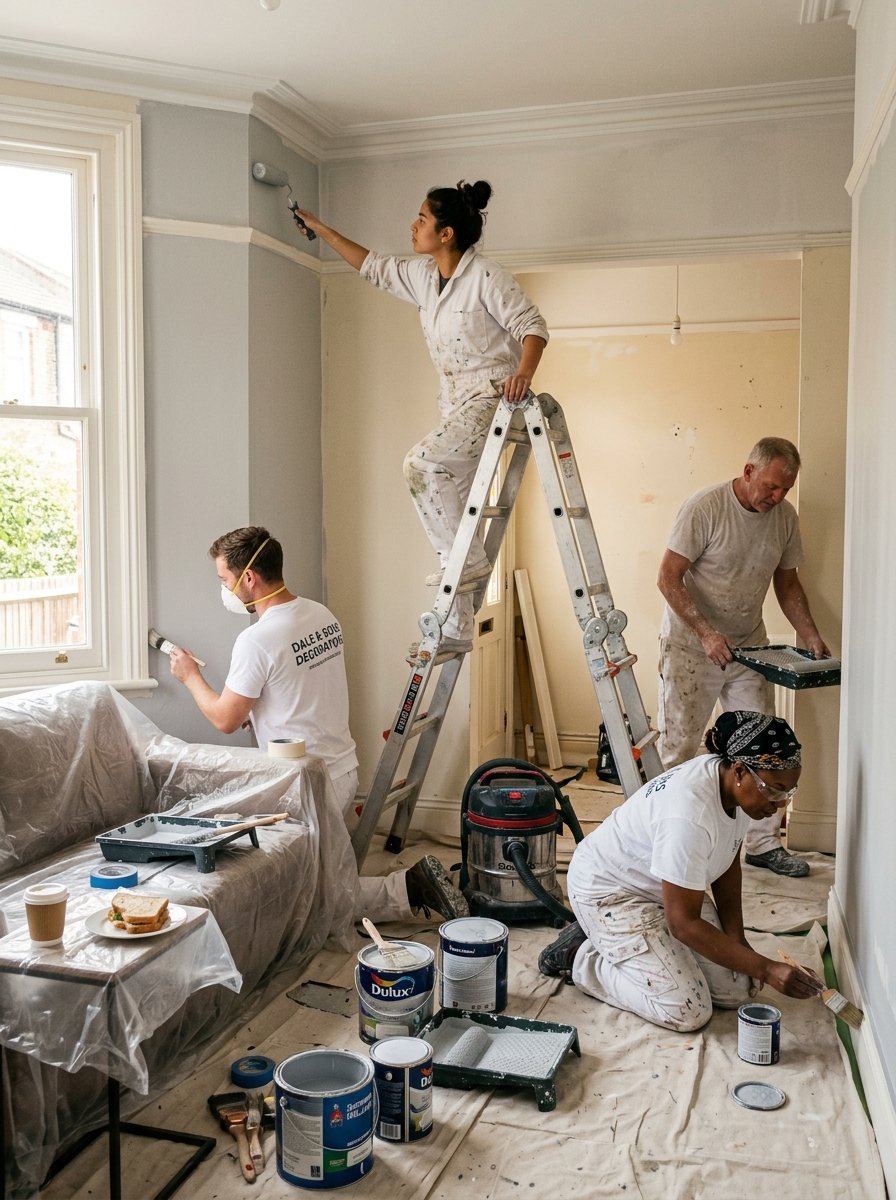
After curing, all surfaces are inspected for smoothness, durability, and readiness for decoration.
Includes: Surface smoothness review, Drying inspection, Final detailing, Paint-ready confirmation, Client approval
We visit your property in UK to assess the scope and requirements.
You receive transparent pricing and a clear timeline for your project.
All trades are coordinated and managed under one system.
Snagging is completed and the project is delivered to agreed standards.
Full replastering costs in North London depend on the number of surfaces, wall construction, and preparation required before any new plaster is applied. A single wall replaster in an average room typically runs between £250 and £500 depending on wall size and substrate condition. A full room replaster covering walls and ceiling is generally between £800 and £1,800 for an average sized room. A full property replaster across a two bedroom Victorian terrace in Islington or Hackney is typically between £4,000 and £8,000 depending on the number of rooms, ceiling heights, and substrate condition throughout. Every job is priced after a site assessment because substrate condition, backing coat requirements, and damp treatment needs cannot be confirmed without inspecting the walls directly.
New plaster requires a minimum of four to six weeks to dry fully before any paint is applied in normal conditions. Thicker backing coats on solid brick walls take longer than plasterboard systems because the plaster mass is greater and moisture takes longer to migrate out of the surface. Painting over plaster that has not fully dried traps moisture, causes emulsion to peel, and creates conditions for mould growth behind the finish coat. Once the surface has dried to a consistent pale colour with no darker patches, a mist coat of diluted emulsion is applied before any full finish coat. We confirm drying timelines and decoration guidance in writing on every replastering job before we leave site.
Yes. Where existing plaster is hollow, salt contaminated, or has failed across large areas, it is removed back to the substrate before any new plaster is applied. Applying new plaster over failing existing plaster produces a finish that continues to move and crack as the old plaster beneath deteriorates. On Victorian properties across Islington, Camden, and Hackney with original lime and lath construction, the extent of plaster removal is assessed carefully before work begins because removing lath plaster from ceilings and walls in poor condition requires controlled work to avoid damaging surrounding surfaces. All removed plaster is cleared from site as part of the job.
In some cases, yes. Where existing plaster is sound, well bonded, and free from damp contamination, a skim coat can be applied directly over the surface without full removal. Where only sections have failed and the surrounding plaster is solid, patch repairs followed by a full skim are carried out rather than full removal. The decision is made on site after assessing adhesion, moisture levels, and surface condition across the whole wall. We do not apply new plaster over existing plaster that is hollow, salt contaminated, or showing signs of active damp, and will not recommend skimming over a wall that requires full replastering in order to keep the price down.
Yes. We carry out ceiling replastering across North London on both original lath and plaster construction and plasterboard ceilings. Lath and plaster ceilings in Victorian properties that have failed structurally are assessed before any work is agreed, and the correct replacement specification is confirmed in writing before any existing plaster is removed. Where a ceiling has localised failure with sound plaster surrounding it, a patch repair and skim approach is assessed before full removal is recommended. All ceiling replastering work is carried out with full protection to floors and surrounding surfaces, and the room is left clean and clear on completion.
Yes in most cases. Plaster that has been affected by rising or penetrating damp absorbs hygroscopic salts during the period of dampness. These salts remain in the plaster after the damp source has been resolved and continue to draw moisture from the air, keeping the surface damp and causing paint and skim coats to fail repeatedly. The only reliable solution is to remove all contaminated plaster back to the substrate after damp treatment is complete, apply a salt-resistant renovating plaster or tanking system to the substrate, and replaster once the wall has dried sufficiently. Skimming over salt-contaminated plaster after damp treatment is the single most common reason replastering jobs fail within months of completion.
Skimming is a thin finish coat of two to three millimetres applied over an existing surface that is structurally sound but uneven or in need of a fresh decorative base. Replastering involves removing existing plaster back to the substrate and applying new backing coats before a finish skim is applied, adding fifteen to twenty-five millimetres of new plaster thickness to the wall. Skimming is appropriate where the existing plaster is solid, well bonded, and free from damp contamination. Replastering is required where plaster is hollow, failing, salt contaminated, or where the substrate needs to be exposed and treated before any new plaster can be applied. We assess which treatment is appropriate as part of the site visit and confirm the recommendation in writing before any work is agreed or priced.
Reliable home refurbishment and roofing specialists delivering compliant, fully managed building work across the UK.
© 2026 EBT Build. All rights reserved.