
| Quick Answer A bathroom renovation in Islington typically costs between £8,000 and £15,000 for a standard full refurbishment. Budget projects start around £6,000, while high-end renovations with premium fixtures and bespoke finishes can exceed £20,000. Labour rates in this part of North London run higher than the national average, which is a key driver of cost. |
Introduction
Islington homeowners face a specific challenge when budgeting for a bathroom renovation: this is one of London’s most in-demand boroughs, full of Victorian terraces and period conversions that come with older plumbing, conservation area rules, and premium contractor rates.
If you’ve been searching for actual numbers rather than vague ranges, this guide gives you a clear cost breakdown for bathroom fitters in Islington in 2026, including what drives prices up, where you can save, and what a realistic budget looks like for each project type.
Bathroom Renovation Costs in Islington: Price Ranges
The cost of your renovation depends on three things: the size of the bathroom, the quality of materials, and whether you’re changing the layout. Many homeowners first compare quotes from full bathroom refurbishment specialists before setting a budget.
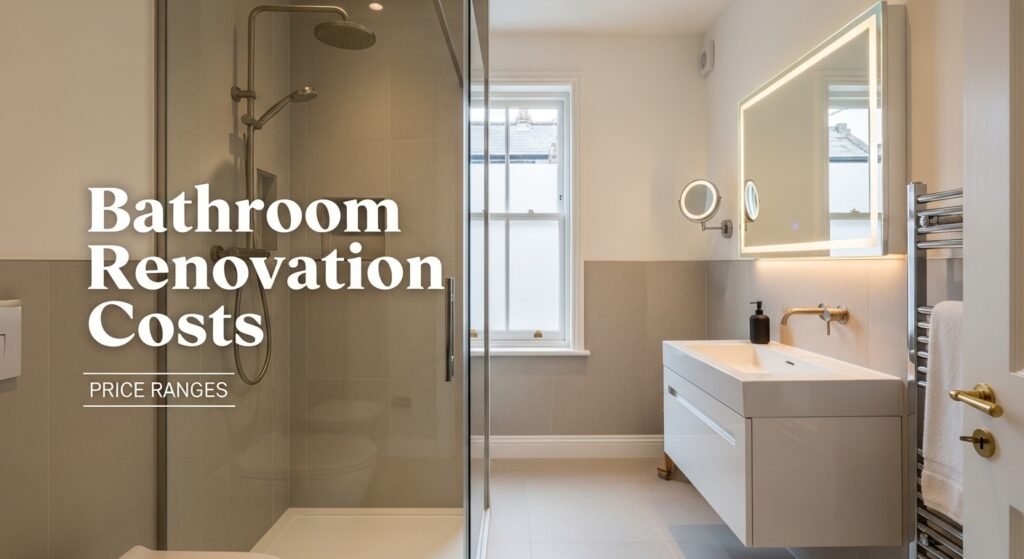
Here’s what most projects in Islington cost:
| Project Type | Typical Cost Range |
| Budget refurb (fixtures only, no layout changes) | £5,500 – £8,000 |
| Mid-range full renovation | £8,000 – £14,000 |
| High-end renovation with premium materials | £14,000 – £22,000+ |
| Ensuite (smaller room, standard spec) | £6,000 – £10,000 |
| WC/cloakroom only | £3,000 – £6,000 |
These figures include labour and standard materials. They exclude VAT, which adds 20% on top for most contractor invoices.
Why Islington Costs More Than the London Average
Inner London boroughs like Islington carry a price premium. According to BuildPartner data, renovating a bathroom in Inner London costs around 7% more than the Greater London average. Contractor day rates in Islington and neighbouring Camden are among the highest in the capital, driven by demand, parking costs, and access challenges in dense residential streets.
What’s Included in a Full Bathroom Renovation
A full renovation covers more than just swapping a toilet and basin. Here’s what the cost typically breaks down into:
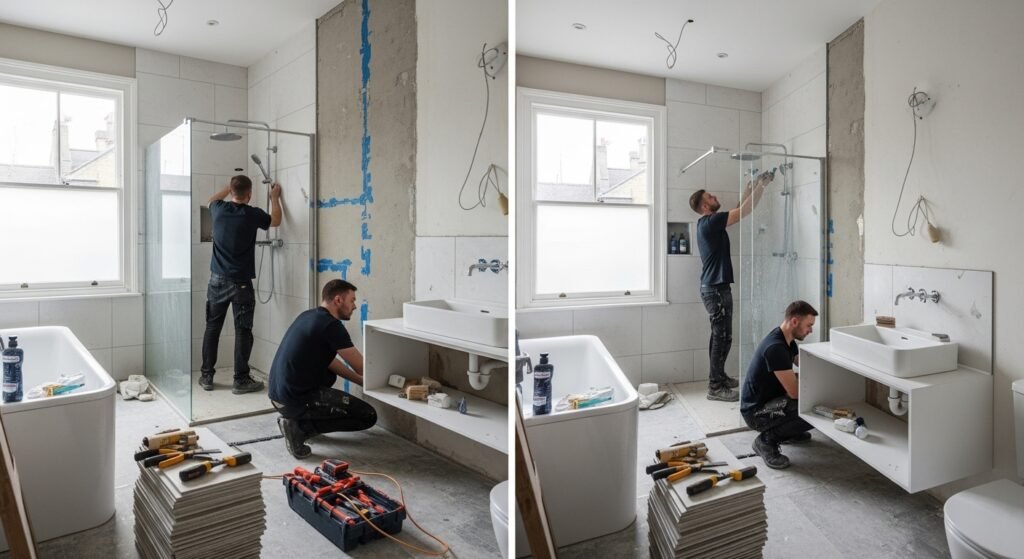
- Strip-out and waste disposal: £300 – £500. Removing your old suite, tiles, and flooring takes 1 to 2 days. Always confirm this is included in your quote, especially when hiring a full refurbishment company.
- Plumbing: £800 – £2,500. Basic re-connection of existing pipework is cheaper. Moving a toilet, shower, or sink to a new position adds a high cost and may require bathroom plumbing work.
- Electrical work: £400 – £900. Includes IP65-rated LED downlights, extractor fan, and a shaver socket. All work must meet regulations, so use qualified electrical work experts.
- Tiling: £600 – £2,000+. Ceramic tiles are cheaper; large-format porcelain or natural stone costs more. Complex layouts like herringbone increase labour time, making bathroom tiling services important.
- Plastering and waterproofing: £400 – £800. Tanking the walls is essential, especially in older Islington properties where damp can be a problem. Proper bathroom tanking systems prevent future issues.
- Bathroom suite (bath, toilet, basin): £500 – £3,000+. A basic suite starts around £500; Mid-range branded suites are popular when paired with modern bathroom vanity unit or Villeroy & Boch run £1,500 to £3,000.
- Shower enclosure and tray: £500 – £2,000. A standard enclosure starts at £500; Walk-in and frameless styles cost more than standard models. Many clients now choose shower installation in Islington services.
- Fixtures and brassware: £300 – £1,500. Brushed brass or matte black finishes cost significantly more than chrome.
The Islington Property Factor
Most properties in Islington are Victorian or Edwardian terraces and flat conversions. This directly affects renovation costs in a few ways.
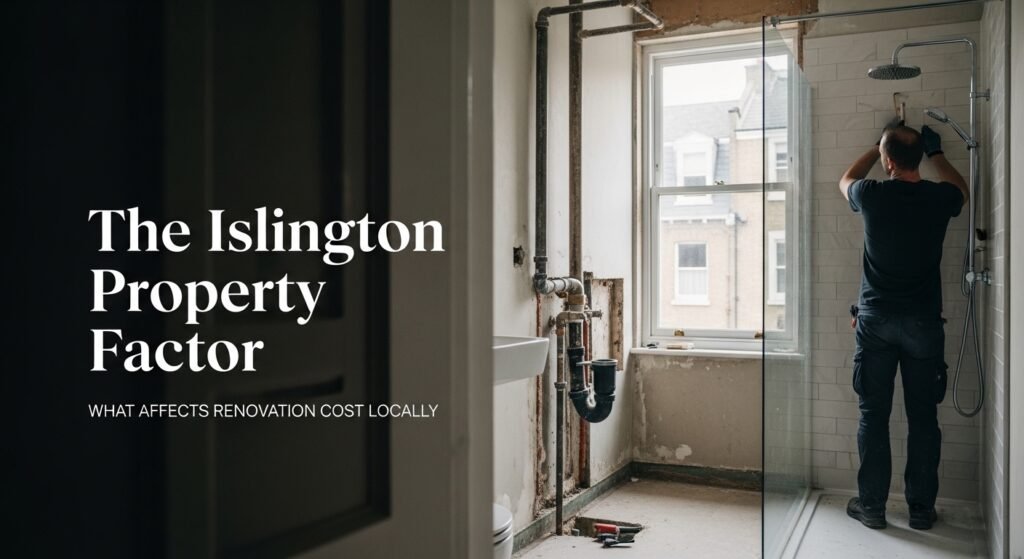
Old plumbing infrastructure. Homes built before 1960 often have lead pipes or outdated cast-iron waste systems. Replacing these adds £500 to £2,000 to a project, depending on how much of the pipework needs updating. Old plumbing infrastructure often needs updating, making pipework replacement services necessary.
Conservation areas and listed buildings. Islington has 28 conservation areas, covering streets around Canonbury, Barnsbury, and Highbury. Internal renovations usually don’t need planning permission, but structural changes to listed buildings do. Always check with the London Borough of Islington planning department before starting work.
Flat conversions. Many Islington homes are split into flats. If you’re renovating in a leasehold property, you may need written consent from the freeholder or managing agent before work begins. This is standard for plumbing and structural changes.
Hard water. Like most of London, Islington receives hard water from Thames Water. Limescale builds up faster on fixtures and glass screens. Many homeowners choose scale-resistant coatings or install an inline water softener during renovation, adding £300 to £800 to the project. Hard water can damage fittings over time, so better-quality fixtures and professional plumbing heating services help long term.
Labour Costs in Islington
Labour is the highest single cost in any bathroom renovation. In Islington, expect to pay:
- Bathroom fitter: £200 – £350 per day
- Plumber: £250 – £400 per day
- Electrician: £250 – £350 per day
- Tiler: £180 – £300 per day
A full renovation typically requires 8 to 14 working days for a standard bathroom. Add 2 to 3 days if you’re moving the toilet or shower position, or if floor-to-ceiling tiling is involved. Many homeowners request quotes from experienced Islington builders and specialist fitters before starting.
Some contractors work as a team and quote a fixed project price, which is often easier to manage. Always get at least three quotes, and check that the contractor is registered with a recognised trade body like the Federation of Master Builders.
Hidden Costs Most Homeowners Forget
Most renovation quotes cover the visible work. What they often don’t cover is what’s discovered once the walls and floor come up. In Islington’s older housing stock, unexpected findings are common rather than rare.
Asbestos removal. Properties built before 1985 may contain asbestos in floor tiles, artex ceilings, or pipe lagging. If found, it must be removed by a licensed contractor before any other work continues. Asbestos removal for a single bathroom typically costs £500 to £1,500, depending on the type and volume of material.
Rotten joists or subfloor damage. Victorian bathrooms in Islington often have timber subfloors beneath old vinyl or tiles. Water damage over the years of use can rot the joists underneath. Water damage beneath floors may also require new subfloors and floor levelling work. Replacing damaged joists adds £400 to £900, and the problem is invisible until the floor comes up.
Upgrading the consumer unit. If your property has an outdated fuse board, you may need consumer unit upgrades before new bathroom electrics are installed. A new consumer unit costs £600 to £1,200 fitted. This isn’t always required, but it comes up more often in older flats.
Damp treatment. Ground-floor and lower ground-floor flats in Islington are particularly prone to rising damp. If your contractor finds evidence during strip-out, treating the walls before re-lining adds £300 to £800 to the project.
Building regulations sign-off. Electrical work in bathrooms requires sign-off under Part P of the Building Regulations. Most registered electricians handle this as part of their fee, but always confirm it is included. If you later sell the property, solicitors will ask for this documentation.
A sensible rule: add a contingency of 10 to 15% to whatever your quoted project cost is. On a £10,000 renovation, that means holding £1,000 to £1,500 in reserve. If nothing goes wrong, you keep it. If something does, you’re not stopping the job mid-way.
What a Real Bathroom Renovation Budget Looks Like in Islington
To make the numbers concrete, here’s how a typical mid-range renovation budget breaks down for a standard bathroom in an Islington Victorian terrace. The room is approximately 5 square metres, with no layout changes.
| Stage | Estimated Cost |
| Strip-out and waste disposal | £400 |
| First fix plumbing (like-for-like) | £900 |
| First fix electrics | £500 |
| Boarding and waterproofing | £600 |
| Plastering | £400 |
| Floor and wall tiling (ceramic, 20m²) | £1,200 |
| Bathroom suite (mid-range branded) | £1,800 |
| Shower enclosure and tray | £900 |
| Second fix plumbing and electrics | £700 |
| Brassware and accessories | £500 |
| Finishing and snagging | £300 |
| Total (ex. VAT) | £8,200 |
| Total (inc. VAT at 20%) | £9,840 |
This is a realistic number for a competent mid-range renovation in Islington using a qualified contractor. It doesn’t include underfloor heating, premium tiles, or any unexpected structural issues. Add those and you’re looking at £11,000 to £14,000.
Choosing Materials: What Each Tier Gets You
Material choice is where the biggest variation in cost happens, and where most people either overspend or underspend relative to what the space actually needs.
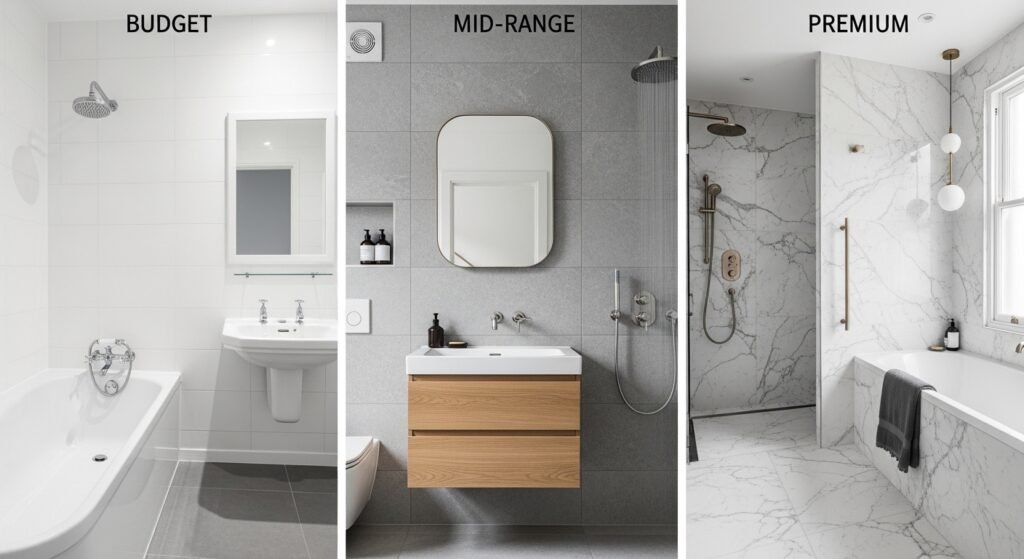
Budget Tier (£500 – £1,500 on materials)
At this level, you’re working with entry-level suites from retailers like B&Q’s Bathrooms range or Screwfix, basic chrome brassware, and standard ceramic wall tiles at £15 to £25 per square metre. The finish is functional and clean, but won’t hold up as well to daily use or hard water over time. Suitable for rental properties or a bathroom you plan to sell with the house rather than live in long-term.
Mid-Range Tier (£1,500 – £3,500 on materials)
This is the sweet spot for most Islington homeowners. Branded suites from suppliers like Burlington, Roca, or Ideal Standard sit in this range. Tiles move up to porcelain or stone-effect at £40 to £80 per square metre. Brassware gets more durable internals, which matters in a hard water area. A mid-range finish looks good, lasts 15 to 20 years with normal maintenance, and photographs well if you ever sell. Mid-range projects usually include branded suites, porcelain finishes, and upgraded bath installation services.
Premium Tier (£3,500 – £8,000+ on materials)
At this level you’re specifying from brands like Duravit, Hansgrohe, or Fired Earth. Large-format porcelain slabs (600x1200mm or larger), walk-in wet rooms, freestanding baths, and brushed brass or unlacquered bronze brassware. Underfloor heating becomes standard. This finish is appropriate for a main bathroom in a high-value Islington townhouse, where the renovation needs to match the overall quality of the property. Premium bathrooms may feature bespoke finishes, designer brassware, and electric underfloor heating wiring.
One practical point: don’t mix tiers carelessly. A premium freestanding bath fitted with budget chrome taps looks worse than a cohesive mid-range bathroom. Match the specification across all elements.
How to Reduce Your Renovation Cost Without Cutting Corners
There are sensible ways to bring costs down without ending up with a bathroom you’ll regret in two years.
- Keep the existing layout. Moving a toilet or shower to the other side of the room can add £1,000 to £3,000 in plumbing costs. If you keep all fixtures in their current positions, you cut labour and materials significantly. Keeping the same layout can save money and reduce complex bathroom remodelling work.
- Choose ceramic over natural stone. Good-quality ceramic or porcelain tiles cost £25 to £60 per square metre. Natural stone, like marble or slate, starts at £80 and can reach £200 per square metre.
- Buy your own fixtures. Many contractors add a markup of 15 to 25% on fixtures they supply. Buying your suite, taps, and accessories yourself from suppliers like Victorian Plumbing or Bathstore can save you several hundred pounds.
- Book off-peak. Contractors in Islington tend to be busiest from April to October. Booking work for January to March often gives you better availability and more room to negotiate on price.
- Don’t over-specify a small room. A £3,000 freestanding bath looks wrong in a 4 square metre bathroom. Match the spec to the space.
How Long Does a Bathroom Renovation Take in Islington?
A standard full bathroom renovation takes 8 to 14 working days. Here’s a rough timeline:
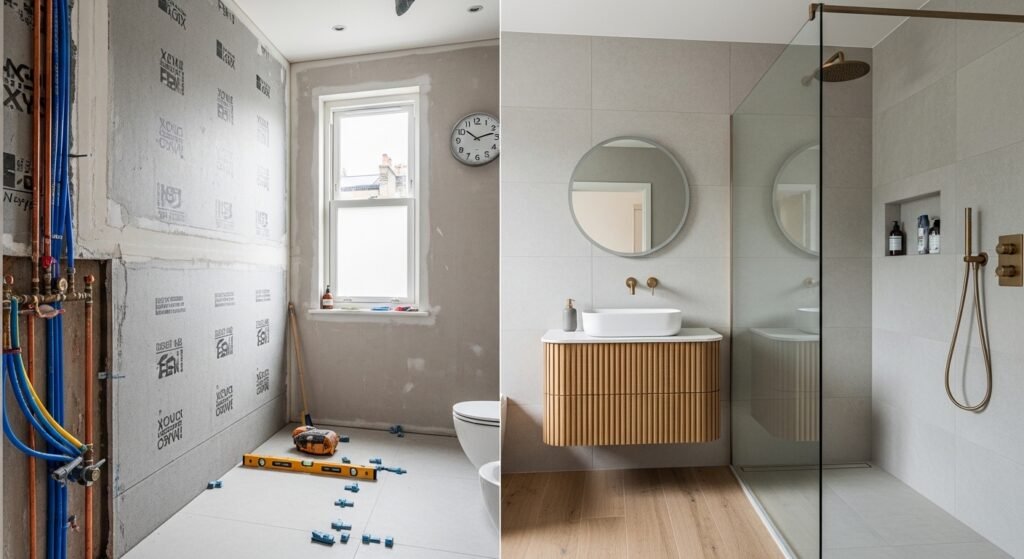
- Day 1 to 2: Strip-out and waste disposal
- Day 2 to 4: First fix plumbing and electrics
- Day 4 to 6: Boarding, waterproofing, and plastering
- Day 6 to 10: Tiling
- Day 10 to 12: Second fix plumbing and electrics (fitting suite and fixtures)
- Day 12 to 14: Finishing, snagging, and cleanup
Complex projects with new layouts or floor-to-ceiling tiling can run to 3 to 4 weeks. If you’re in a leasehold flat, building regulations may restrict working hours, typically between 8 am and 6 pm Monday to Friday. Larger projects that involve multiple trades or plastering decorating work may take longer.
FAQ
Q: Is £8,000 enough for a bathroom renovation in Islington?
£8,000 is on the lower end for a full renovation in Islington. It’s achievable if you keep the existing layout, use mid-range fixtures, and choose ceramic tiles. However, if your property has old plumbing that needs updating or you need electrical work beyond a basic fit, costs can push closer to £10,000 to £12,000.
Q: Do I need planning permission to renovate my bathroom in Islington?
Most bathroom renovations in Islington don’t require planning permission because they count as internal alterations. However, if your property is listed or sits within a conservation area, structural changes may need consent from the London Borough of Islington. If you’re in a leasehold flat, you’ll also need written approval from your freeholder before starting work.
Q: How do I find a reliable bathroom fitter in Islington?
Check the Federation of Master Builders (FMB) directory, Checkatrade, or TrustMark for vetted tradespeople with verified reviews. Always get three written quotes, confirm the contractor carries public liability insurance, and make sure any electrical work is carried out by a Part P-registered electrician.
Q: What adds the most cost to a bathroom renovation in Islington?
Moving plumbing is the single biggest cost driver. Relocating a toilet or shower can add £1,000 to £3,000. After that, premium tiles and brassware, underfloor heating, and bespoke joinery like floating vanity units all push the budget up significantly.
Q: How much does an ensuite bathroom renovation cost in Islington?
An ensuite renovation in Islington typically costs £6,000 to £10,000 for a standard finish. En-suites are smaller, which reduces material costs, but they still require the same plumbing, electrical, and waterproofing work as a full bathroom, so labour costs don’t drop proportionally.
Q: Does a bathroom renovation add value to a property in Islington?
Yes. A well-executed bathroom renovation in Islington typically adds more value than it costs, given the borough’s strong property market. A dated bathroom can reduce a buyer’s offer; a modern, clean finish removes that objection. The return depends on the quality of the finish relative to the property value, but mid-range renovations generally deliver positive ROI in this area.
Conclusion
A bathroom renovation in Islington costs between £8,000 and £15,000 for most homeowners tackling a full refurbishment. Budget projects start around £6,000 if you keep the existing layout and choose standard materials. High-end projects with premium tiles, bespoke vanity units, and luxury fixtures can easily reach £20,000 or more. The main cost drivers are labour rates, plumbing complexity, and material choices.
The main cost drivers are labour rates, plumbing complexity, and material choices. Working with trusted local renovation experts helps avoid delays, poor workmanship, and hidden costs. Islington’s Victorian property stock and conservation area rules add additional considerations that don’t apply in newer builds or outer boroughs.
Get at least three written quotes, confirm what is and isn’t included in each, and check your contractor’s credentials before committing to any work.

Tilly Bani is a renovation and roofing specialist with over 15 years of experience in construction and property refurbishment across North London. He specialises in roofing, structural repairs, and full home renovations, helping homeowners improve property value and safety.