
| Quick Answer In most of Islington, replacing sash windows with a different material, style, or appearance requires planning permission because Article 4 Directions apply in 40 of the borough’s 42 conservation areas. Many owners first compare sash window repair options. Like-for-like repairs using matching timber and the same glazing profile generally do not. Replacement with matching timber window frames may be approved, but uPVC is almost never accepted on street-facing elevations. For most period properties, repair and draught-proofing costs less and avoids the planning process entirely. |
Introduction
Sash windows on an Islington Victorian terrace look straightforward until something goes wrong. The frames are swollen, the cords are snapped, or the single glazing is doing nothing against the winter cold. Many homes start with expert sash window repair services. Then the questions start: Can you replace them? Do you need permission? Can you get double glazing? What does the council actually require?
Islington has some of the most tightly controlled conservation rules in London. With 42 designated conservation areas and Article 4 Directions removing permitted development rights in 40 of them, the borough treats its Georgian and Victorian streetscapes as a planning priority. This guide explains exactly when you need permission, what the council will and will not accept, and what repair, replacement, and glazing upgrade options are open to you.
Why Islington’s Conservation Rules Are So Restrictive
Islington Council has 42 designated conservation areas. These include Barnsbury, Canonbury, Highbury, Clerkenwell, and Duncan Terrace/Colebrooke Row, among many others. Together, they cover a substantial portion of the borough’s residential streets. Many residents seek advice from trusted Islington builders.
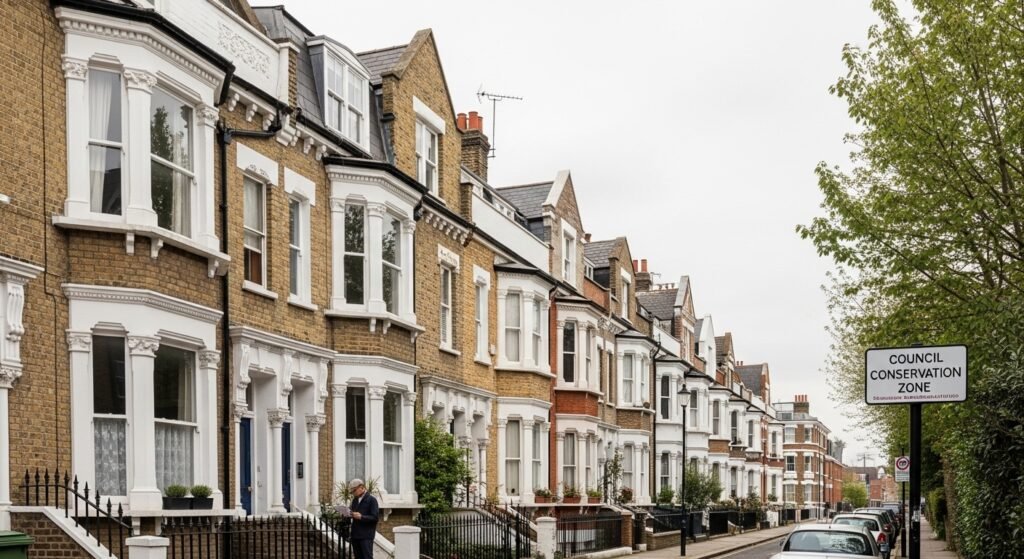
Article 4 Directions are in place in 40 of those 42 areas. An Article 4 Direction removes permitted development rights, meaning changes that would normally require no planning approval elsewhere in England do require a formal application in Islington. Replacing your windows falls squarely within that category.
The practical effect for homeowners is this: in most of Islington, any change to a window that alters its appearance, material, or style on the front elevation, or on a side elevation visible from the street, requires planning permission. This is not a rule that applies only to listed buildings. It applies to the vast majority of ordinary houses and flats across the borough.
There are approximately 4,500 nationally listed buildings in Islington as well. If your property is listed, Listed Building Consent (LBC) is required for any material change to windows or doors, regardless of whether it is in a conservation area. Altering listed windows without consent is a criminal offence.
What Requires Planning Permission in Islington
Islington Council is explicit about which window changes trigger a planning requirement. You need householder planning permission if the proposed work falls into any of these categories:
- The replacement window is made from a different material (for example, swapping timber for uPVC), Most period homes keep traditional timber sash styles.
- The window differs in appearance from the existing (for example, replacing a sash with a casement, or changing the glazing bar pattern)
- The window is a different size from the existing one
- Your property sits within an Article 4 Direction area, and the change affects the front or a street-visible side elevation
For flats, the rules are stricter still. Planning permission is needed for any window replacement that changes material, size, or appearance, even in areas without an Article 4 Direction.
The implications are direct. A standard uPVC sash window, however closely it imitates timber in profile, is made from a different material and will not get planning permission in a conservation area. A casement window to replace a sash, even in timber, differs in appearance and requires approval that it will not receive in an Islington conservation area. A timber sash matching the original profile and glazing bar arrangement has a strong chance of approval on the basis of like-for-like replacement.
What Does NOT Require Planning Permission
Repair work that preserves the existing character of the windows does not require planning permission. This makes specialist Camden restoration work increasingly popular. This covers:
- Replacing sash cords with new cords of the same material
- Re-glazing broken panes with matching glass
- Repairing sections of rotten timber by piecing in matching timber of the same species and dimensions
- Repainting
- Draught-proofing using compression or wiper seals fitted to the existing frame and sashes
Historic England confirms this directly in its guidance on modifying historic windows. Repairs that do not change the appearance or character of the window do not need listed building consent or planning permission, even on listed buildings.
This matters practically. If your sash windows are draughty, stiff, rattling, or difficult to operate, there is a substantial repair and improvement programme available to you without any planning involvement at all.
The Case for Repair: What a Full Sash Window Overhaul Covers
A full sash window overhaul is the standard approach for period properties in Islington and is far more comprehensive than most homeowners expect.
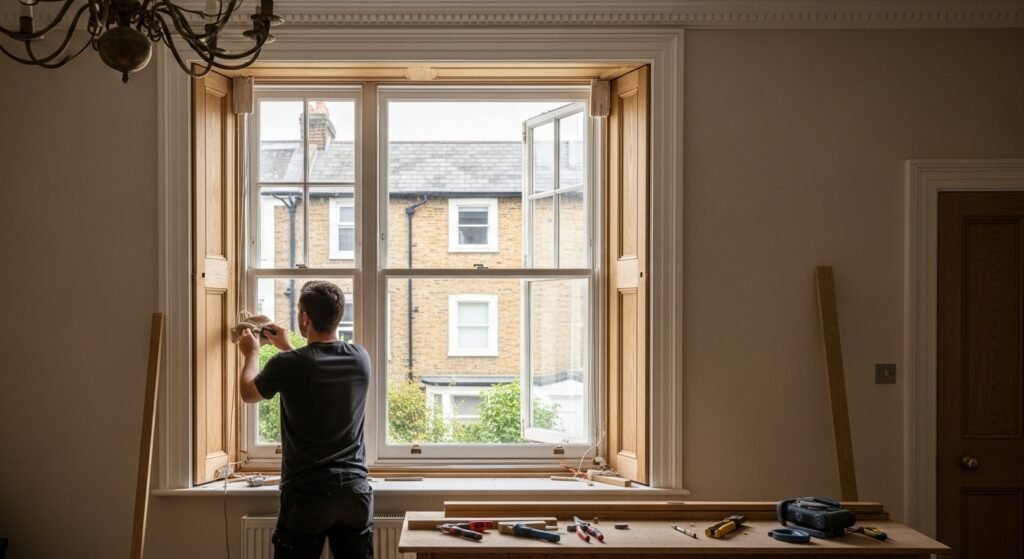
A specialist will typically carry out the following in a single visit:
- Strip the window of excess paint layers, causing the sashes to bind
- Replace broken or worn sash cords on both the upper and lower sash. Many households also update timber front doors.
- Service or replace the pulleys in the sash box
- Piece in new timber to replace any sections with active wet rot
- Install new staff bead and parting bead with integrated compression seals for draught-proofing
- Re-glaze any cracked or broken panes with matching glass. Some owners pair repairs with decorating services.
- Re-hang the sashes so they run freely and counterbalance correctly
- Apply a primed or painted finish ready for decoration
The result is a window that operates as it was designed to, with the draught-proofing performance of a well-fitted modern window.
Draught-Proofing: The Biggest Thermal Gain for the Least Disruption
Of all the improvements available to Islington’s sash windows, draught-proofing delivers the best ratio of performance improvement to cost and planning risk. Homes also benefit from added soundproofing upgrades. A draughty sash window loses heat through the gaps between the sashes and the frame, between the sashes themselves at the meeting rail, and at the bottom of the lower sash. Compression seals fitted into machined channels in the staff bead and meeting rail eliminate these gaps without altering the appearance of the window.
Historic England notes that draught-proofing provides the largest energy saving for the lowest environmental and financial cost among all available window upgrades. It also requires no planning permission, even on Grade I listed buildings.
Cost for draught-proofing and overhaul on a standard Islington Victorian sash window runs approximately £400 to £550 per window, depending on condition and size۔
Glazing Options in Islington’s Conservation Areas
This is where the rules become nuanced and depend on whether the property is listed, unlisted in a conservation area, or on a rear elevation not visible from the street.
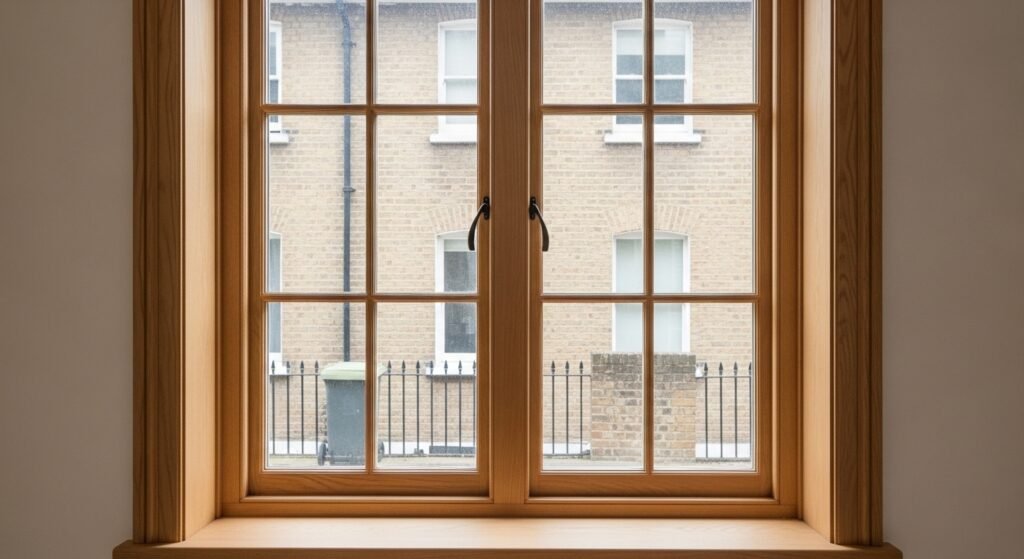
Single Glazing Retained
On the front elevation of an unlisted property in an Islington conservation area, the conservation officers will typically expect single glazing to remain on any replacement window. The slim profile of original single glazing is a defining part of the visual character of Georgian and Victorian sash windows. Standard double-glazing units (typically 24mm to 28mm thick) cannot be accommodated in historic sash frames without rebating out the timber and thickening the glazing bars, which destroys the fine proportions of the original.
Slimline Double Glazing in Existing Sashes
Where the existing sash is in good condition and the frame has sufficient depth, slimline double-glazed units can sometimes be retrofitted into the original sash. Many homes compare efficient London glazing upgrades. This requires a minimum of around 40mm of depth in the sash for a 20mm unit. The units use argon fill and low-E glass to achieve a U-value significantly better than single glazing.
In Islington’s conservation areas, this approach is more likely to be approved where it does not change the external appearance of the window. The slim profile avoids the sightline problem of standard double glazing. Specialists in Islington have achieved council sign-off on this approach, though it is done case by case. Budget approximately £680 to £1,280 per window for the glazing work, in addition to the overhaul cost.
New Replacement Sashes with Slim Double Glazing
Where the original sashes are beyond reasonable repair, replacement sashes manufactured to match the original profile and fitted with slim double-glazed units can be installed in the existing frame. This route suits larger Angel renovation projects. This is the preferred approach for many Islington conservation area properties. It preserves the original box frame (where it is in good condition), uses matching timber species and profiles, and achieves measurably better thermal performance.
New replacement double-glazed sashes in the existing frame cost approximately £900 to £1,300 per window pair, fitted. This includes draught-proofing of the frame as part of the installation.
Secondary Glazing: The Conservation Officer’s Preferred Solution
Secondary glazing, a separate internal panel of glass fitted within the window reveal on the room side of the existing window, is the approach most consistently supported by Islington conservation officers and by Historic England for the most sensitive properties.
Because secondary glazing is installed internally and does not alter the external fabric or appearance of the building, it is typically exempt from planning permission. It is reversible. It does not affect the original window frames or glass. Historic England’s guidance states that secondary glazing can reduce heat loss through a window by over 60% while leaving the historic fabric entirely untouched.
For listed buildings in Islington where any material change to windows requires LBC, secondary glazing is often the only glazing upgrade that proceeds without a complex consent process. For unlisted conservation area properties where the homeowner wants to keep the original single-glazed character intact on the front elevation, secondary glazing improves thermal and acoustic performance without the planning exposure of double glazing.
The main limitation is aesthetic: secondary glazing panels are visible internally. High-quality systems with slim aluminium or timber subframes are far less obtrusive than older systems, and vertically sliding secondary panels can be designed to mirror the operation of the sash window itself. Cost ranges from approximately £200 to £500 per window for supply-only systems to £400 to £900 per window installed by a specialist.
Vacuum Glazing for Listed Buildings
Vacuum glazing (brands include Fineo and LandVac) uses two panes of glass with the air evacuated between them rather than gas-filled, reducing the unit to approximately 6mm total thickness. This is thin enough to fit in original historic sash profiles without rebating.
Vacuum glazing has been approved for use by Historic England. Premium properties often include energy efficiency works. It achieves a U-value comparable to standard double glazing from a unit barely thicker than single glass. For Grade II listed buildings in Islington, where conventional double glazing would not receive LBC, vacuum glazing with its minimal visual impact has a growing track record of successful applications.
It is a premium option. Supply and installation costs run approximately £500 to £900 per pane, depending on size, substantially more than standard slim double glazing. Listed Building Consent is still required because it constitutes a material alteration to the windows, but the argument for approval is considerably stronger given the minimal visual impact.
Cost Comparison: Repair vs Replacement in Islington
| New replacement double-glazed sashes in the existing frame | Typical Cost per Window (2026, London) |
|---|---|
| Draught-proofing only | £400 to £550 |
| Full overhaul including draught-proofing | £600 to £900 |
| Slimline double glazing into existing sashes | £980 to £1,480 |
| New replacement double-glazed sashes in existing frame | £900 to £1,300 |
| Full frame and sash replacement (matching timber) | £1,500 to £2,500 |
| Secondary glazing (installed) | £400 to £900 |
| Vacuum glazing (listed buildings) | £500 to £900 per pane |
For a typical Islington Victorian terrace with six sash windows on the front and rear elevations, a full overhaul including draught-proofing across all windows typically costs £3,600 to £5,400. Whole-house projects may also involve flooring upgrades. New replacement double-glazed sashes across the same windows would run £5,400 to £7,800, plus planning fees where required.
How to Apply for Planning Permission in Islington
If your proposed work requires planning consent, here is the process:
The Islington planning portal accepts householder planning applications online. The application fee for householder works as of 2026 is £258. You will need to provide existing and proposed elevation drawings, a location plan, and a design and access statement explaining how the proposed windows respect the conservation area character. Many owners hire skilled property contractors.
For listed buildings, a separate Listed Building Consent application runs concurrently. There is no fee for LBC.
Islington’s conservation officers carry significant weight in window applications. Applications that specify timber sash windows matching the original profile, glazing bar arrangement, and proportions of the existing windows, with appropriate glass type, have a high approval rate. Applications to replace sash windows with uPVC on the front elevation of a conservation area property are almost never approved.
Processing time is typically eight weeks from validation for straightforward applications.
If you are uncertain whether your proposed work requires permission, Islington offers a pre-application advice service. A written response typically takes four to six weeks and costs £150 to £300 for a householder query. It is money well spent before commissioning work that may require retrospective application or enforcement action.
FAQ
Q: Can I replace sash windows with uPVC in an Islington conservation area?
No, in almost all cases. uPVC is a different material from the original timber, which immediately triggers the need for planning permission in Islington’s Article 4 conservation areas. Conservation officers will not approve uPVC on the front elevation of a period property because it is inconsistent with the historic character of the streetscape. The only situations where uPVC might be considered are on hidden rear elevations with no public visibility, and even then, specialist timber or timber-effect heritage windows are the recommended specification.
Q: Does draught-proofing a sash window need planning permission in Islington?
No. Draught-proofing using compression or wiper seals fitted to the existing frame and sash is a repair and maintenance activity that does not alter the appearance of the window. It requires no planning permission in Islington’s conservation areas and no Listed Building Consent on listed buildings. It is one of the few energy efficiency improvements that is unrestricted in all heritage contexts.
Q: What glazing can I get approved in an Islington conservation area?
It depends on the property’s status and the elevation. On an unlisted property, slimline double-glazed units retrofitted into the existing sashes, or new replacement sashes with slim units in the existing frame, can receive planning approval where the external appearance is not materially changed. Secondary glazing requires no planning permission as it is installed internally. On listed buildings, Listed Building Consent is needed for any glazing change. Vacuum glazing (approximately 6mm thick) has the strongest case for listed building approval because it matches the profile of single glazing visually.
Q: How long do repaired Victorian sash windows last compared to replacements?
Well-repaired original Victorian sash windows in good structural timber can last another 50 to 100 years with periodic maintenance. Original Victorian sashes were often made in old-growth, slow-grown timber that is denser and more durable than modern softwood. A full overhaul, followed by repainting every five to seven years, is all they typically need. New replacement timber sash windows made from modern softwood will last 25 to 40 years with comparable maintenance. The repair route preserves more of the original material, which is what Islington conservation policy exists to protect.
Q: What happens if I replace windows in an Islington conservation area without permission?
Replacing windows without the required planning permission in a conservation area is a breach of planning control. Islington Council can issue an enforcement notice requiring the work to be reversed and the original windows reinstated, at the homeowner’s cost. For listed buildings, unauthorised alteration is a criminal offence, not just a planning breach, and can result in prosecution. Enforcement action is particularly likely in Islington because window replacement on street-facing elevations is visible to conservation officers on routine monitoring visits.
Q: Is secondary glazing better than double glazing for an Islington sash window?
For the most sensitive front elevations in Islington’s conservation areas, secondary glazing is often the more practical choice because it requires no planning permission, preserves the original window intact, and can reduce heat loss by over 60%. It does not alter the external appearance of the property at all. Double glazing in slimline or slim double-glazed sash form offers better performance per unit and no internal visual obstruction, but it requires planning approval and may not be accepted on all properties. For listed buildings, secondary glazing is frequently the only approved option.
Conclusion
Sash window repair and replacement in Islington requires understanding two sets of rules simultaneously: the planning rules that determine what you can do, and the technical options that determine how to do it within those rules.
In most of Islington, the Article 4 Directions in its conservation areas mean that changing your windows requires planning permission the moment you change the material, appearance, or style. That rules out uPVC categorically and requires any replacement to match the original timber sash profile closely. It does not rule out double glazing in all cases, but it narrows the options to slimline and slim-unit approaches.
Repair, draught-proofing, and secondary glazing remain available to all Islington homeowners regardless of planning status. Many homes also add period finishing details. For most period properties where the structural timber is sound, this route delivers genuine performance improvements at lower cost and with no planning risk. For windows that are genuinely beyond repair, like-for-like timber replacement with matching slim double glazing, supported by a well-prepared planning application, is the appropriate route.
If in doubt, commission a specialist sash window survey first and seek pre-application advice from Islington’s planning team before commissioning any work.

Tilly Bani is a renovation and roofing specialist with over 15 years of experience in construction and property refurbishment across North London. He specialises in roofing, structural repairs, and full home renovations, helping homeowners improve property value and safety.