
| Quick Answer Yes, professional sash window draught proofing is worth it for North London Victorian homes. Historic England’s research shows it can reduce air infiltration through a sash window by up to 86%. The cost is £250 to £550 per window, this is cheaper than full window frame replacement, attracts 0% VAT as an energy-saving measure, and typically pays back through reduced heating bills within four to five years. It is also the only thermal upgrade available on listed buildings and conservation area properties without planning permission. |
Introduction
If you own a Victorian terrace in Islington, Hackney, Highbury, or Muswell Hill, you will know the feeling. Many period homes also need trusted North London specialists. The heating is on, yet the living room never quite warms up. Some households also upgrade radiator performance. There is a persistent chill that moves when you move. The sash windows rattle in wind. On cold mornings, condensation forms on the glass and at the bottom of the frame.
These are not problems with your heating system. They are the predictable result of original Victorian sash windows that were designed and built without draught-proofing seals, in an era when air infiltration through windows was simply accepted as part of living in a period property.
Sash window draught proofing solves this directly. This guide explains exactly what the process involves, what it costs in North London, how much heat it actually saves, and whether it represents better value than the alternatives.
Why Victorian Sash Windows Are Draughty
Original Victorian sash windows were built with an intentional 2 to 3mm gap between the sashes and the surrounding frame. That is why many homes need Hackney sash repairs. This gap was necessary to allow the sashes to slide freely up and down without binding. It also meant the window was never truly sealed when closed.
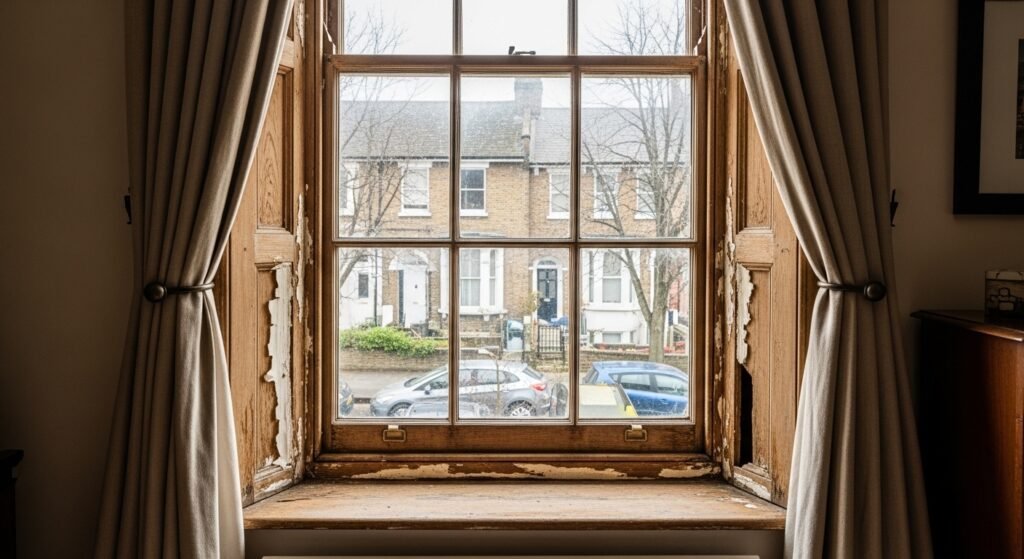
Over 100 to 140 years of use, that gap widens further as timber shrinks and swells with seasonal moisture changes, paint builds up unevenly, and the original putty at the glazing bars dries and cracks. A Victorian sash window that has never been properly maintained has gaps not just at the sides but at the meeting rail where the two sashes meet, at the bottom of the lower sash, and at the top of the upper sash.
One specialist describes the total gap on a typical unmaintained Victorian sash as equivalent to leaving the lower sash open an inch at all times. That framing makes clear why the room never quite gets warm.
The gaps also explain the rattling. Reducing noise can complement soundproofing upgrades. When there is play in the sash within the frame, wind pressure causes the sash to move slightly and vibrate against the parting bead or staff bead. Draught-proofing eliminates the play by creating a fitted seal at every gap, which is why the rattling stops as immediately as the draught does.
What Sash Window Draught Proofing Actually Involves
Professional sash window draught proofing is not a strip of foam applied around the frame. Quality work comes from skilled property specialists. That DIY approach exists, is inexpensive, and degrades quickly as the foam compresses. Professional draught proofing is a machined process.
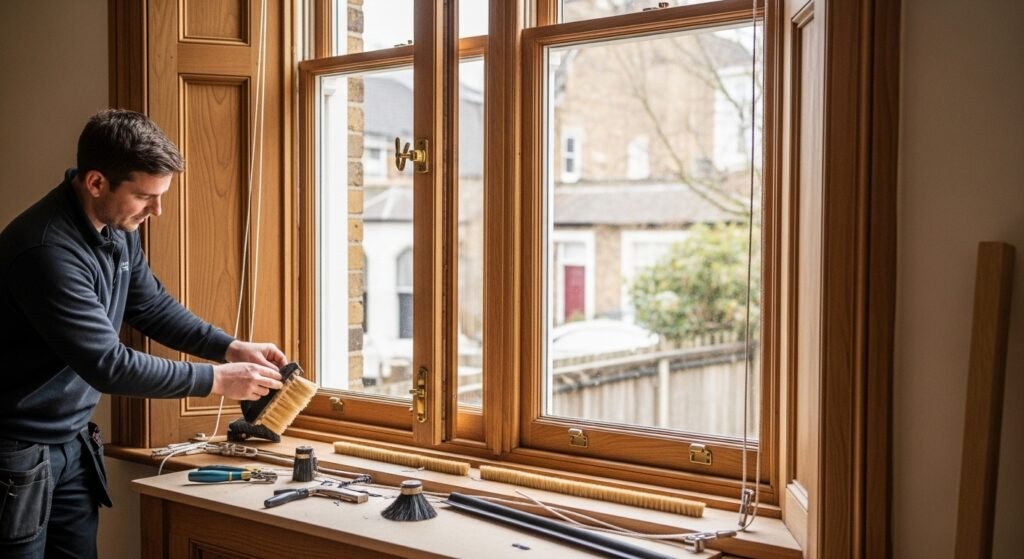
A specialist removes the lower sash entirely from the frame to work on it properly, then the upper sash. Some homes combine repairs with full refurbishment. The following is done to each window:
- The staff bead (the strip of timber that runs down each side of the frame, against which the lower sash closes) is removed and replaced with a new one that has a brush pile seal integrated into a machined channel. The brush pile compresses when the sash closes and springs back when it opens, creating a continuous seal along both sides of the lower sash without impeding movement.
- The parting bead (the strip of timber between the upper and lower sash) is removed and replaced with a new one carrying integrated seals. This seals the channel that the upper sash runs in.
- The meeting rail, where the top rail of the lower sash meets the bottom rail of the upper sash when both are closed, is fitted with wiper or compression seals that create a draught-free joint.
- The bottom of the lower sash is fitted with a brush pile or wiper seal against the sill.
- Sash cords are replaced at the same time if they are worn, frayed, or broken, and the pulleys are lubricated or replaced.
- Both sashes are re-hung so they slide freely, counterbalance correctly, and stay in position when left open at any height.
The completed window closes with a noticeably snugger feel, slides with light pressure, and produces no rattle in wind. The draught-proofing seals are invisible when the window is closed and visible only as neat strips at the edges when the sash is open.
The Evidence on Heat Savings
The thermal performance of draught-proofed sash windows is backed by research rather than just by the companies selling the service.
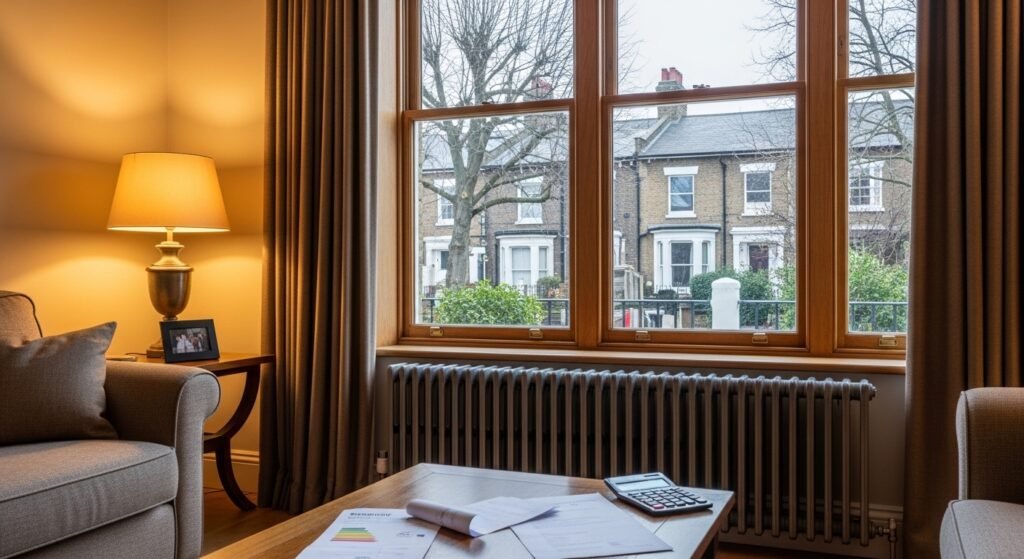
Historic England’s guidance states that air infiltration through a sash window in good condition can be reduced by as much as 86% by adding professional draught-proofing. The Building Research Establishment tested the air leakage reduction from professional draught-proofing at over 50%, and energy savings improved by over 25% per window.
To put this in context: windows account for approximately 18 to 20% of heat loss in an average UK home, and most of that loss is through air gaps rather than through the glass itself. This is the key counterintuitive point about Victorian sash windows. The popular assumption is that single-glazed windows lose heat primarily through the cold glass. In reality, a well-fitted single-glazed window with good seals loses relatively little heat through conduction. It is the gaps, not the glass, that are the main problem.
The Energy Saving Trust calculates that draught-proofing all the single-glazed sash windows in a typical house saves approximately 630 kWh of energy per year, equivalent to around £45 to £97 per year at current energy prices, depending on the fuel type and tariff. For a larger North London Victorian terrace with six to ten sash windows across front and rear elevations, the annual saving at the upper end of this range puts the payback period at four to five years on a typical installation cost.
What It Costs in North London
Professional sash window draught proofing in North London costs £250 to £550 per window for a standard Victorian box sash. This reflects the London labour premium of approximately 20 to 30% above the national average. The cost includes the overhaul (cord replacement, pulley servicing, re-hanging), the installation of new beads with integrated seals on both sashes, and leaving the windows ready for decoration.
A typical North London Victorian terrace with eight sash windows on the front and rear elevations would cost £2,000 to £4,400 to draught-proof across all windows. Most specialists offer volume pricing, which brings the per-window cost closer to the lower end of the range when several windows are done in a single visit. Larger homes often pair jobs with painting services.
Draught-proofing currently attracts 0% VAT as an energy-saving material under UK government policy. This applies to the materials and installation of draught-proofing seals. Other elements of the overhaul (cord replacement, pulley work) are subject to 20% VAT, so confirm with the specialist exactly what proportion of the quote is zero-rated before comparing prices.
The 0% VAT status represents a meaningful cost saving. On a £400 draught-proofing job, 20% VAT would add £80. Over an eight-window project, that is a saving of up to £640.
Draught Proofing vs the Alternatives
This is the central question for most North London Victorian homeowners. Is draught-proofing the right investment, or should you spend more and get double glazing, secondary glazing, or full window replacement?
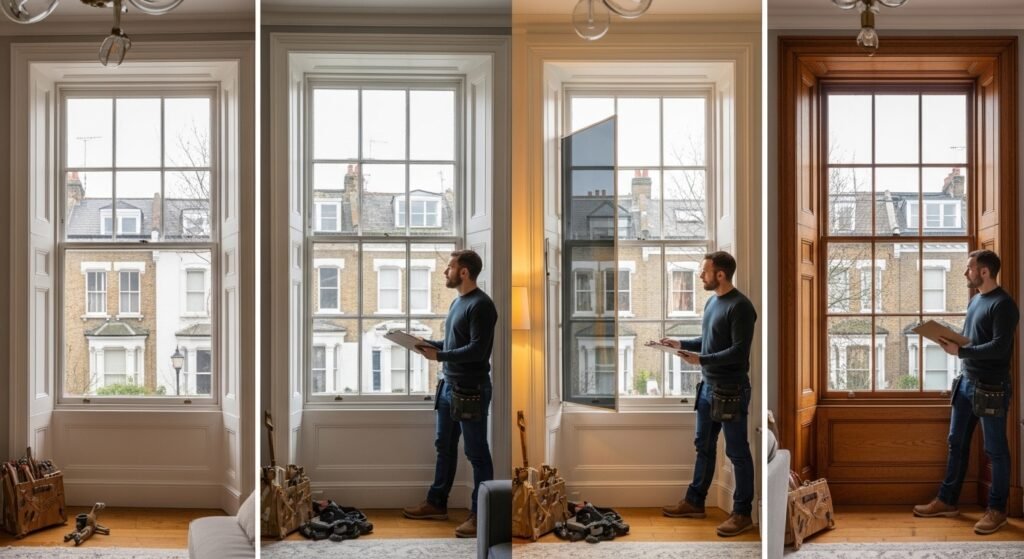
Draught Proofing Alone
Cost: £250 to £550 per window. No planning permission needed anywhere. Reduces air infiltration by up to 86%. Payback in four to five years from energy savings. Leaves the original window completely intact.
This is the correct starting point for any Victorian sash window that has sound structural timber and functional sashes. The ongoing debate about whether period homes should have double glazing becomes less urgent once the draught gaps are sealed, because it is the air infiltration rather than the glazing U-value that is responsible for most of the discomfort and heat loss.
Draught Proofing Plus Slimline Double Glazing
Cost: £1,000 to £2,000 per window combined. Planning permission required in most of Islington, Hackney, and Camden’s conservation areas for front elevations. Improves both the air sealing and the thermal conductance of the glass. Payback period extends to eight to twelve years from energy savings alone.
This combination makes sense for rear elevations where planning is less restrictive, for windows in rooms where acoustic performance matters (a North London Victorian terrace on Upper Street or Seven Sisters Road benefits substantially from double glazing), and for homeowners planning to stay in the property long-term. Rear rooms may also benefit from extra natural light.
Secondary Glazing
Cost: £400 to £900 per window installed. No planning permission required anywhere, including listed buildings. Historic England’s research shows secondary glazing with Low-E coating can reduce heat loss through the window as a whole by over 60%. Does not alter the external appearance of the property.
Secondary glazing is the right choice for listed buildings in North London, where any material change to windows requires Listed Building Consent, and for conservation area front elevations where slimline double glazing has not been approved. It provides a bigger thermal improvement than draught-proofing alone at a higher cost, but without the planning risk.
Full Window Replacement
Cost: £1,500 to £2,500 per window in like-for-like timber. Planning permission required for any change of material or appearance in Islington, Camden, Hackney, and Haringey conservation areas. uPVC is not approved on conservation area properties. Payback purely from energy savings does not realistically occur within the typical ownership period of a property.
Full replacement is justified when the structural frame is beyond repair or when a previous replacement used a non-original specification that needs correcting. Severe decay can require wider timber joinery work. For windows where the box frame and structural timber are sound, replacement is significantly more expensive than repair plus draught-proofing and delivers lower long-term satisfaction, as modern replacement windows require replacement again within 20 to 25 years while properly maintained originals can last another century.
Is It Worth It Specifically for North London?
Several factors specific to North London Victorian homes make draught-proofing a particularly strong investment compared to the national average.
Conservation area constraints. The majority of residential North London sits within conservation areas with Article 4 Directions. In Islington, 40 of 42 conservation areas have Article 4 in place. This means double glazing on front elevations requires planning permission that is frequently not granted. Draught-proofing, which does not alter the external appearance of the window, requires no consent anywhere. For homeowners who want thermal improvement but face conservation restrictions on glazing changes, draught-proofing is not just the cheapest option. It is often the only option available without planning exposure.
Acoustic performance. North London is louder than most of the UK. Victorian terraces in Islington back onto rail lines, front onto bus routes, and sit alongside busy streets around Angel, Highbury, and Finsbury Park. The elimination of the gap between the sash and the frame after draught-proofing produces a measurable reduction in ambient noise. This is not soundproofing. It does not eliminate road noise on a busy street. But the absence of rattling sashes and the tighter fit that prevents wind-driven noise through the frame is immediately noticeable, particularly on streets that carry significant traffic.
Hard water and timber preservation. Thames Water’s supply to North London is very hard. Condensation on cold window glass, which then runs onto the timber sill and bottom rail, carries dissolved calcium that accelerates surface rot in unprotected timber. Damaged surfaces may later need wall replastering. A window that is properly draught-proofed and re-corded reduces the temperature differential between the inner and outer faces of the glass, which reduces condensation formation. This is a secondary benefit but a meaningful one for timber preservation in a city with North London’s water chemistry.
Density of period housing. The concentration of Victorian housing in Islington, Hackney, Haringey, and Camden is significantly higher than the national average. Many neighbouring areas use Haringey home services. A draught-proofing specialist operating in North London typically has deep familiarity with the specific window configurations, sash sizes, and conservation area requirements of these boroughs. This local expertise matters for the quality of the work and the accuracy of the specification.
The Payback Calculation for a Typical North London Terrace
Here is a worked example for a standard three-bedroom Victorian mid-terrace in Islington with eight sash windows (four front, four rear).
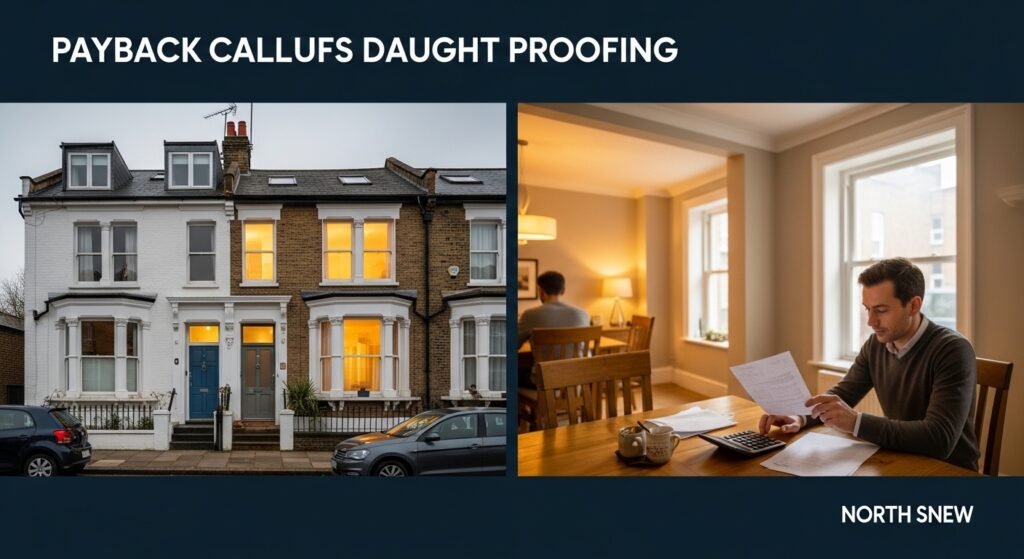
Installation cost at £350 per window, average for a volume job: £2,800 including 0% VAT on draught-proofing materials.
Annual heating savings: Using the Energy Saving Trust’s figure of approximately £45 to £97 per year for a typical house, and adjusting for eight windows with relatively large dimensions typical of a Victorian Islington terrace, a conservative estimate is £60 to £80 per year in direct energy savings.
Payback period from energy savings alone: approximately five to seven years.
This does not account for:
- The comfort improvement from eliminating draughts, which has real value independent of the heating bill
- The noise reduction from eliminating rattling and air gaps
- The timber preservation benefit from reduced condensation
- The contribution to EPC rating, which affects rental compliance and resale value
- The avoidance of larger future repair costs from condensation-related rot at the sill and bottom rail
When these additional benefits are included in the calculation, draught-proofing on a typical North London Victorian terrace is a straightforward decision.
What to Look For in a Sash Window Draught Proofing Specialist
Not all sash window draught-proofing is the same quality, and the difference between a well-executed job and a poor one is visible within a few months.
Ask whether the system uses machined channels or adhesive carriers. Good workmanship often reflects broader company experience. The best systems machine a groove into the bead itself and seat the brush pile carrier into it. This creates a lasting, accurate fit. Adhesive systems that simply stick the pile carrier to the surface of the bead loosen over time and are harder to renew when the seals eventually wear out.
Ask what happens at the bottom of the lower sash. This is the most difficult seal to get right and is where poorly executed jobs most often fail. A good specialist fits a wiper or compression seal to the bottom rail that presses against the sill without impeding the sash’s operation or leaving a visible gap when closed.
Ask whether the cord replacement and overhaul are included. A draught-proofing installation where the sash cords are left in poor condition will not operate smoothly and will loosen the newly fitted seals as the worn cords allow the sash to tip and bind. The overhaul and draught-proofing should be done together.
Ask what the warranty covers and for how long. A quality specialist will guarantee the seals for at least five years. The brush pile itself typically has an effective life of around ten years, after which it can be replaced by fitting new pile into the existing carrier at a fraction of the original installation cost.
FAQ
Q: Will draught-proofing my sash windows make them harder to open?
No. When done correctly, draught-proofing makes sash windows easier and smoother to operate, not harder. The combined overhaul replaces worn cords, lubricates the pulleys, and re-hangs the sashes so they counterbalance properly. A well-serviced sash with fresh draught-proofing seals should open with light finger pressure and stay at any position without slipping. The seals compress smoothly and do not create significant additional resistance.
Q: Does sash window draught proofing require planning permission in North London?
No. Draught-proofing does not alter the external appearance of the window in any way. It is an internal repair and maintenance activity that requires no planning permission anywhere in England, including listed buildings in the most tightly controlled conservation areas in Islington, Camden, and Hackney. Unlike double glazing retrofits, which can require planning approval in conservation areas with Article 4 Directions, draught-proofing is fully unrestricted.
Q: How does draught proofing compare to double glazing for a North London Victorian terrace?
Draught-proofing addresses the primary source of heat loss and discomfort in Victorian sash windows, which is air infiltration through gaps rather than conduction through single glass. It costs roughly a quarter of the price of slimline double glazing, requires no planning permission, and delivers the majority of the comfort improvement. Historic England recommends draught-proofing as the first measure before committing to glazing upgrades, noting it can recover around 60% of the thermal benefit of double glazing at a fraction of the cost. For conservation area properties where front elevation glazing changes are restricted, draught-proofing may be the only thermal upgrade available for those windows.
Q: How long do sash window draught-proofing seals last?
The brush pile seals used in professional systems have an effective life of approximately eight to ten years with normal use. After that, the pile compresses and loses its sealing performance. The good news is that the pile carrier is seated in a machined groove in the bead, which means renewal involves fitting new pile into the existing carrier at significantly lower cost than the original installation. A full overhaul and re-cord may be needed at the same interval. The 10-year maintenance cycle for Victorian sash windows (draught seal renewal, re-cord, re-paint) keeps the windows performing well with regular but affordable investment.
Q: Can I draught proof sash windows myself?
DIY draught-proofing is possible and costs far less than professional installation. Self-adhesive foam strips cost a few pounds per window and create an immediate improvement. The limitations are longevity (foam compresses and degrades within one to two winters of use), accuracy (the foam does not create a precise fit across the full sash travel), and the inability to address cord wear and pulley condition at the same time. For a period property in North London where the windows are of heritage value, the professional system that uses machined beads, integrated pile, and a full overhaul is worth the additional cost, particularly given the 0% VAT benefit and the better long-term seal performance.
Conclusion
Sash window draught-proofing is worth it for virtually every North London Victorian terrace where the existing sash windows are structurally sound. It eliminates the primary source of heat loss and discomfort in these properties, requires no planning permission in any conservation area, and pays back through reduced heating bills within four to five years. Many households also improve comfort with flooring upgrades.
For the majority of Islington, Hackney, Haringey, and Camden properties that sit within conservation areas with Article 4 Directions, draught-proofing is not just worth it. It is often the only thermal upgrade available for front elevation windows without a planning application that may or may not succeed. That constraint makes it the most practical and most immediate route to a warmer, quieter, and more efficient Victorian home.
The combination of 0% VAT, immediate comfort improvement, no planning risk, and a four to five year payback puts draught-proofing in a category of home improvement that is genuinely difficult to argue against.

Tilly Bani is a renovation and roofing specialist with over 15 years of experience in construction and property refurbishment across North London. He specialises in roofing, structural repairs, and full home renovations, helping homeowners improve property value and safety.