
A full rewire in London typically costs £3,500 to £5,000 for a one-bedroom flat, £6,000 to £10,000 for a three-bedroom terraced or semi-detached house, and £9,000 to £14,000 for a four-bedroom house. Large period houses can go beyond £15,000. These figures cover the electrician’s labour, cable, back boxes, standard sockets, switches and light fittings, testing and certification, but usually not plastering and redecorating afterwards, which can add a few hundred pounds per room. A three-bedroom house normally takes around eight to twelve working days.
Full Rewire Cost by Property Size
The biggest factors in the price of a rewire are the size of the property and the number of points: every socket, switch, light, fused spur and appliance connection. A house with more rooms has more points and more cable to run.
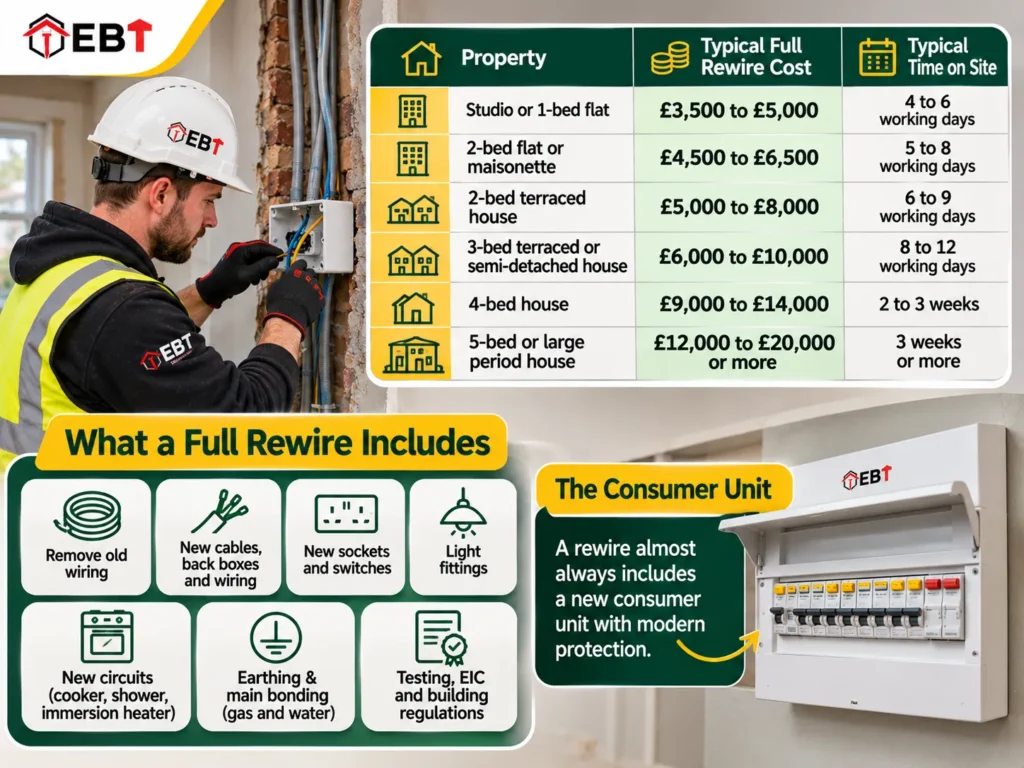
The table shows typical house rewiring costs in North London, including VAT. They assume a standard specification of white sockets and switches, pendant or basic ceiling lights, and a property that is empty or mostly cleared during the work.
| Property | Typical full rewire cost | Typical time on site |
|---|---|---|
| Studio or 1-bed flat | £3,500 to £5,000 | 4 to 6 working days |
| 2-bed flat or maisonette | £4,500 to £6,500 | 5 to 8 working days |
| 2-bed terraced house | £5,000 to £8,000 | 6 to 9 working days |
| 3-bed terraced or semi-detached house | £6,000 to £10,000 | 8 to 12 working days |
| 4-bed house | £9,000 to £14,000 | 2 to 3 weeks |
| 5-bed or large period house | £12,000 to £20,000 or more | 3 weeks or more |
London prices sit at the top of the national range. Higher day rates, parking permits, congestion and the extra care needed in tall, narrow Victorian houses all add to the cost.
What a Full Rewire Includes
A fair quote for a full rewire should include:
- Removing or disconnecting all the old wiring
- New cables to every socket, switch and light, with new back boxes
- New sockets, switches and basic light fittings
- New circuits for the cooker, shower and immersion heater where needed
- Earthing and main bonding to gas and water pipes
- Testing, an Electrical Installation Certificate, and building regulations notification
It usually does not include replastering, decorating, new flooring or high-end fittings, unless the quote says so.
The Consumer Unit
A rewire almost always comes with a new consumer unit, because the new circuits need modern protection. Some electricians include it in the rewire price and others list it separately, so check before comparing quotes. Our consumer unit upgrades page explains what a modern board involves.
What Changes the Price
Two houses with the same number of bedrooms can be thousands of pounds apart. These are the reasons.

Number of Points and Specification
Most households today want far more sockets than the house was originally wired for, especially in kitchens, home offices and bedrooms. Every extra double socket, USB socket or outdoor point adds labour and materials.
Specification also matters. Brushed metal sockets, dimmer switches, recessed downlights, smart lighting, under cabinet lighting and outside lights all add to the base price. Planning these with your electrician before first fix keeps the cost under control, and our sockets and switches installation work is priced per point so additions are clear.
Floors, Walls and Ceilings
Victorian and Edwardian houses usually have suspended timber floors, which makes running cable easier once boards are lifted. Solid concrete floors, tiled floors and fitted wood floors make access harder and slower.
Older ceilings bring their own care. Original lath and plaster ceilings can crack if cables are pulled through roughly, so experienced electricians work from the floor above wherever possible.
Whether the House Is Empty
An empty house is quicker to rewire. In an occupied home, furniture has to be moved room by room, power has to be restored at the end of each day, and dust has to be contained around belongings. Expect the job to take longer and cost more if you are living there.
Flats and Access
Flats bring different questions. Communal areas, lift bookings, working hours set by the building and the position of the meter can all affect the programme. Leaseholders may also need the freeholder’s consent before chasing walls or lifting floors.
Costs Your Quote May Leave Out
The electrical work is only part of the total. These items are often priced separately.
Making Good and Redecorating
Rewiring means chasing channels into plaster for cables and boxes. Electricians usually fill the chases roughly, but leave a finish for a plasterer. Making good typically adds £200 to £500 per room for filling and skimming over the chases, more where whole walls need replastering.
Decoration comes last. Most people repaint every rewired room, so it is worth booking painting and decorating as part of the same project rather than as an afterthought.
Floors and Carpets
Lifting floorboards is normally included, but refitting carpets and replacing damaged boards may not be. Fitted wood floors may need careful lifting or alternative cable routes.
Extra Systems
A rewire is the cheapest time to add circuits you may want later:
- Mains-wired, interlinked smoke and heat alarms
- Data cabling for wired internet and TVs
- An outdoor socket or garden lighting
- A circuit for an electric car charger
- A circuit for electric underfloor heating
Each adds cost, but far less than adding it after the walls are decorated.
Asbestos
Some older fuse boards contain asbestos in their flash pads or backing boards. If the existing board looks original or dates from before the 1980s, the electrician should check it before removing it.
Signs Your House Needs Rewiring
Wiring does not have a fixed expiry date, but a lot of older London houses are well overdue. These are the signs that point to a rewire rather than a repair:
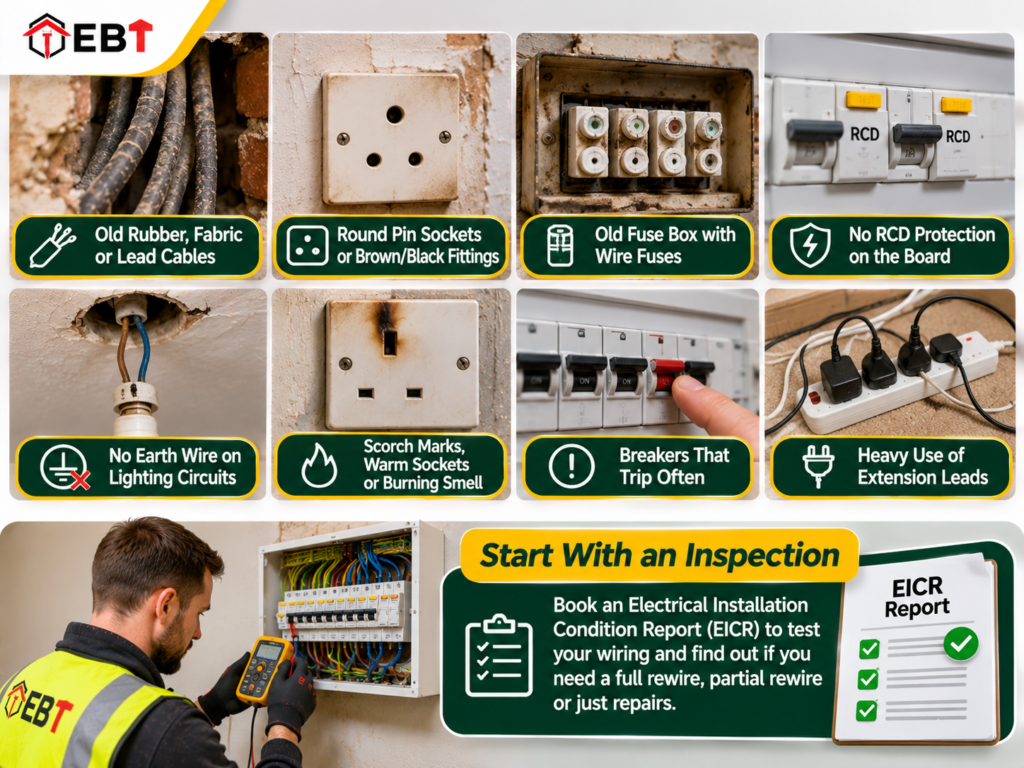
- Black rubber or fabric covered cables, or cables with a lead outer sheath
- Round pin sockets, or brown and black switches and sockets
- An old fuse box with wire fuses instead of circuit breakers
- No RCD protection on the board
- No earth wire on the lighting circuits, which is common in installations from before the mid 1960s
- Scorch marks, warm sockets, buzzing, or a burning smell
- Breakers that trip often for no clear reason
- Heavy use of extension leads because there are not enough sockets
PVC wiring installed from the 1960s onwards can still be in good condition, but it may lack the protection modern regulations expect.
Start With an Inspection
If you are not sure, an Electrical Installation Condition Report is the place to start. It tests the existing installation and grades any defects, so you know whether you need a full rewire, a partial rewire or a few repairs. Our guide to EICR certificate cost in London explains what the report covers and who needs one.
Buyers often ask for one during a purchase, and landlords must have a valid report for every let property. Booking EICR certification before you get rewiring quotes gives every electrician the same starting point.
Full Rewire vs Partial Rewire
A partial rewire replaces only some circuits, often the kitchen, a new extension or a single floor. It costs less and causes less disruption.
It makes sense when the rest of the installation tests well, for example where a previous owner rewired most of the house but left an older kitchen circuit. A single room typically costs a few hundred pounds, and a kitchen £500 to £1,500.
It does not make sense when the cables throughout the house are old rubber or lead sheathed types. Mixing new and old wiring on the same board leaves the old parts as a weak point, and you will pay for disruption twice.
How Long Does a Rewire Take?
Most rewires happen in two stages, with a gap for plastering in between.
First Fix
First fix is the messy part. Floorboards are lifted, cables are run through joists and down walls, chases are cut, and new back boxes are fixed. The old wiring stays live in parts of the house where possible so you are not left without power.
In a three-bedroom house this usually takes five to eight working days.
Plastering
Once first fix is done, chases are filled and walls are skimmed where needed. The plaster needs a few days to dry before the electrician returns.
Second Fix and Testing
Second fix fits the sockets, switches, light fittings and the new consumer unit, then connects everything. The electrician tests each circuit and the whole installation before issuing the certificates. This normally takes two to four days in a three-bedroom house.
Can You Live in the House During a Rewire?
You can, but it is hard work. Expect lifted floors, dust, furniture moved from room to room, and power off for parts of each day.
Families with young children, or anyone working from home, often find it easier to stay elsewhere for at least the first fix stage. If moving out is not possible, a room-by-room plan, with one clean room kept as a base, makes the job more bearable and lets the electrician restore power to finished areas each evening.
Regulations and Certification
A full rewire is notifiable building work under Part P of the Building Regulations in England. It must also be designed and installed to BS 7671, the IET Wiring Regulations.
Who Can Sign It Off
An electrician registered with a competent person scheme, such as NICEIC or NAPIT, can self-certify the work. On completion you should receive:
- An Electrical Installation Certificate, which records the design, installation and test results
- A building regulations compliance certificate, issued through the electrician’s scheme
If your electrician is not registered, the work has to be notified to building control before it starts, which adds cost and time. Keep both certificates; your solicitor will need them when you sell.
What Modern Regulations Expect
A new installation will look different from the old one. Most circuits will have RCD protection, usually through RCBOs on each circuit, and a surge protection device is normally fitted at the board. Arc fault detection devices are required in some higher risk buildings, such as houses in multiple occupation, and are increasingly recommended in ordinary homes.
Smoke and Heat Alarms
A rewire is the right time to fit mains-powered, interlinked alarms on every floor, with a heat alarm in the kitchen. Landlords have specific legal duties on alarms, and our smoke and heat alarms service covers both owner-occupied and rented homes.
Planning a Rewire Around Other Work
Rewiring is disruptive, so it is best done at the start of a wider renovation, before plastering, kitchens, bathrooms and decoration. Doing it later means opening up finished walls and floors.
Think about how you will use each room in five or ten years. Sockets for a home office, lighting for a new kitchen layout, or a car charger circuit are all cheap to add at first fix and expensive later. Our guide to lighting installation covers the options worth planning at this stage.
In Hackney and across North London, rewiring is one of the core costs of renovating an older house. Our guide to home improvement costs in Hackney shows how it sits alongside replumbing, kitchens and structural work.
When a rewire is part of a whole house project, our full refurbishment team plans the electrical work, plastering and finishes as one sequence, so each room is only disturbed once.
How to Compare Rewiring Quotes
Rewiring quotes are hard to compare unless they are built on the same list of points. Before asking for prices, walk round the house and note what you want in each room.
Questions to Ask
When you have quotes, check:
- Is the consumer unit included, and what type of protection does it have?
- How many sockets, switches and lights are included in each room?
- Are smoke alarms, data points and outside points included?
- Does the price cover making good, or only rough filling?
- Who notifies building control, and which scheme is the electrician registered with?
- How will the house be left at the end of each day?
A quote that is far below the others usually leaves something out. The cheapest rewire rarely stays the cheapest once extras are added.
Frequently Asked Questions
How much does it cost to rewire a 3 bed house in London?
A full rewire of a three-bedroom terraced or semi-detached house in London typically costs £6,000 to £10,000 including VAT. Making good and decorating are usually extra.
How long does it take to rewire a house?
A one-bedroom flat takes around four to six working days. A three-bedroom house usually takes eight to twelve working days, split between first fix and second fix, with plastering in between.
How often should a house be rewired?
There is no fixed interval. Many electricians use 25 to 30 years as a rough guide for PVC wiring, but the condition matters more than the age. An EICR is the reliable way to find out.
Does a rewire need building regulations approval?
Yes. A full rewire is notifiable under Part P. A registered electrician can self-certify it and will arrange the building regulations compliance certificate.
Can I rewire one room at a time?
You can, but it usually costs more overall because the electrician sets up and makes good several times. It works best where the rest of the installation is already in good condition.
Does rewiring add value to a house?
A rewire rarely adds value on its own, but old wiring can reduce what buyers will pay, and lenders or buyers’ surveyors may flag it. A certified, recent rewire removes that objection.
Getting Your Rewire Right
The cost of rewiring a house in London depends mostly on its size, the number of points you need, and whether the house is empty while the work happens. Plastering and decoration are the costs most often missed.
Start with an inspection, plan every room before first fix, and get quotes built on the same specification. Done properly, a full rewire should not need repeating for decades. For older houses, our guide to Victorian house renovation shows where rewiring fits in the wider order of work.
