
| Quick Answer Fixing a broken sash window depends entirely on what’s broken. Stuck sashes, broken cords, and draughts are DIY-friendly repairs most homeowners can handle in a day. Rotting frames, failed glazing, and structural issues need a professional, especially in Hackney, where many properties sit in conservation areas with strict rules about what you can and cannot change. |
Introduction
Sash windows are one of the defining features of Victorian and Edwardian housing in Hackney. From the terraced streets of Stoke Newington to the converted warehouses of Haggerston, the borough has tens of thousands of these double-hung timber windows, and most of them have problems. Many owners of older homes also invest in sash window repair or wider Hackney home improvements while restoring period properties.
The question most homeowners face is not whether to fix the window. It’s whether to call someone or do it themselves. This guide walks you through the most common sash window faults, what each repair actually involves, how long it takes, and when calling a specialist is the only sensible option.
How a Sash Window Works (and Why They Break)
A traditional sash window has two frames, called sashes, that slide vertically inside a box frame. Each sash is counterbalanced by weights hidden inside the frame, connected by cords running over pulleys. When the system works, a single finger can raise a 20kg sash. When the system fails, nothing moves properly. In some full restorations, damaged timber around the frame may need window frame repairs or full refurbishment. When the system fails, nothing moves properly.
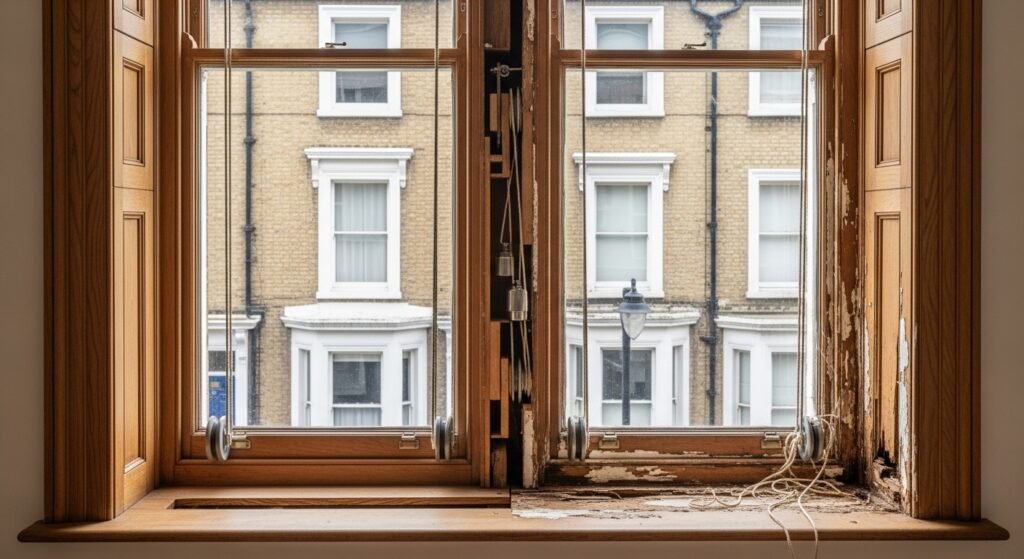
Most faults trace back to four sources:
- Broken or frayed cords connecting the sash to the counterweights
- Swollen or warped timber caused by moisture getting into the frame
- Paint build-up seals the sashes shut over decades of repainting
- Decayed wood in the sill, frame, or sash rails
Victorian sash windows in Hackney are typically 100 to 140 years old. That age alone explains why most of them need attention.
Common Sash Window Problems and What Causes Them
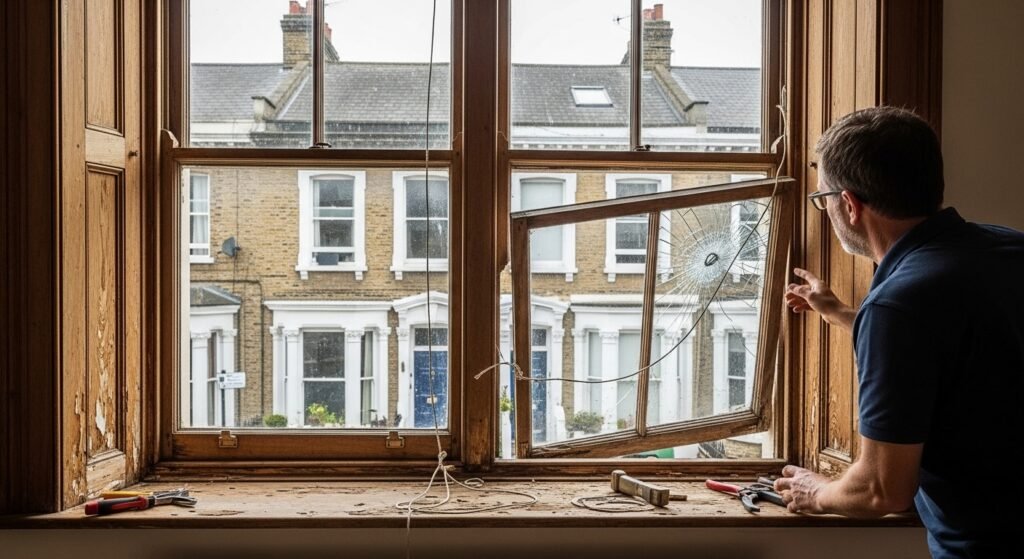
The Window Won’t Open or Close
This is the most common complaint, and it has two likely causes.
The first is paint. Generations of repainting, especially on the parting beads and staff beads that hold the sashes in their channels, can effectively glue a window shut. This is a DIY fix, often followed by painting and decorating touch-ups. This is a DIY fix.
The second is a swollen sash. Timber absorbs moisture in wet weather and expands. If the sash swells enough, it jams in the frame. This is also often DIY-manageable, but it requires drying out the window and planing the sash, which means removing it from the frame.
The Sash Won’t Stay Up
If a sash drops when you let go of it, the cord on one or both sides has broken. The counterweight is sitting at the bottom of the box frame, disconnected. In some cases, homeowners also replace worn trims with new skirting boards during repairs. This is one of the most satisfying DIY repairs to do because the method is logical and the result is immediate.
Draughts and Heat Loss
Draughts in a sash window usually come from three places: gaps between the sashes when closed, the gap around the outer frame, and the meeting rail where the two sashes meet in the middle.
Draught-proofing a sash window is a DIY job. Many older homes also improve comfort with radiator installation or underfloor heating. Specialist brush seals (also called pile seals) are available from timber window suppliers and fit into a routed channel around the sash perimeter. A full draught-proofing kit for one window costs between £40 and £80 in materials, and the job takes two to four hours.
Broken or Cracked Glass
A cracked pane is a single-glazed repair if your sash windows are original Victorian units. The glass sits in a rebate and is held by putty. Removing broken glass, cutting a replacement pane, and re-puttying is possible as a DIY task, but it involves handling sharp glass and working with glazing putty, which takes practice to apply cleanly.
If your windows have been upgraded to double-glazed units inside the original frame, a cracked sealed unit needs a professional to replace. Sealed units cannot be patched.
Rot in the Frame or Sill
This is where DIY ends for most people. Soft, spongy timber in the sill, the bottom rail of the lower sash, or the pulley stiles means water has been getting in for a long time. Structural timber damage may need timber repairs skills similar to other joinery restoration work. Surface rot on a sill can sometimes be treated with a consolidant and filler, but structural rot, where the wood crushes underhand pressure, needs cutting out and splicing in new timber.
What You Can Realistically Fix Yourself
These repairs are within reach of someone with basic tools and a free weekend:
- Replacing sash cords: The standard DIY repair. You need a parting tool to remove the staff bead, access to the weight pocket, and waxed cord or chain. Total material cost is under £30. Time: half a day per window, faster with practice.
- Freeing a painted-shut sash: Use a craft knife to score around the sash perimeter and a wide chisel to break the paint bond gently. Sand and repaint the beads afterwards.
- Draught-proofing: Brush seals, foam tape, and compression seals are all available from builders merchants. The job is fiddly but not technically difficult.
- Single-pane glass replacement: Manageable if you are careful with glass handling. A glazier’s hacking knife, new putty, and a replacement pane cut to size at a glass merchant is all you need.
- Basic filling and painting: Hairline cracks in putty or minor surface damage to the frame can be filled and painted without specialist knowledge.
Homeowners doing room upgrades at the same time often add wall skimming or full replastering after opening walls.
When You Need a Professional in Hackney
Some repairs look simple but are not, and some properties in Hackney have legal restrictions that make a professional not just preferable but required.
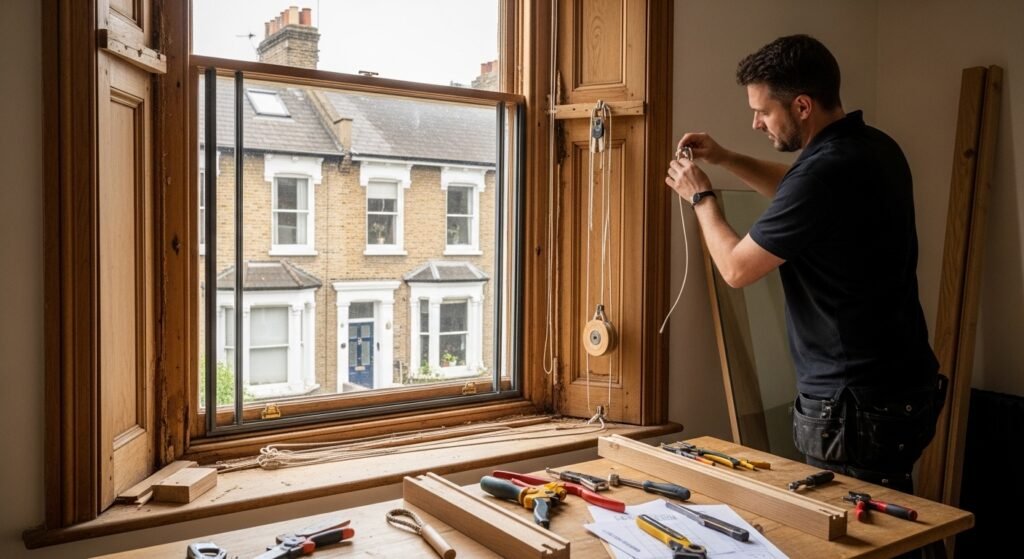
Structural Rot and Frame Repairs
Splicing new timber into a decayed frame requires the skill to match the profile of Victorian mouldings, the right adhesives and fixings, and the ability to assess how far the rot has spread. Where multiple rooms are affected, people often combine this with door installation or wider carpentry upgrades. Getting this wrong means the repair fails in two or three years. A specialist timber window joiner will cut out the affected section, bond in a matching timber splice, and treat the surrounding wood. Expect to pay £150 to £350 per window for this repair, depending on the extent of the damage.
Sash Window Restoration
Full restoration means stripping the window to its components, replacing cords, pulleys, and weights where needed, repairing the frame, re-glazing if necessary, and applying a full paint system. Some clients also upgrade nearby finishes, such as hardwood flooring or laminate flooring. For a large Victorian window in Hackney, this typically costs £400 to £700. The result is a window that should last another 30 to 50 years without major attention.
Conservation Areas and Listed Buildings
A significant portion of Hackney sits within conservation areas. The Stoke Newington conservation area, the De Beauvoir estate, and parts of Dalston and London Fields all have restrictions that limit what changes you can make to the external appearance of a property.
In most Hackney conservation areas, replacing original sash windows with modern alternatives requires planning permission or prior approval from the London Borough of Hackney. Doing it without permission can result in an enforcement notice requiring you to restore the original windows at your own cost.
If your property is a listed building (there are several hundred in Hackney), you need Listed Building Consent before carrying out any repairs that alter the character of the window, which can include like-for-like glass replacement in some cases.
Before starting any external work on a sash window in Hackney, check the council’s planning portal or call the planning department. A professional window company working in the area will already know these rules and can advise you.
Secondary Glazing Installation
Secondary glazing, where a slim inner frame is fitted inside the reveal to improve insulation and acoustic performance, is the standard recommended solution for sash windows in conservation areas. It avoids the need for planning permission in most cases and significantly reduces heat loss without altering the external appearance.
Installation requires accurate measuring, drilling into the frame or plaster reveal, and fitting aluminium or timber secondary frames. Most homeowners use a specialist for this. Costs typically run from £250 to £500 per window for a basic system.
DIY vs Professional: Deciding Factor by Factor
| Problem | DIY Viable? | Professional Needed? | Approximate Cost (Professional) |
|---|---|---|---|
| Stuck sash (paint) | Yes | No | – |
| Broken sash cord | Yes | No | – |
| Draught-proofing | Yes | No | – |
| Single-pane reglaze | Possibly | If double-glazed unit | £80-£150 |
| Surface rot / filler | Sometimes | If structural | £150-£350 |
| Full frame rot | No | Yes | £200-£500 |
| Full restoration | No | Yes | £400-£700 |
| Secondary glazing | No | Yes | £250-£500 |
| Listed building repair | No | Yes | Varies |
Finding a Sash Window Specialist in Hackney
Not every joiner or window company has experience with traditional box sash windows. The mechanism, the timber profiles, and the techniques are specific to this type of window, and a company that works mainly with uPVC windows will not have the right skills. Some homeowners compare quotes with nearby Islington window repair specialists too.
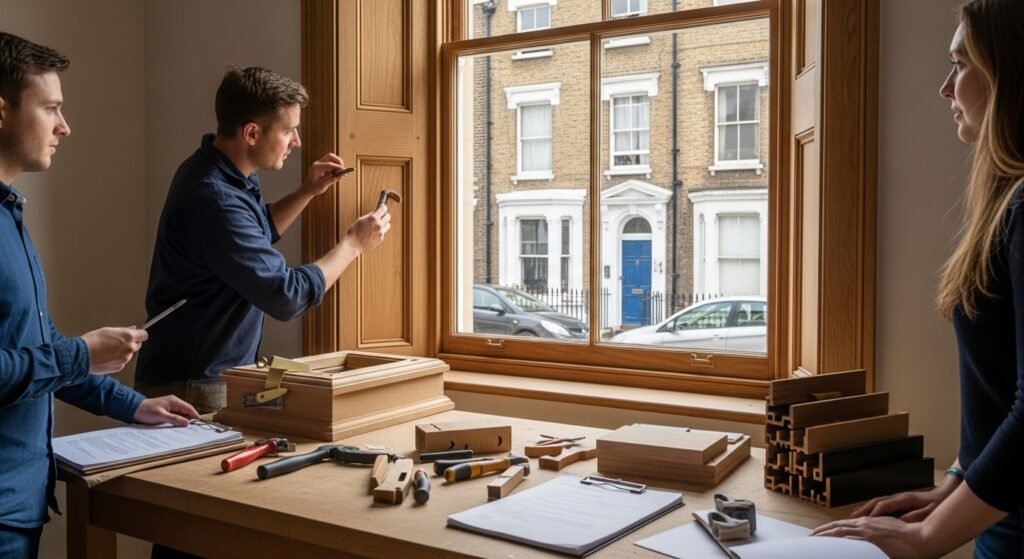
What to look for:
- Experience specifically with Victorian and Edwardian sash windows, not just windows in general
- References from other properties in Hackney or nearby boroughs (Islington, Tower Hamlets, Haringey)
- Familiarity with Hackney’s conservation area requirements
- The ability to source matching timber profiles for repairs (purpose-made mouldings, not off-the-shelf)
The Guild of Master Craftsmen and the London Sash Window Experts directory are two useful starting points for finding vetted specialists. You can also ask neighbours in the same street, as many Victorian terraces in Hackney share the same original window design.
A Note on Cost vs. Replacement
Some homeowners in Hackney look at a deteriorated sash window and ask whether replacement is more cost-effective than repair. In most cases, the answer is no, for three reasons.
First, replacing original windows in a conservation area property often requires planning permission, which you may not get. Second, modern replacement windows (including so-called “sash-style” uPVC units) do not replicate the acoustic and thermal performance of properly restored original windows with draught-proofing and secondary glazing. Third, original Victorian sash windows in good repair add to the character and, in many cases, the market value of a Hackney property.
Some homeowners in Hackney look at a deteriorated sash window and ask whether replacement is more cost-effective than repair. In most cases, Restoration is almost always the better investment, especially when paired with long-term upgrades like roof insulation or boiler repair.
FAQ
How much does it cost to replace sash window cords in Hackney?
If you do it yourself, the materials cost under £30 per window. A professional joiner will typically charge £100 to £200 per window for cord replacement, depending on access and the condition of the pulleys and weights. If the weights need replacing or the pocket lining is damaged, add another £50 to £100.
Can I replace my sash windows in a Hackney conservation area?
Not without checking first. Most conservation areas in Hackney require planning permission or prior approval before replacing original sash windows with any different type, including timber alternatives. Like-for-like replacement in the same material and style is sometimes permitted under permitted development rights, but this varies by property and area. Always contact Hackney Council’s planning department before ordering new windows.
How do I stop my sash window from rattling at night?
Rattling usually means the sashes have too much lateral play in their channels, or the meeting rail is not sealing properly. Fitting brush pile seals to the staff beads and parting beads removes the play and stops the rattling. This is a DIY repair and costs under £30 in materials. In older windows, replacing worn or missing staff beads entirely is sometimes necessary.
Is it worth repairing a sash window with significant rot?
Yes, in most cases, provided the structural timber in the main frame is sound. A skilled joiner can splice new timber into a rotted sill or sash rail, and the result is indistinguishable from original wood once painted. The key question is whether the pulley stiles and head frame are solid. If those are compromised, the repair cost rises significantly, but it is still usually cheaper than full replacement.
How long does a full sash window restoration take?
A single window typically takes one to two days on-site for a professional. The window may need to come out of the frame, so you will have a gap during the work. Restoration companies in London often work through properties room by room to minimize disruption. For a typical two-storey Victorian terrace in Hackney with eight sash windows, expect the full job to take three to five days.
Do sash windows need planning permission for repairs?
Repairs in the same material, like-for-like, generally do not require planning permission. However, any change to the appearance, including changing from single to double glazing in the original frame, may require consent in a conservation area or if the building is listed. When in doubt, submit a pre-application query to Hackney Council, which is free and gives you a written response.
Conclusion
Fixing a broken sash window in Hackney is not always a job for a specialist, but knowing the difference between what you can handle and what you cannot saves time and money. Stuck sashes, broken cords, and draughts are genuinely DIY-friendly. Rot, structural repairs, and anything touching conservation area or listed building rules are not.
If you are buying or currently own a Victorian or Edwardian property in Hackney and the sash windows are in poor condition, get a specialist to assess them before assuming they need replacement. In most cases, restoration is cheaper than you expect and far more durable than the modern alternatives.

Tilly Bani is a renovation and roofing specialist with over 15 years of experience in construction and property refurbishment across North London. He specialises in roofing, structural repairs, and full home renovations, helping homeowners improve property value and safety.