Floor leveling is essential before installing tiles, laminate, vinyl, or hardwood flooring. Uneven surfaces can cause movement, cracks, and long term damage to finished floors. Our floor leveling service prepares concrete and timber subfloors so the final surface remains stable and durable.
We use professional methods including floor levelling compound, latex floor levelling compound, and self levelling floor screed depending on the surface condition. The aim is to create a smooth, even base that supports proper flooring installation without future movement issues.
Floor levelling is usually completed as part of wider flooring services when preparing a property for new floor installation.
Certified engineers for all gas work, safety checks, boiler installations, and compliance.

Electrical work carried out, tested, and certified to current UK regulations.
Public & employer liability insurance in place for complete peace of mind.
Consistently rated for workmanship, reliability, and project management.
Delivering home refurbishment and roofing projects with controlled processes, certified trades, and accountable project management.

We apply floor levelling compound to correct dips, cracks, and uneven areas before new flooring is installed. This process ensures the finished surface sits flat and performs correctly over time.
Depending on the condition of the subfloor, we may use self leveling floor compound or latex floor leveller products. Self leveling concrete flooring is often used on solid slabs, while flexible compounds are suitable for timber subfloors.
All preparation and application work follows guidance aligned with the British Standards Institution to ensure structural compatibility and safe installation standards.
Once the surface is level and stable, the floor becomes suitable for professional carpet installation in bedrooms, offices, and living areas.
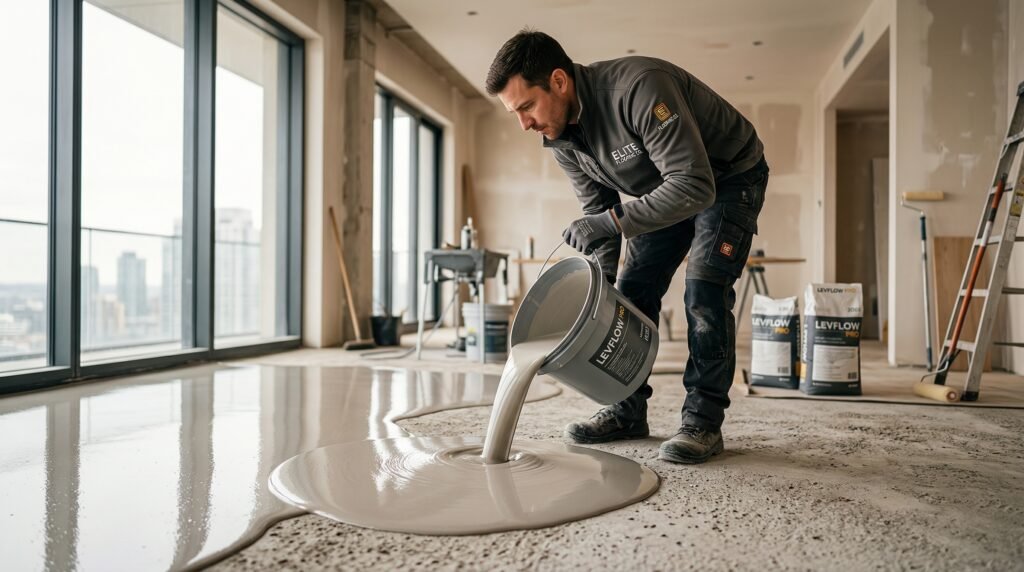
Floor leveling directly affects how well your finished flooring performs. Uneven surfaces can cause laminate joints to separate, tiles to crack, and LVT to lift.
We avoid rushed applications and ensure the correct thickness of floor leveler compound is used. Surface preparation is handled carefully so the compound bonds properly.
This structured approach reduces the risk of movement, hollow spots, and long term structural issues.
Many waterproof flooring systems such as LVT vinyl flooring require a perfectly smooth base to prevent lifting or visible joints.
EXCELLENTTrustindex verifies that the original source of the review is Google. Brilliant roofing job and refurbishments in Hackney! We hired EBT Build and they were no-nonsense and got straight to work. The work included: new kitchen and kitchen fitting, full rewiring, new plumbing, plastering, painting, all flooring, skirting boards and new doors. We agreed on a reasonable price and the end result was exemplary. Would highly recommend EBT Build to everyone looking for reliable trades in the area.Posted on GoogleTrustindex verifies that the original source of the review is Google. EBT team renovated my bathroom and kitchen to a fantastic standard. They were really professional and efficient. Could not recommend more! Thank you to the whole team but especially Tilly!Posted on GoogleTrustindex verifies that the original source of the review is Google. “I know choosing a builder can feel like a gamble, but this team won’t let you down. They completed our roofing, plastering and painting work on our property in Islington, and we can’t praise them enough. The workmanship is faultless — they’re punctual, friendly, and kept everything as tidy as possible throughout the job. Attentive to detail and very helpful. Highly recommended!”Posted on GoogleTrustindex verifies that the original source of the review is Google. Our extension project in Haringey took a few weeks and the whole experience was really great. The team was polite, respectful, and explained everything clearly without confusing us with technical jargon. They worked efficiently, kept things tidy, and we’re absolutely delighted with the finished result. Would happily recommend EBT Build to anyone!Posted on GoogleTrustindex verifies that the original source of the review is Google. We were really pleased with the work completed by EBT Build. Everything they did exceeded our expectations. They were punctual, kept the site tidy at all times, and were thoroughly professional throughout. They carried out new roofing, kitchen installation, plastering and decorating for us in Kentish Town, and every part of the job was finished to an excellent standard. They took great care with every detail, and their fees are very reasonable too. We would highly recommend them, and will definitely use them again for any future building work.Posted on GoogleTrustindex verifies that the original source of the review is Google. I am delighted to highly recommend EBT Build. They carried out a full refurbishment and loft conversion at my property in Hackney, and I am very pleased with the result. The team were hardworking, punctual, reliable, and always helpful throughout the project. The work was completed to a high standard with great attention to detail, and nothing was ever too much trouble. They were professional from start to finish, and I would happily recommend EBT Build to anyone looking for a trustworthy and reliable building company.Posted on GoogleTrustindex verifies that the original source of the review is Google. EBT Build Ltd completed a full refurbishment of our property in Camden Town, including plastering, painting, a new kitchen, a new bathroom and a full rewire. The team were professional, reliable and hardworking throughout the project. The quality of workmanship was excellent, with great attention to detail from start to finish. Nothing was too much trouble, and the work was completed to a very high standard. We are extremely pleased with the finished result and would highly recommend EBT Build Ltd to anyone looking for a reliable and skilled building company.Verified by TrustindexTrustindex verified badge is the Universal Symbol of Trust. Only the greatest companies can get the verified badge who has a review score above 4.5, based on customer reviews over the past 12 months. Read more
Our service covers both minor corrections and full surface adjustments. For deeper uneven areas, we may use self leveling concrete floor systems to restore flatness across the room.
We also provide hardwood floor leveling preparation before engineered hardwood flooring installation. The right base ensures boards remain aligned and stable.
Where required, threshold strips for different floor levels are planned to manage transitions between rooms safely and cleanly.
A level subfloor is also important before installing laminate flooring, as uneven surfaces can cause gaps and movement between planks.
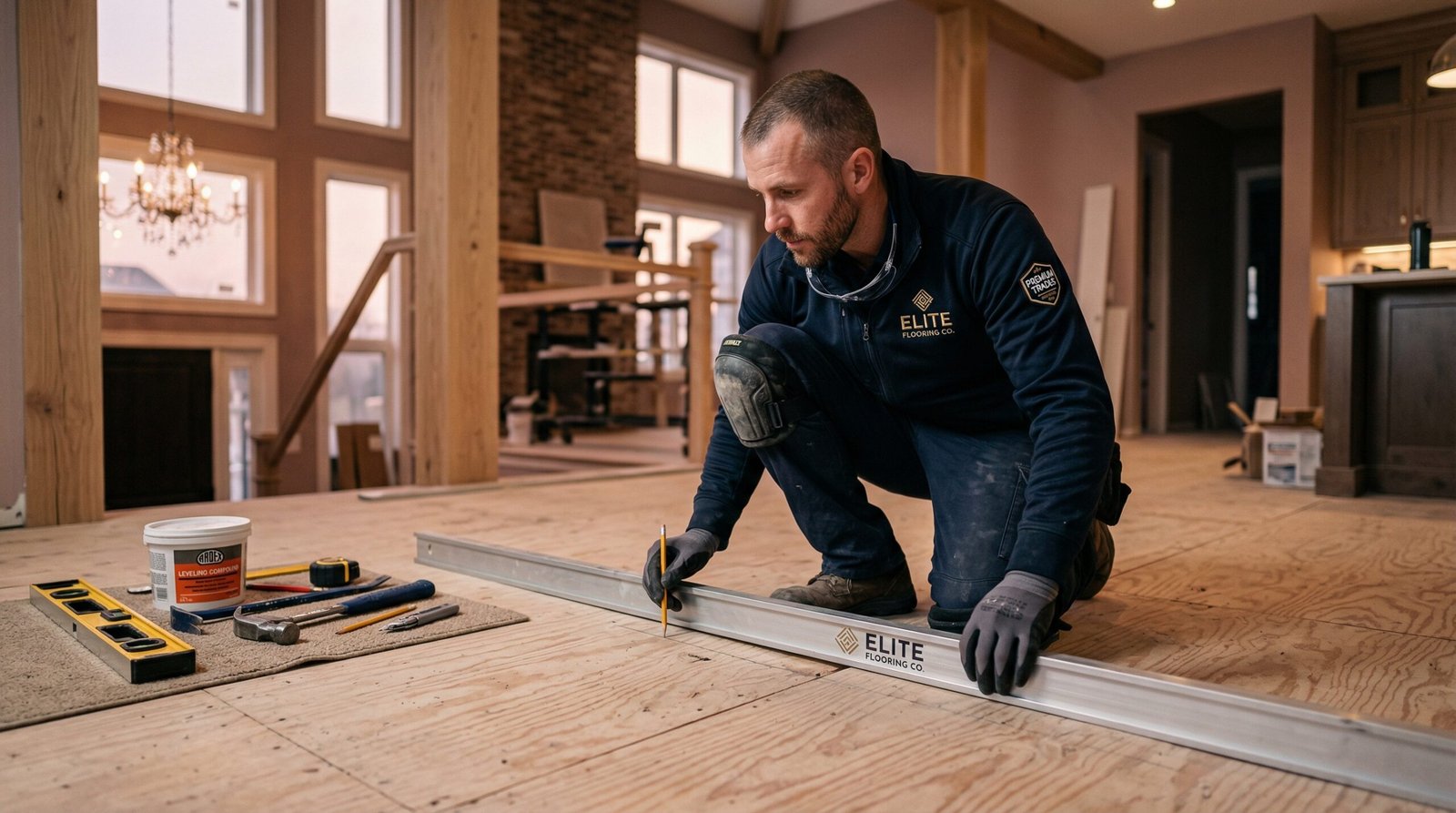
We provide focused solutions for single rooms or isolated uneven areas. This includes applying ready mixed floor levelling compound to correct dips before installing laminate, LVT, or tile flooring.
This approach improves surface stability without requiring full structural reconstruction.
For larger areas, we carry out full subfloor preparation. This includes crack repair, moisture checks, self levelling floor screed application, and complete smoothing across the entire room.
Each project is planned to deliver a level, stable base that supports long term flooring performance.
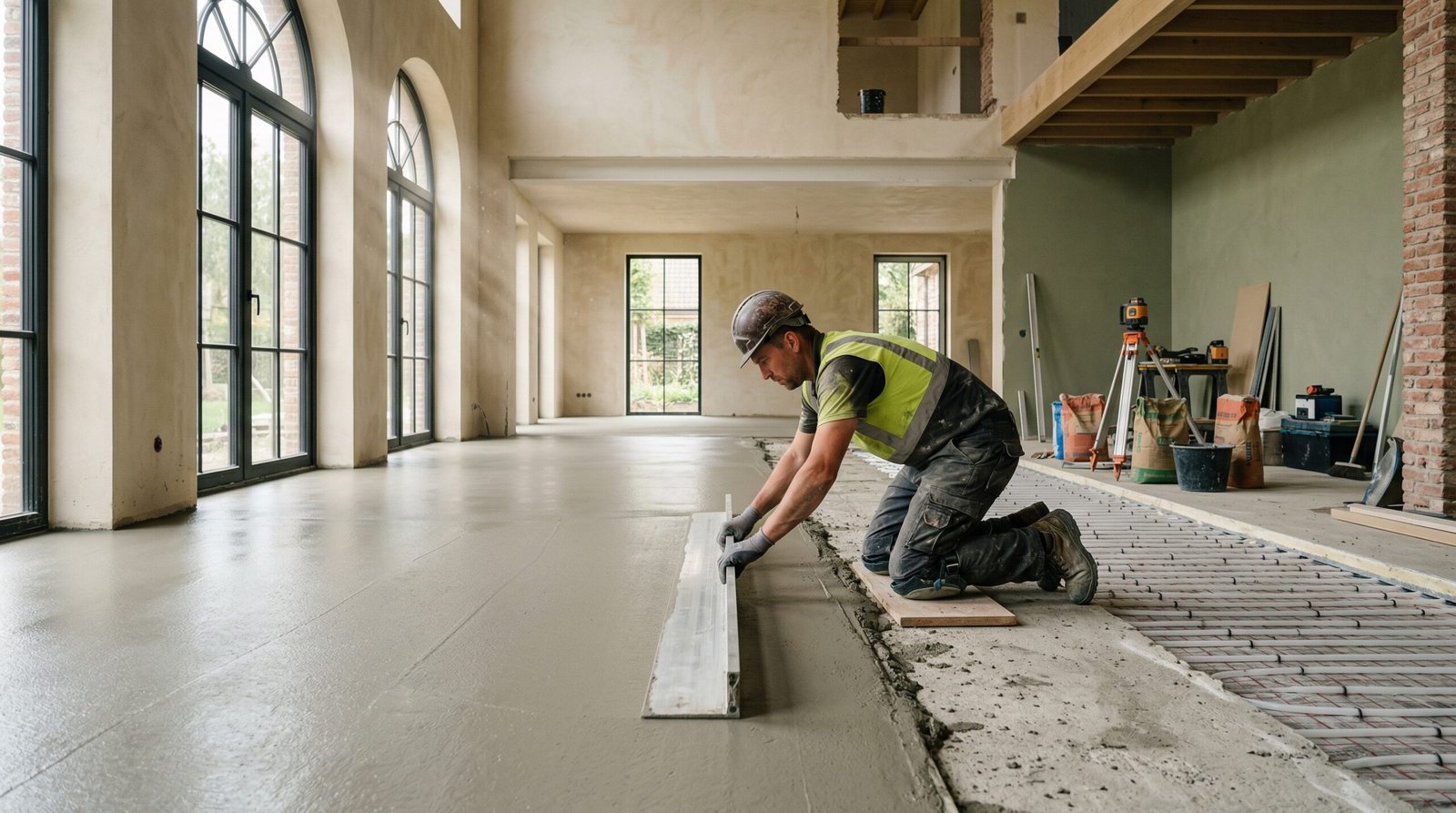
Every project begins with a detailed inspection of the subfloor condition. Surface flatness, structural stability, and moisture levels are checked carefully.
We assess whether self leveling compound for floors or latex floor levelling compound is most suitable for the surface type.
Includes:
Site survey
Subfloor checks
Moisture testing
Surface cleaning
Application planning
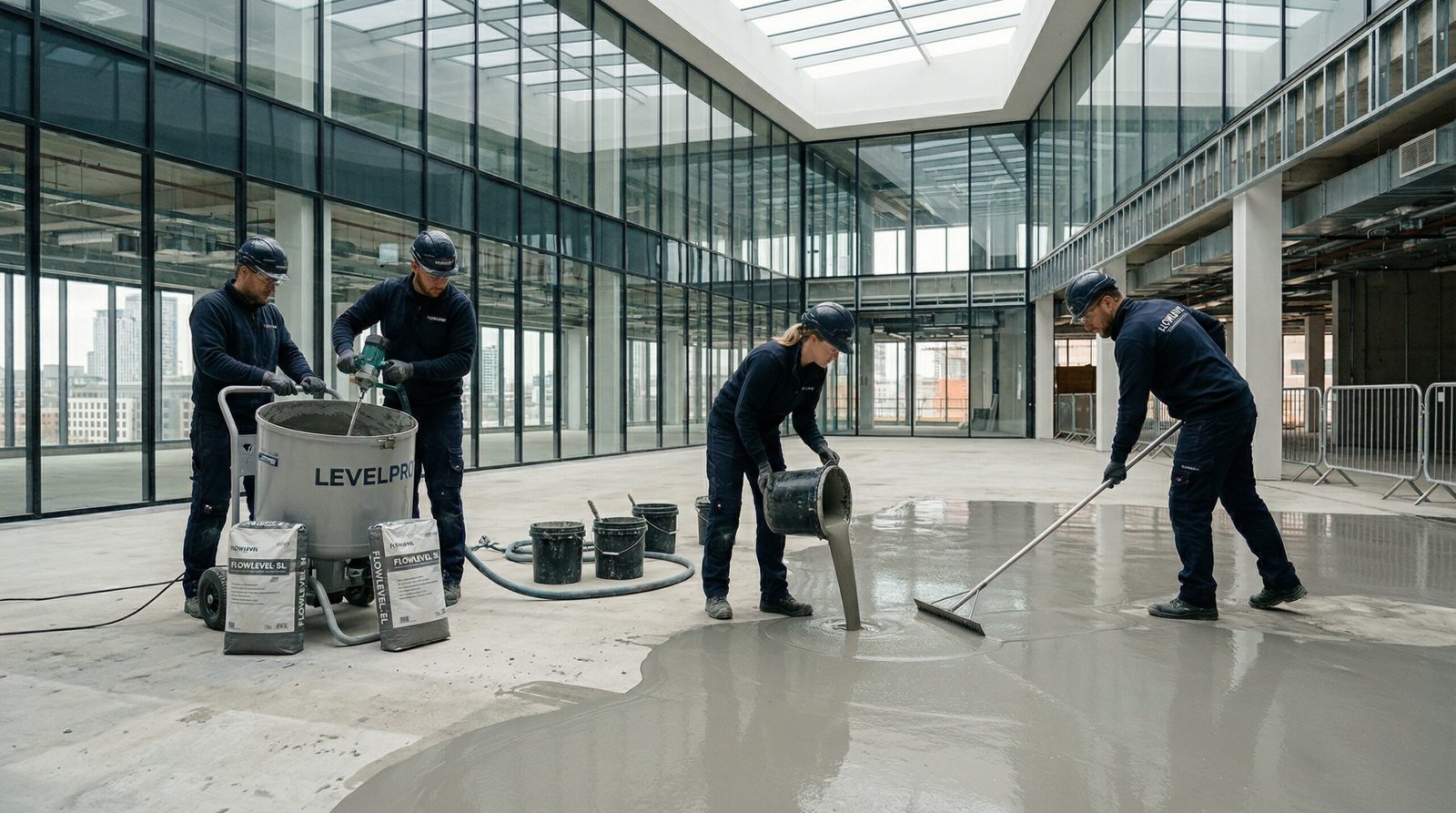
Once preparation is complete, the selected compound is mixed and applied evenly across the surface. Tools for floor leveling are used to ensure correct spread and thickness.
The compound is allowed to settle naturally to create a smooth finish. Drying time is monitored before further work continues.
Includes:
Mixing and pouring compound
Spreading and smoothing
Thickness control
Drying supervision

After curing, the surface is inspected for level accuracy and smoothness. Any minor corrections are addressed before flooring installation begins.
Level preparation is equally important before installing tile flooring.
Includes:
Level accuracy check
Surface inspection
Preparation for flooring installation
Site visit and scope assessment
Transparent costs and timelines
Trades coordinated and managed
Snagging cleared, project closed
Floor leveling is the process of correcting an uneven or sloping subfloor before new flooring is installed, ensuring a smooth, flat surface that prevents premature wear or failure. You will need it if your floor has dips, humps, or slopes that could cause tiles to crack, laminate to buckle, or adhesive to fail over time. It is a critical preparation step for any flooring installation and is strongly recommended before laying tile, LVT, hardwood, or laminate.
The most common products used in the UK are cementitious self-levelling compounds, which are poured onto the subfloor and flow into low spots to create a flat surface. Options include rapid-setting compounds for quick turnaround, deep-fill compounds for larger depressions, and latex-modified versions for use on timber subfloors. The right product depends on your subfloor type, the degree of unevenness, and the flooring being installed on top.
Yes, floor leveling can be carried out on both concrete and timber subfloors, though the preparation and product choice differ between the two. Concrete floors typically require priming or a bonding agent before the leveling compound is applied to ensure a proper bond. Timber floors need to be firm, with any loose boards secured first, and a flexible or two-part compound should be used to accommodate natural movement in the wood.
Most standard self-levelling compounds can be applied at depths ranging from a few millimetres up to around 15mm in a single pour, while deep-fill products allow for greater depths. For larger depressions exceeding this, it is more practical and cost-effective to first fill the bulk of the void with a concrete mix or plywood, then apply the leveling compound as a finishing layer on top. Our team will assess the extent of the unevenness and recommend the most suitable approach for your floor.
Drying times vary depending on the product used, the depth of application, and the conditions in the room. Most rapid-setting compounds allow foot traffic within one to two hours and are ready for flooring installation within 24 hours. Standard compounds may require 24 to 48 hours before flooring can be laid, and the room should be kept at a stable temperature with adequate ventilation throughout the curing process.
The cost of floor leveling depends on the size of the area, the degree of unevenness, and the type of compound required for your specific subfloor. Materials such as self-levelling compounds are widely available in the UK from around £15 to £50 per bag, but professional application ensures the correct preparation, priming, and finish. Contact us today for a free survey and quote, and we will provide a clear, honest price before any work begins.

Reliable home refurbishment and roofing specialists delivering compliant, fully managed building work across the UK.
© 2026 EBT Build. All rights reserved.