
| Quick Answer Standard double glazing is almost never approved on front elevations in Hackney and Islington conservation areas because the thick units visually distort the original window proportions. What can be approved, with planning permission, is slimline double glazing in matching timber sash frames that preserves the original profile and sight lines. Secondary glazing, fitted internally, requires no planning permission at all and is accepted everywhere, including listed buildings. uPVC is rejected by both councils in almost every case. |
Introduction
If you own a period property in Hackney or Islington, you are almost certainly in a conservation area. Hackney has 35 designated conservation areas covering large swaths of Stoke Newington, Clapton, De Beauvoir, Victoria Park, Broadway Market, and many more neighbourhoods. Islington has 42. Together, these two boroughs account for a significant share of inner North London’s Georgian and Victorian housing stock, and their conservation rules are among the most actively enforced in London. Many owners planning wider upgrades also look into kitchen renovation or bathroom renovation while improving older homes.
The most common question homeowners in these boroughs ask is straightforward: Can I install double glazing? The answer is more nuanced than a simple yes or no, and it depends on your borough, your specific conservation area, whether your property is listed, which elevation is affected, and what type of glazing you specify. This guide gives you the rules for both Hackney and Islington, with a clear breakdown of what each council accepts, what it refuses, and what alternatives are available regardless of conservation status.
How Conservation Areas Work in Hackney and Islington
Both boroughs designate conservation areas under Section 69 of the Planning (Listed Buildings and Conservation Areas) Act 1990. Designation gives the council extra planning controls over demolition and works that affect the character and appearance of the area. In many period homes, these projects are often combined with stud wall construction or skirting architraves upgrades.
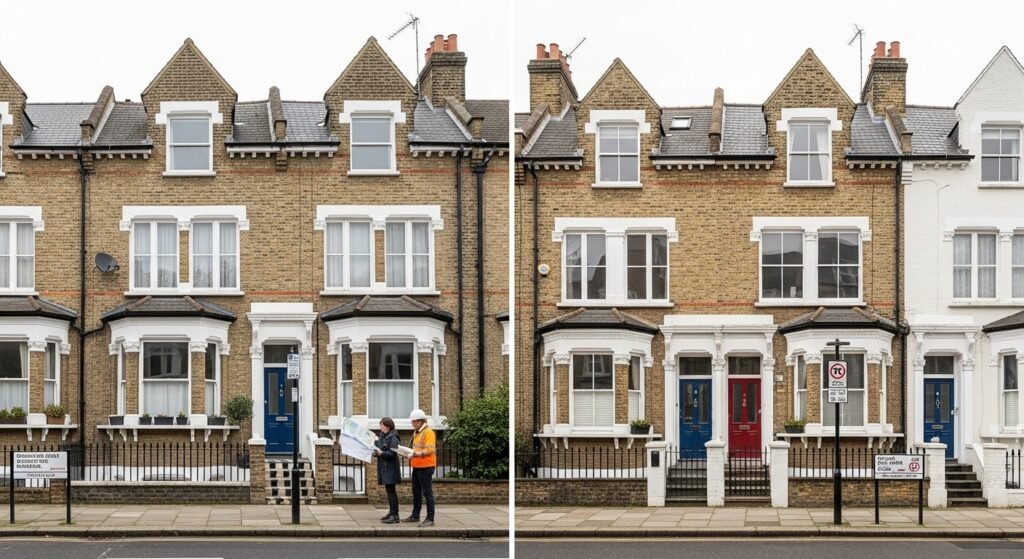
The tool that makes these controls matter for homeowners is the Article 4 Direction. This is a statutory instrument that removes some or all permitted development rights from properties in a designated area. Without an Article 4 Direction, a homeowner in a conservation area can still replace windows under permitted development, provided the replacement does not change the material or appearance. Once an Article 4 Direction is in place, that permitted development right is removed, and a formal planning application is required instead.
Islington
Islington has issued Article 4 Directions in 40 of its 42 conservation areas. This is one of the highest rates in London. The practical effect is that for the overwhelming majority of Islington properties in conservation areas, replacing windows on the front elevation or a street-visible side elevation requires a planning application regardless of what material or specification is proposed. There is no automatic permitted development for windows in these areas. Every change needs explicit council approval. Homeowners often seek advice from sash window repair specialists before applying.
Hackney
Hackney’s position is different. The borough has 35 conservation areas, but Article 4 Directions covering householder window and alteration works have been confirmed for a smaller number of those areas. The Article 4 Directions removing Part 1 permitted development rights are in place for the Brownswood, Beck Road, and Well Street conservation areas, and the De Beauvoir and St Mark’s conservation areas also have specific directions in place. For properties in other Hackney conservation areas, the standard conservation area rules apply: permitted development is available for window replacement, but on designated land (which includes all conservation areas), the replacement must not materially affect the external appearance of the building. Many owners first explore window repair options before replacement.
This distinction matters practically. A homeowner in Dalston Lane or Stoke Newington conservation area (without a residential Article 4 Direction) may be able to replace windows under permitted development if the replacement matches the existing appearance closely enough. A homeowner in De Beauvoir or Beck Road needs a formal planning application for any window change.
For flats in any conservation area in both boroughs, the position is consistent: flats do not benefit from permitted development rights for window replacement. Any change requires planning permission, regardless of Article 4 status.
Why Standard Double Glazing Is Rejected
The refusal of standard double glazing in conservation areas is not arbitrary heritage conservatism. It follows directly from what standard double glazing does to period windows visually.
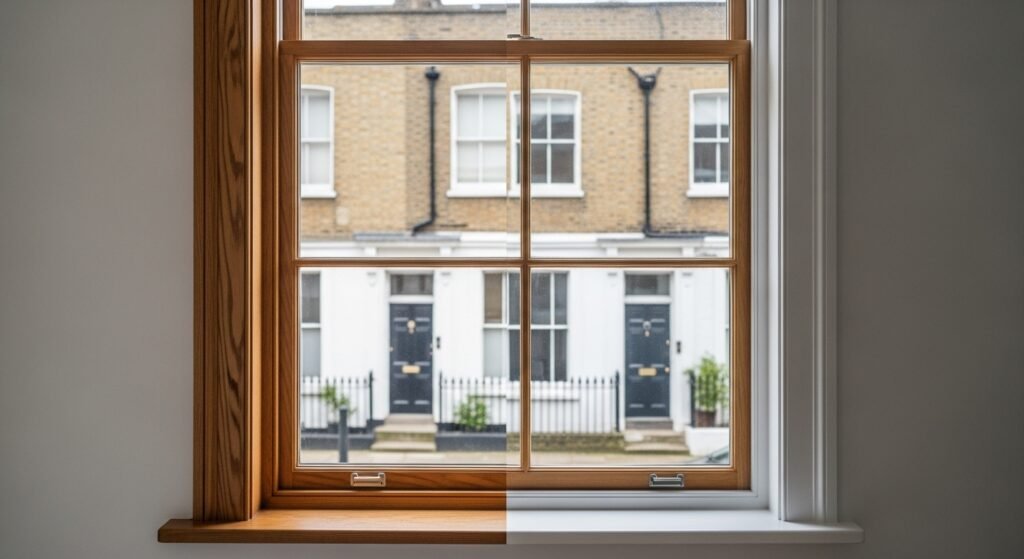
A traditional Victorian or Georgian sash window is built with glass sitting in a narrow timber rebate, held by putty. The glazing bars, where they exist, are slender. The sight line from the room looking out, and from the street looking at the window, is clean and relatively unobstructed. The glass appears flush with the surrounding timber.
Standard double glazing is 24mm to 28mm thick. The spacer bar between the two panes is typically 16 to 20mm wide. This cannot physically fit in a traditional timber sash rebate without either rebating the timber deeper (weakening it and making the frame visually heavier) or replacing the frame entirely with a new one designed for thicker glass. Either approach changes the sight lines of the window, makes the glazing bars appear wider, and introduces the characteristic “double image” reflection that period windows do not have. In many homes, owners instead upgrade the surrounding window frames sills first.
Conservation officers in Hackney and Islington assess window applications primarily on visual impact. Their guidance consistently indicates that if the proposed replacement would be distinguishable from the original by a knowledgeable observer at street level, it is unlikely to be approved on the principal or street-visible elevation. Standard double glazing fails this test in virtually all cases on traditional period windows.
uPVC fails on additional grounds. Even where a uPVC sash window closely replicates the profile of a timber one, the material is visually different. The finish is typically shinier, the profiles are slightly different in section, and the material does not age in the same way as timber. Both councils specify timber as the required material for replacement windows in their conservation areas.
What Double Glazing Options Are Actually Approvable
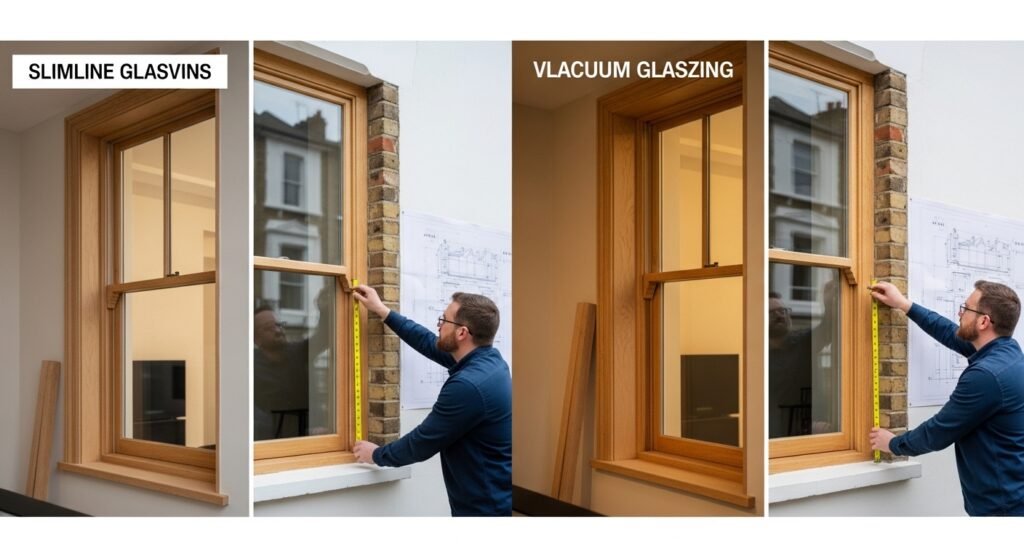
Slimline Double Glazing
Slimline double glazing uses units with an overall thickness of typically 11mm to 16mm, compared to 24mm to 28mm for standard units. The cavity is compressed using krypton or xenon gas fill rather than the more common argon, which allows the same thermal performance to be achieved with a smaller gap. Warm-edge spacer bars reduce the visible spacer width further.
The key advantage for conservation areas is visual. At 12mm total thickness, a slimline unit fits in a timber sash rebate without requiring the frame to be substantially altered. The glazing bars can retain their original proportions. Fitted with a putty-fronted finish rather than a bead-retained finish, the unit replicates the flush appearance of original single glazing at normal viewing distances.
Where joinery needs adjustment first, some owners combine glazing upgrades with full refurbishment work to restore period details.
Slimline double glazing has been approved by both Hackney and Islington conservation officers on a case-by-case basis. The approval is not automatic. The application must demonstrate that the proposed units will not alter the external appearance of the windows in a material way, and must include drawings showing the existing and proposed window sections at scale so the planning officer can assess sight line changes.
What makes a slimline application succeed:
- Timber frames or sashes matching the original species, profiles, and dimensions
- Unit thickness that fits in the existing rebate depth without additional rebating
- Putty or traditional finish rather than modern beaded retention
- Glazing bar profiles matching the original width and projection
- Low-iron glass specified to reduce the double reflection effect
- A heritage statement explaining how the proposal preserves the character of the area
- If available, references to planning precedents on the same street where similar work was approved
Applications that include all of these elements and are submitted to a conservation officer familiar with slimline glazing have a good track record of approval in both boroughs. Where internal damage exists around openings, repairs may also include wall skimming work after installation.
Vacuum Glazing
Vacuum glazing, from products such as Fineo or LandVac, uses two panes of glass with a vacuum between them rather than a gas fill. This reduces the total unit thickness to approximately 6mm to 8mm, comparable to traditional single glazing in overall dimension.
For conservation areas, the advantage is that a vacuum-glazed unit requires no alteration to the existing timber frame. It sits in the same rebate as single glazing. Some homeowners pair this with painting decorating once the windows are complete. The visual appearance is essentially identical to single glass. Conservation officers who have resisted slimline glazing as they still create “visible sightline distortion” often accept vacuum glazing without objection.
For listed buildings in both boroughs, vacuum glazing has a growing track record of approval where slimline would require a more complex Listed Building Consent application. The thermal performance of vacuum glazing matches or exceeds standard double glazing, achieving U-values of 0.4 to 0.7 W/m²K depending on specification.
The cost is substantially higher: vacuum-glazed units typically cost £80 to £200 per pane more than equivalent slimline units. For a property with many windows, this represents a significant premium. However, for listed buildings or particularly sensitive conservation area front elevations where the planning risk of slimline is higher, the certainty of approval that vacuum glazing often provides makes it a rational investment.
Secondary Glazing: The Universal Option
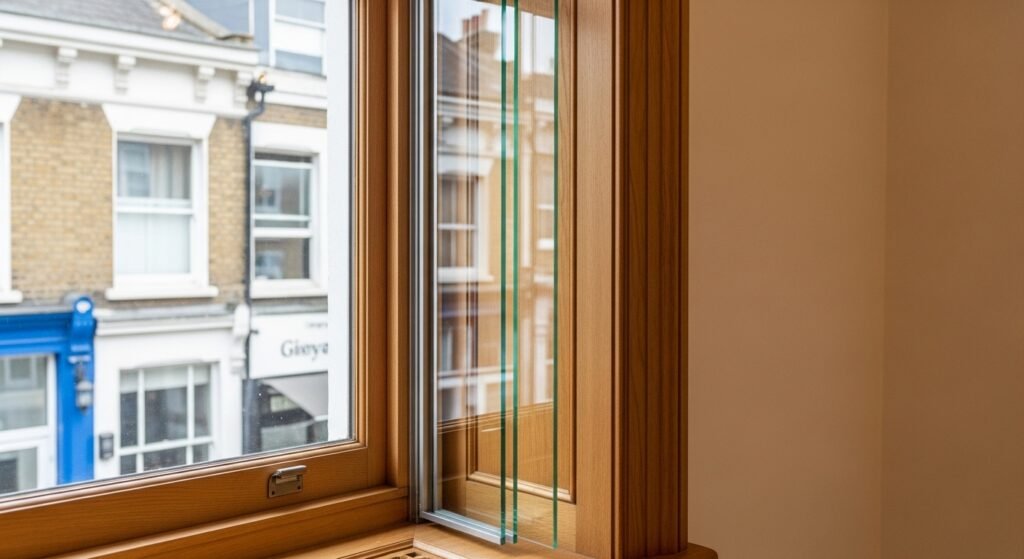
Secondary glazing is the one thermal upgrade that is available to every homeowner in both boroughs, in every conservation area, in every listed building, on every elevation, without any planning permission.
Secondary glazing fits an additional glass panel on the room side of the existing window, typically in a slim aluminium or timber subframe. The original window remains completely unaltered. From the exterior, nothing changes. It is often installed alongside soundproofing solutions for homes on busy roads. Historic England explicitly supports secondary glazing as the preferred approach for improving the thermal performance of historic windows precisely because it involves no loss of historic fabric and is fully reversible.
Secondary glazing can reduce heat loss through a window by over 60% when specified with Low-E glass facing outward, according to Historic England’s research on the thermal performance of secondary glazing systems. For noise reduction, secondary glazing with an appropriately specified air gap outperforms most double glazed units.
Costs in Islington and Hackney run approximately £400 to £900 per window installed by a specialist, depending on window size, system type, and access requirements. For listed buildings where LBC for double glazing is uncertain, and for conservation area front elevations where planning permission for slimline glazing is not guaranteed, secondary glazing eliminates the planning risk entirely at a comparable or lower cost than slimline glazing.
The main practical limitation is internal appearance. A secondary glazing panel is visible from inside the room. High-quality systems with slim profiles and matching finishes are significantly less obtrusive than older systems, and vertically sliding secondary panels can be designed to replicate the operation of the sash window itself. For rooms where the internal appearance matters greatly, slimline double glazing (if approved) produces a cleaner internal result.
Rear Elevations: A Meaningfully Different Position
Both Hackney and Islington operate a distinction between front and rear elevations in their conservation area guidance.
For front elevations and side elevations visible from the street, both councils apply their most stringent requirements. Any double glazing on these elevations requires a planning application and must be demonstrably non-harmful to the character of the conservation area.
For rear elevations that are not visible from the public realm, the planning position is materially different. In many cases, changes to rear-elevation windows are less tightly scrutinised because the impact on the character of the conservation area, which is primarily assessed from the street, is minimal or non-existent. In practice, this means that slimline double glazing on rear elevations has a higher approval rate. Rear projects are sometimes completed during wider door installation or extension upgrades and, in some circumstances, may proceed under permitted development where the Article 4 Direction does not cover rear works.
This is worth checking specifically for your property. If the Article 4 Direction in your Islington or Hackney conservation area removes permitted development only for principal or street-facing elevations (as some do), rear windows may be replaceable with slimline or even standard double glazing under permitted development, subject to the general requirement not to materially affect the external appearance of the building.
Both councils offer an interactive planning map and pre-application advice to confirm exactly what restrictions apply to specific properties. Using this service before commissioning any window work is worth the time and cost.
Practical Steps for Hackney and Islington Homeowners

Step 1: Confirm your conservation area and Article 4 status
Both councils have interactive online maps. Use them to confirm whether your property is in a conservation area, and whether an Article 4 Direction applies to your street. Do not rely on neighbours’ accounts or estate agent descriptions. Article 4 Directions vary street by street in some areas, and the difference between being inside and outside one changes your planning exposure entirely.
Step 2: Check listed building status
If your property or part of the building is listed, Listed Building Consent is required for any material change to windows, in addition to planning permission. The National Heritage List for England is searchable by address. Islington alone has approximately 4,500 listed buildings. Hackney has over 1,300. Being on a terrace with a listed building does not automatically make your property listed, but it is worth confirming.
Step 3: Use pre-application advice
Both Hackney and Islington offer pre-application planning advice services. Before window works, some owners also price nearby upgrades such as boiler installation or boiler repair while scaffolding access is available. Islington charges approximately £150 to £300 for a written pre-application response on a householder query. Hackney’s pre-application service has similar fees. The response will tell you whether a formal application is needed and, crucially, what the conservation officer’s likely position is on the proposed glazing specification. This information changes how you approach the application and what you specify.
Step 4: Prepare a strong application
For any glazing change in a conservation area that requires planning permission, the quality of the application determines the outcome. Submit existing and proposed window section drawings at a scale that allows the sight line differences to be assessed. Include a heritage statement explaining how the proposal preserves the character of the area. If undertaking wider renovations, combine it with full replastering or hardwood flooring upgrades. Provide material specifications, including glass type, spacer bar colour, gas fill, and frame species. If any similar work has been approved on the same street or in the same conservation area, reference those consents by application number.
Step 5: Consider the fallback position
Any planning application can be refused. Before submitting for slimline double glazing, confirm that secondary glazing (which needs no planning permission) would be an acceptable fallback if the application fails. Many households also improve comfort using radiator installation or underfloor heating. A well-drafted application often acknowledges the secondary glazing option explicitly, which demonstrates to the planning officer that the applicant understands the conservation area values and is not demanding double glazing regardless of heritage impact.
FAQ
Q: Can I install double glazing in a conservation area in Hackney without planning permission?
It depends on whether your property is in one of Hackney’s Article 4 Direction areas and whether the change would materially affect the external appearance. In the Brownswood, Beck Road, Well Street, De Beauvoir, and St Mark’s conservation areas, a formal planning application is required for any window change. In other Hackney conservation areas without a residential Article 4 Direction, permitted development may be available for like-for-like replacements, but changing from single to double glazing typically constitutes a material change that takes it outside permitted development. For flats, a planning application is always required. Pre-application advice from Hackney Council is the most reliable way to confirm your specific position.
Q: Is uPVC ever approved for double glazing in Islington or Hackney conservation areas?
Almost never for principal or street-facing elevations. Both boroughs specify timber as the required material for replacement windows in their conservation areas. uPVC, even in heritage sash profiles, is visually distinct from timber in material finish, reflectivity, and ageing characteristics, and conservation officers consistently identify it as harmful to the character of the area. Enforcement notices requiring removal of unauthorised uPVC windows have been issued in both boroughs. The cost of removing and replacing non-compliant windows, added to the cost of the original installation and any legal fees, consistently exceeds the cost of using the correct material in the first place.
Q: What is the difference between slimline double glazing and standard double glazing for planning purposes?
Standard double glazing is 24mm to 28mm thick with a visible spacer bar of 16 to 20mm. It cannot fit in a traditional timber sash rebate without substantially altering the frame, which changes the sight lines and visual profile of the window. Slimline double glazing is 11mm to 16mm thick, using krypton or xenon gas fill to achieve similar thermal performance in a narrower cavity. It fits in the original timber rebate with minimal alteration, preserving the original sight lines. Conservation officers assess windows primarily on visual impact, and slimline glazing that genuinely replicates the original profile from street level has a track record of approval in both Hackney and Islington, whereas standard glazing does not.
Q: Does secondary glazing need planning permission in Hackney and Islington conservation areas?
No. Secondary glazing is fitted internally and does not alter the external appearance of the building in any way. It requires no planning permission in any conservation area in either borough, and no Listed Building Consent on listed buildings. Historic England explicitly supports secondary glazing as the conservation-preferred approach to improving window thermal performance because it leaves the original fabric entirely intact and is fully reversible. It is the only double glazing option that is guaranteed to be allowed regardless of conservation area designation, Article 4 status, or listed building grade.
Q: How much does planning permission for double glazing cost in Islington or Hackney?
The planning application fee for householder works is currently £258 (as of 2026). For listed buildings, Listed Building Consent is free to apply for. Pre-application advice, which most specialists recommend before submitting a conservation area window application, costs £150 to £300 for a written response from Islington, and similar rates in Hackney. A well-prepared application including section drawings and a heritage statement typically costs £500 to £1,500 if prepared by an architect or specialist window company with conservation experience. The total pre-application and application cost of £800 to £2,000 is worth the investment before committing to a £10,000 or £15,000 window installation that may need to be undone.
Q: What happens if I install double glazing without permission in a conservation area?
Both councils monitor conservation areas and can issue enforcement notices requiring removal of non-compliant work at the homeowner’s cost. There is no time limit on enforcement for works affecting the character of a conservation area. On listed buildings, installing windows without Listed Building Consent is a criminal offence that can result in prosecution regardless of whether the work has planning permission. In practice, non-compliant window installations most commonly come to light during property sales, when a buyer’s solicitor requests evidence of consent for visible works. The absence of consent at that point can delay or collapse a sale until the windows are either retrospectively approved or removed and reinstated in a compliant form.
Conclusion
Double glazing in the conservation areas of Hackney and Islington is possible, but not simple. Standard double glazing and uPVC are rejected consistently on principal elevations by both councils. Slimline double glazing in matching timber frames can be approved with a well-prepared planning application that demonstrates negligible visual impact. Secondary glazing is available without any planning permission to every homeowner in every conservation area and listed building in both boroughs.
The most common and costly mistake in both boroughs is installing non-compliant windows without checking the planning position first. Article 4 Directions, listed building status, and the specific guidance of each conservation area all affect what is permitted. A one-hour conversation with a specialist window company experienced in Hackney and Islington planning, combined with a pre-application enquiry to the relevant conservation officer, costs a fraction of the remediation bill for windows that need to be removed and reinstated.
Start with secondary glazing if you need an immediate thermal improvement with no planning risk. Move to a slimline application when you want the visual clarity of double glazing and can invest in a properly prepared planning application.

Tilly Bani is a renovation and roofing specialist with over 15 years of experience in construction and property refurbishment across North London. He specialises in roofing, structural repairs, and full home renovations, helping homeowners improve property value and safety.