
| Quick Answer House extensions in North London cost between £3,000 and £5,000 per square metre in 2026, depending on extension type and specification level. A standard single-storey rear extension of 20 to 30m² costs £75,000 to £135,000 all-in, including VAT and professional fees. A side return extension runs £40,000 to £75,000. A loft conversion costs £55,000 to £120,000. A double-storey extension costs £110,000 to £200,000. Add 10 to 20% contingency on top of any quoted figure for all projects in North London’s predominantly Victorian housing stock. |
Introduction
North London’s housing market creates a consistent demand for extensions that no other borough cluster in England quite matches. Islington, Hackney, Camden, Haringey, and Angel contain some of the highest concentrations of Victorian and Edwardian terraces in the country, and the owners of those properties face a recurring calculation: pay £80,000 to £150,000 for an extension, or face stamp duty, agent fees, legal costs, and a significant price uplift to buy something larger.
The extension typically wins. Most families choose this route instead of moving and incurring extra costs for a larger home, often with help from full-refurbishment specialists. But the cost question is where most projects begin and where most homeowners feel least confident. The figure on a contractor’s first quote rarely matches what they thought they would pay, and the final invoice rarely matches either.
This guide gives you accurate, North London-specific costs for 2026 for every major extension type, broken down by specification level, with the professional fees, planning costs, and hidden costs that most guides leave out.
Why North London Extensions Cost More Than the National Average
Before the numbers, it helps to understand why. North London extension costs sit 20 to 35% above national UK averages, and the gap is not simply London greed.
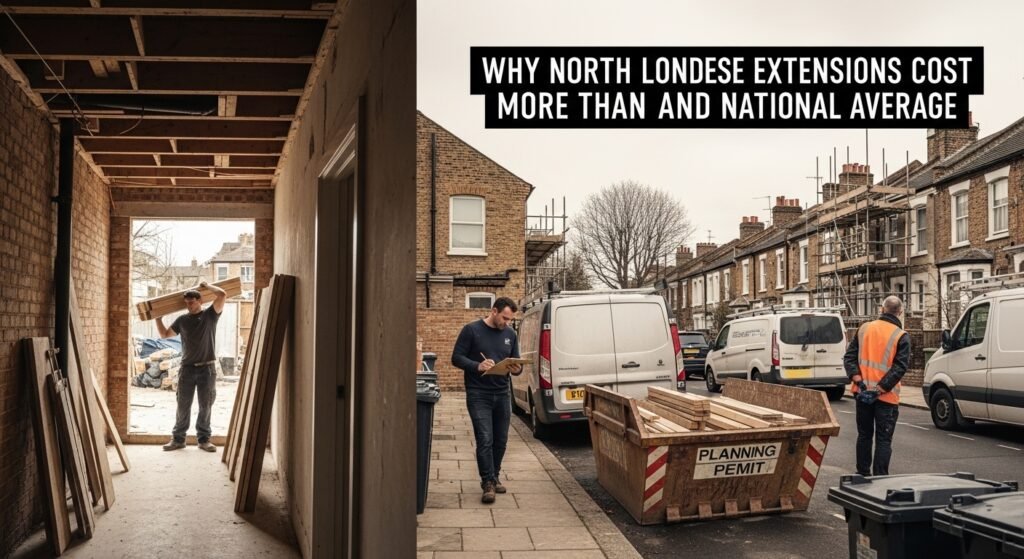
Labour rates. Skilled tradespeople in inner North London earn more than their counterparts in almost every other part of the UK. This applies across trades such as plumbing heating and specialist building work. A plumber in Islington charges more than a plumber in Leeds because his rent, his van insurance, his parking permits, and his cost of living are materially higher. The BCIS Labour Cost Index rose approximately 7% year-on-year through 2025, and labour still accounts for 45 to 60% of a typical extension project.
Access and logistics. Victorian terraces on North London streets were not designed for construction. Many projects also need careful scheduling for Roofing services and material access. Materials go through the front door and through the house to the rear. Skips require highway permits from the borough. Controlled parking zones mean contractors cannot leave vans on the street without permits. Deliveries cannot be left on single yellow lines. All of this adds coordination time that does not appear in a square metre rate.
Conservation area density. Islington has 42 conservation areas. Camden has 34. Hackney has 35. Haringey has its own extensive conservation coverage across Muswell Hill, Crouch End, and Highgate. Conservation area designation means full planning permission is required for many extensions that would be permitted development elsewhere, specialist materials are often required, and design standards are higher. These factors consistently add £2,000 to £8,000 to professional fees and extend the pre-construction phase by three to six months.
Victorian property complications. Once you open up a Victorian terrace wall, you find things. Corroded iron drainage that needs rerouting. Common discoveries include damaged joists, old pipes, and worn window frames sills. A soil pipe was positioned where the extension was planned to go. A chimney breast that serves the neighbours’ flue as well as yours. Floor joists bouncing on 130 years of movement. A 15 to 20% contingency is not pessimistic on a North London Victorian terrace extension. It is experience.
Extension Cost by Type: North London 2026
Single-Storey Rear Extension
The most common extension in North London. It adds ground-floor space by projecting the house into the rear garden, typically creating an open-plan kitchen-diner or family room. Many owners complete the space with bespoke kitchen installation.
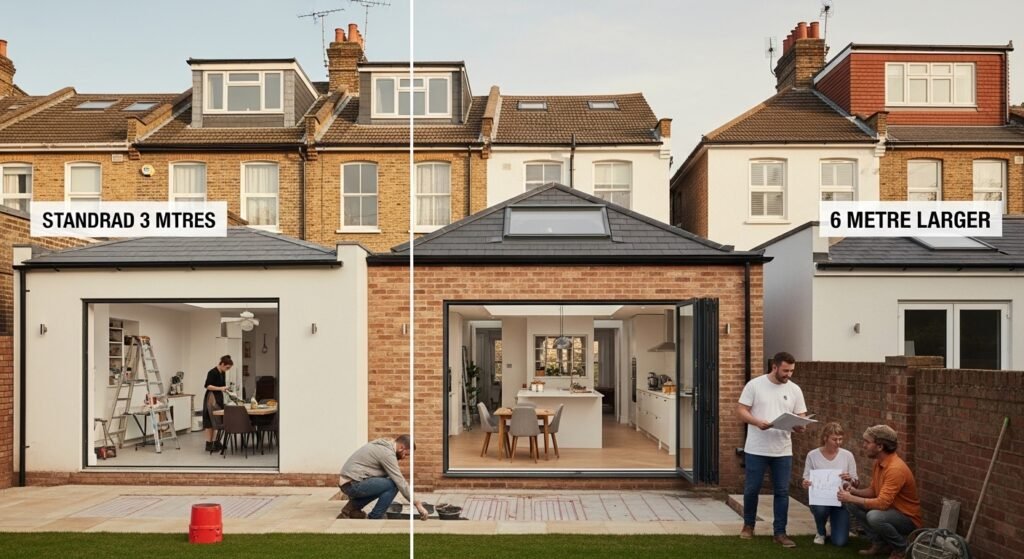
Permitted development limits: Up to 3 metres beyond the rear wall of the original house for a terraced or semi-detached property (the outrigger does not count as the original rear wall). Up to 4 metres for a detached house. Height no more than 4 metres.
Larger Home Extension scheme (Prior Approval): Up to 6 metres for a terraced or semi-detached property, subject to neighbour notification. This does not apply in conservation areas.
| Specification | Cost per m² | Total (20m²) | Total (30m²) |
|---|---|---|---|
| Budget (basic materials, standard glazing) | £3,000 – £3,500 | £60,000 – £70,000 | £90,000 – £105,000 |
| Mid-range (quality materials, bi-fold or sliding doors, rooflight) | £3,500 – £4,200 | £70,000 – £84,000 | £105,000 – £126,000 |
| High specification (premium glazing, underfloor heating, bespoke joinery) | £4,200 – £5,000+ | £84,000 – £100,000 | £126,000 – £150,000+ |
All figures include VAT at 20% and an allowance for architect, structural engineer, and building regulations fees. They do not include kitchen furniture and appliances, landscaping, or party wall surveyor costs.
Side Return Extension
The side return is the narrow passage running alongside the rear outrigger of a Victorian or Edwardian terrace. In North London terraces in Islington, Hackney, Finsbury Park, and Crouch End, this space is typically 0.9 to 1.8 metres wide and runs 5 to 8 metres.
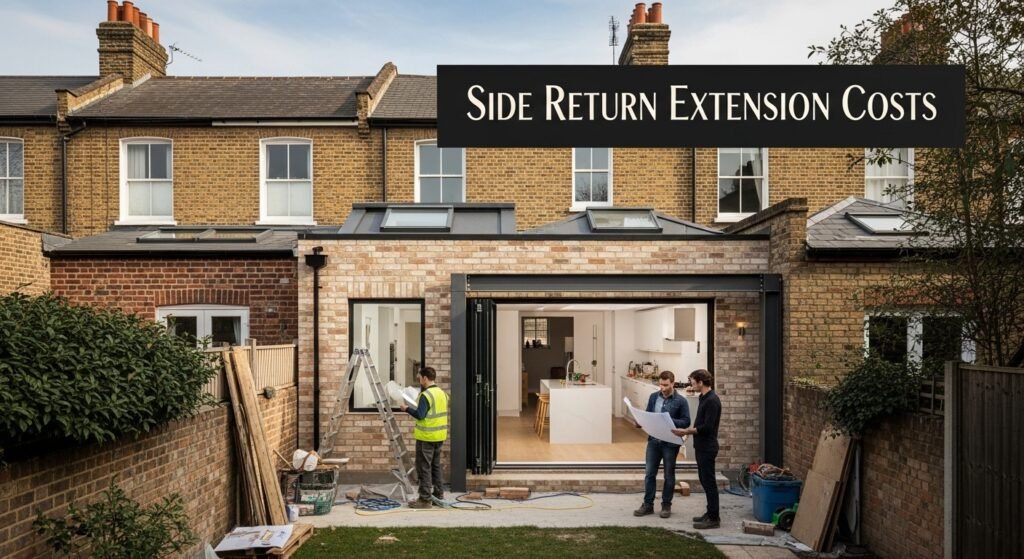
Filling in the side return and connecting it to the existing ground floor creates a significantly wider kitchen or kitchen-diner. This layout is especially popular for modern kitchen renovation projects. The addition of a glazed roof section or rooflights makes the interior substantially lighter. Many homeowners also add skylight installation for more daylight.
The cost per square metre for a side return is higher than for a rear extension because of the smaller footprint. Fixed costs (structural beam, connection to existing structure, glazing, foundations, professional fees) represent a larger proportion of a smaller project.
| Specification | Extension Size | Typical Total Cost |
|---|---|---|
| Mid-range | 10 to 15m² | £40,000 – £55,000 |
| Mid-range | 15 to 22m² | £50,000 – £70,000 |
| High specification | 15 to 22m² | £65,000 – £85,000 |
Note: Side returns in conservation areas always require full planning permission in North London. The Brownswood, Beck Road, and Well Street conservation areas in Hackney, and almost all of Islington’s 42 conservation areas under Article 4 Directions, require a planning application regardless of the extension dimensions.
Wraparound Extension (L-shaped/Rear Plus Side Return)
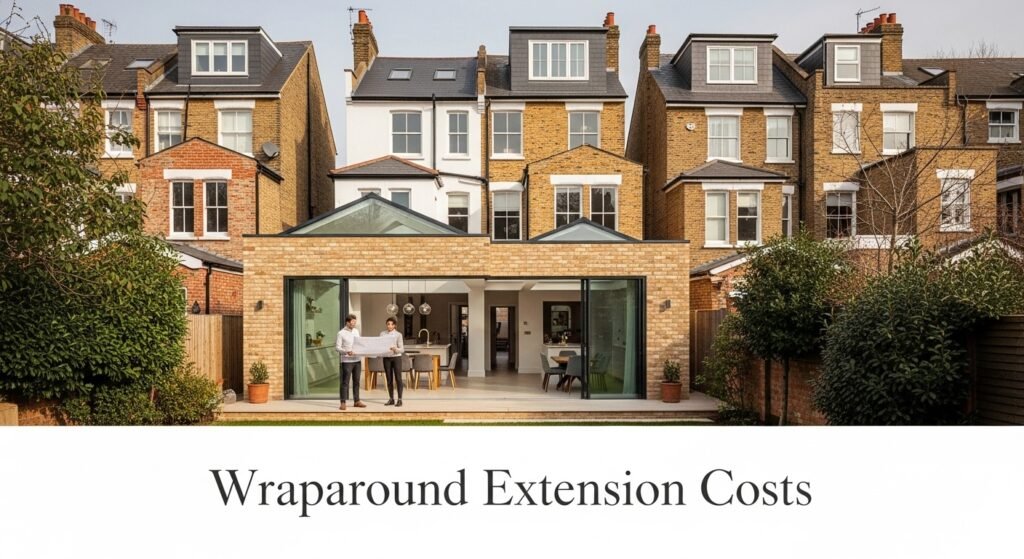
The most popular ground-floor transformation in North London. Combining a side return infill with a rear projection creates an L-shaped extension that transforms the ground floor from a series of disconnected rooms into an open plan kitchen-diner-garden room.
| Total Extension Area | Typical Total Cost |
|---|---|
| 25 to 35m² | £90,000 – £135,000 |
| 35 to 45m² | £130,000 – £175,000 |
Wraparound extensions always require full planning permission. The design quality expected in North London conservation areas means architectural fees are at the higher end of the range. Allow 12 to 18 weeks from planning submission to decision in Islington and Camden, where conservation officers review proposals carefully.
Loft Conversion
Converting unused roof space into a liveable room. Many families use the new area for bedrooms, offices, or extra bathroom installation. In North London’s Victorian and Edwardian terraces, the most common loft conversion types are the rear dormer (a vertical extension projecting from the rear slope of the roof) and, for end-of-terrace or semi-detached properties, hip-to-gable conversions.
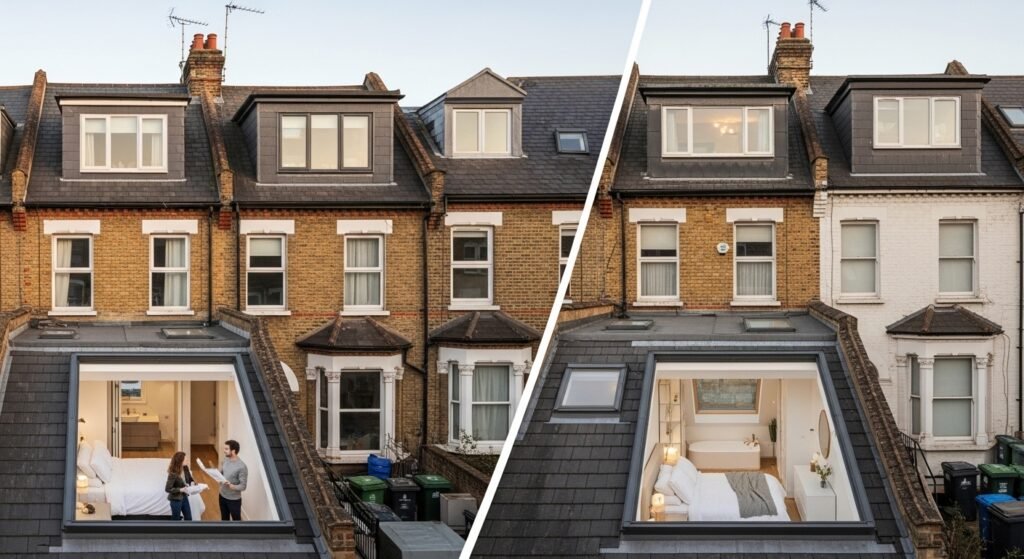
Dormer loft conversion: The most common and most affordable option. A box dormer extends across the full width of the rear roof slope, creating a rectangular room with full-height walls. Planning permission is required in conservation areas. In non-conservation areas, a rear dormer within the permitted development volume limits does not need planning permission, but conservation areas in North London make this a less available route than in outer London boroughs.
Hip-to-gable conversion: Adds space by converting the sloping hip end of the roof to a vertical gable. Typically combined with a rear dormer. Usually requires planning permission.
Mansard conversion: A full conversion of the roof structure to create a near-vertical rear wall and a flat roof with rooflights. The most space-efficient option and the most expensive. Always requires planning permission.
| Conversion Type | Typical Total Cost in North London |
|---|---|
| Velux/rooflight only (no dormer) | £30,000 – £50,000 |
| Rear dormer (standard) | £55,000 – £90,000 |
| Rear dormer (high specification) | £80,000 – £120,000 |
| Hip-to-gable with rear dormer | £65,000 – £100,000 |
| Mansard conversion | £90,000 – £160,000+ |
All costs include structural engineering, building regulations, and a standard bedroom and bathroom fit-out. They exclude bespoke joinery, premium materials, or significant staircase alterations to the floors below.
Double-Storey Rear Extension
Adds two floors simultaneously, creating a ground-floor kitchen or living space and first-floor bedrooms or bathrooms. These projects often combine kitchen work with upper-floor bathroom renovation. Always requires full planning permission.
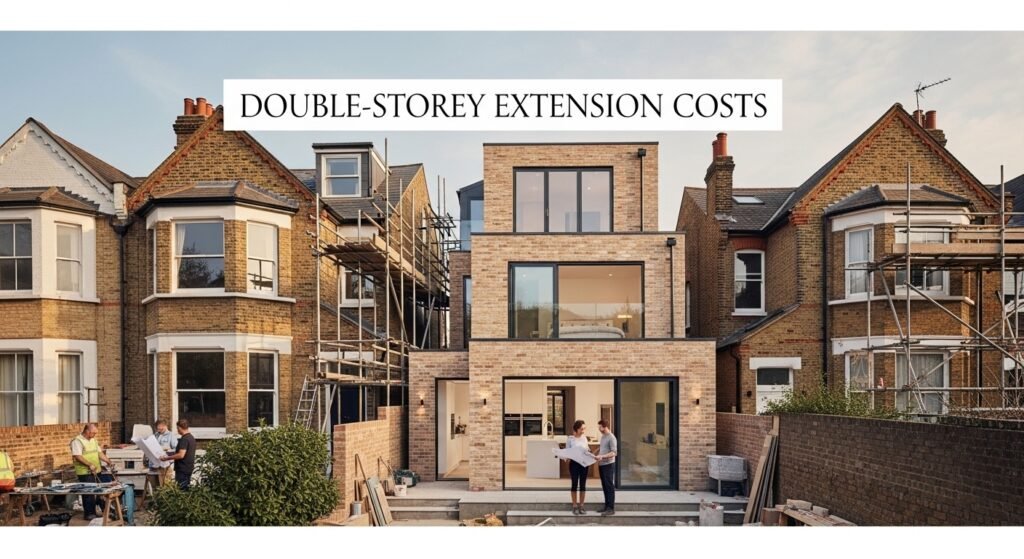
The cost per square metre for a double-storey extension is often lower than a single-storey, because foundations and roofing costs are shared across both floors. However, the total project cost is higher because more floor area is being created.
| Extension Depth | Total Cost |
|---|---|
| 3m x 4m (mid-range specification) | £80,000 – £120,000 |
| 3m x 5m (mid-range specification) | £95,000 – £140,000 |
| 4m to 5m depth (high specification) | £130,000 – £200,000+ |
For North London terraces, two-storey extensions typically face more planning scrutiny than single-storey, particularly regarding the impact on neighbouring properties’ daylight and the relationship to the established building line.
Basement and Cellar Extension
The most expensive extension type by square metre, and a significant project in any North London terrace where other extension options have been exhausted. Basement builds usually need major drainage repairs and waterproofing.
Cellar conversion (converting an existing cellar): The existing void beneath the house is excavated to full headroom (minimum 2.2 metres), waterproofed, and fitted out. Costs depend heavily on the existing cellar depth and condition. Typical costs: £50,000 to £120,000.
New basement excavation: Excavating beneath the house where no cellar exists is a major structural project involving underpinning the existing foundations, structural retention, and comprehensive waterproofing. Costs are substantial and heavily site-dependent. Typical costs: £200,000 to £400,000+ for a 40 to 60m² basement in inner North London.
Planning permission is required for basement works in most North London boroughs. Party wall agreements with multiple neighbours are typically needed. Camden, Islington, and Hackney all have specific basement policies that limit excavation depth and require detailed structural and drainage surveys.
Professional Fees: What to Budget Beyond the Build Cost
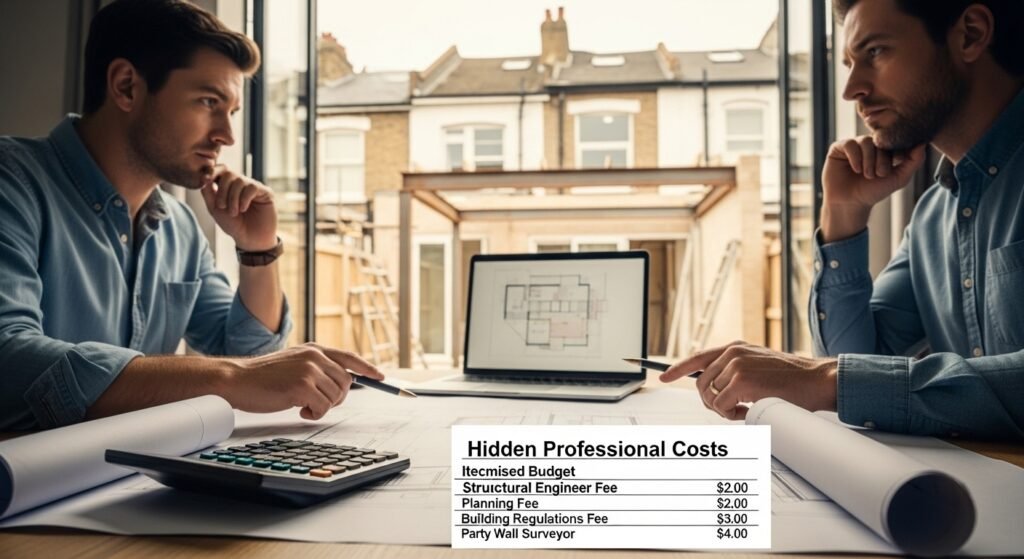
The build cost is not the total cost. Professional fees on a North London extension typically add 12 to 18% on top of the construction figure.
Architect
An architect is not legally required for most extension projects, but professional design consistently produces better planning outcomes and better value for money than self-managed applications. Architects fees in North London run approximately 8 to 12% of construction cost for a full service from design through to site completion. For a £100,000 extension, that is £8,000 to £12,000.
For planning-only services (design and application submission, without site monitoring), fees run approximately 4 to 6% of construction cost.
Structural Engineer
Required for virtually every extension. The structural engineer calculates the steel beam sizes for any removed walls, designs the foundation, and produces calculations that building control requires before construction begins. Complex layouts may also require internal stud wall construction changes later in the build. Structural engineering fees in North London run £1,500 to £4,000 for a standard single-storey extension, rising to £3,000 to £6,000 for more complex projects.
Planning Application Fee
From 1 April 2026, the householder planning application fee in England is £548 for alterations or extensions to a single dwelling house. This is the flat fee regardless of extension size. Prior Approval applications (Larger Home Extension scheme) have a separate lower fee.
Building Regulations
Building Regulations approval is required for all extension work. Costs are either through the local council building control department or an approved inspector. Typical fees: £800 to £2,000 depending on project value.
Party Wall Surveyor
Extensions that involve excavation within 3 metres of a neighbouring structure, building on or cutting into a shared boundary wall, or working on any party structure require Party Wall Notices to be served at least two months before work begins. Party wall surveyor fees in North London run £700 to £2,000 per adjoining owner, for a standard award. Projects with three or four neighbouring owners (common on terraces) can see party wall costs of £3,000 to £6,000.
Summary of Professional Fees
| Fee Type | Typical Range |
|---|---|
| Architect (full service) | 8 to 12% of build cost |
| Structural engineer | £1,500 – £6,000 |
| Planning application fee (from April 2026) | £548 |
| Building regulations | £800 – £2,000 |
| Party wall surveyor | £700 – £2,000 per neighbour |
| Conservation area premium on professional fees | Add £2,000 – £5,000 |
Hidden Costs That Catch North London Homeowners Out
Skip Permits
In most North London streets, skips must be placed on the public highway. A permit from the local council is required. In Islington, Camden, and Hackney, skip permits cost £75 to £100 for two weeks. Processing takes two to three working days. Budget one to two skip permits per major extension project.
Parking and Contractor Permits
Most North London residential streets are in controlled parking zones. Contractors need daily parking permits or a resident contractor permit to park their vans and equipment. This cost is often passed to the client or absorbed into the contractor’s pricing. On longer projects, parking can add £500 to £2,000 to the total.
Thames Water Build Over Agreement
If the extension will be built over or within 3 metres of a public sewer, Thames Water requires a Build Over Agreement before construction begins. Cost: approximately £350 to £450. Processing time: four to six weeks. Many North London Victorian terraces have public sewers running beneath or close to the garden.
Soil Pipe Rerouting
Victorian terrace soil pipes are often positioned exactly where the extension needs to go. Rerouting a soil pipe adds £500 to £2,500 depending on the extent of the diversion and whether Building Regulations approval is needed for the new drainage configuration.
Lead Pipe Replacement
Victorian terraces with original lead supply pipes are common in North London. Undertaking an extension that opens the floors and walls is the right time to replace lead pipework. Cost: £1,500 to £4,000, depending on the run length and access.
Contaminated Ground
In some North London locations, particularly where there has been previous commercial or industrial use, ground conditions may require contamination testing and treatment before foundation works begin. Budget £2,000 to £8,000 if this risk is identified.
What an Extension Adds to North London Property Values
A well-executed extension in North London adds measurable value. The return depends heavily on which borough, which extension type, and the pre-extension condition and size of the property.
Rear and wraparound extensions: Adding an open-plan kitchen-diner ground floor in a Victorian terrace consistently adds 8 to 15% to the property value in inner North London boroughs. Buyers strongly favour homes with finished kitchen fitters and quality interiors. In Islington, where average property values exceed £650,000, that represents £52,000 to £97,000 of value addition on a property at the average price.
Loft conversions: Adding a bedroom and bathroom in the loft of a three-bedroom Victorian terrace typically adds 10 to 15% to the property value. On a £600,000 Hackney terrace, a loft conversion costing £85,000 that adds £70,000 to £90,000 of value is broadly cost-neutral at the point of sale, while delivering a meaningfully improved property to live in.
Adding an ensuite or bathroom: The highest-return small addition in North London. Adding an ensuite to the master bedroom of a property without one adds approximately 4 to 6% to the property value and makes the property substantially easier to sell.
The transaction costs of moving from a three-bedroom to a four-bedroom North London Victorian terrace, including stamp duty, agent fees, conveyancing, and the premium for additional space, typically run from £80,000 to £150,000 in the current market. A well-specified extension project at £100,000 to £130,000 often compares favourably, particularly when the value uplift to the existing property is included in the calculation.
Planning Permission in North London: What You Need to Know
When You Can Build Without Planning Permission
Standard permitted development rules allow single-storey rear extensions of up to 3 metres depth (terraced and semi-detached) and 4 metres (detached) without planning permission, provided height limits are met. The Larger Home Extension scheme extends this to 6 metres depth for terraced properties, subject to a neighbour notification process.
However, these rights are significantly restricted in North London’s conservation areas:
- In Islington, Article 4 Directions are in place in 40 of the 42 conservation areas. Any extension in these areas requires full planning permission.
- In Hackney, Article 4 Directions affecting householder works apply to Brownswood, Beck Road, Well Street, De Beauvoir, and St Mark’s conservation areas.
- Side extensions on any designated land (all conservation areas) are not permitted development anywhere in England.
When You Always Need Planning Permission
- Any double-storey extension
- Any extension exceeding the standard PD depth or height limits
- Extensions in conservation areas under Article 4 Directions
- Extensions to listed buildings (which also require Listed Building Consent)
- Side extensions in conservation areas
- Any extension that materially affects the appearance of the principal elevation
Applying for Planning Permission in North London
The householder application fee from 1 April 2026 is £548. The statutory determination period is 8 weeks. In practice, conservation area applications in Islington and Camden frequently take 10 to 14 weeks due to the volume of applications and the conservation officer assessment required.
Pre-application advice from the relevant council is strongly recommended for any North London conservation area extension. Many owners also seek practical advice from trusted London builders before applying. This typically costs £150 to £300 for a written response and can prevent the expense and delay of a poorly prepared application that needs revision.
FAQ
Q: How much does a single-storey rear extension cost in North London in 2026?
A standard single-storey rear extension of 20 to 25m² in North London costs £70,000 to £105,000 at mid-range specification, including VAT and professional fees. The cost per square metre ranges from £3,000 to £4,500 depending on specification level and borough. Conservation area properties and those requiring significant structural work sit toward the upper end.
Q: Do I need planning permission for a rear extension in North London?
Most standard single-storey rear extensions within the permitted development limits (3 metres depth for a terrace, 4 metres for a detached house) do not require planning permission in areas outside conservation areas. However, large parts of Islington, Camden, Hackney, and Haringey are in conservation areas, and many have Article 4 Directions that remove permitted development rights. Always check the planning map for your specific address before assuming permitted development applies.
Q: What is the most cost-effective extension type in North London?
The single-storey rear extension typically delivers the best cost per square metre and the most usable ground-floor space for the investment. The side return extension adds fewer square metres but is often high-impact because it transforms a dark, narrow ground floor into a wide, light-filled open plan space. The double-storey extension offers the best long-term value per square metre if the project is large enough to achieve economies of scale. The loft conversion is usually the most cost-effective route to adding a bedroom.
Q: How much should I add for contingency on a North London extension?
15 to 20% of the quoted build cost. Victorian terraces in North London consistently reveal unexpected issues at strip-out and excavation: corroded pipework, chimney breasts in unexpected positions, timber rot, historical drainage in the wrong place. A 15% contingency on a £100,000 project is £15,000. This is not excessive caution on a North London Victorian terrace. It is the standard allowance recommended by professional quantity surveyors for projects of this type.
Q: How long does a house extension take in North London?
The design and planning phase typically takes 4 to 6 months from initial architect appointment to planning permission decision, with conservation area projects at the longer end. Construction time for a single-storey rear extension runs 12 to 16 weeks. A loft conversion takes 8 to 14 weeks on site. A wraparound extension runs 16 to 24 weeks. Factor in contractor booking lead times of 3 to 6 months for quality firms in inner North London, and the total project timeline from first conversation to completed extension typically runs 12 to 18 months.
Conclusion
House extension costs in North London in 2026 are high, and they are rising. The combination of labour cost inflation, planning complexity, Victorian property complications, and the logistical premium of building in dense urban terraces means that a North London extension consistently costs more than the national benchmarks suggest.
What these extensions deliver in return is also considerable. The best outcomes usually come from experienced building services teams who plan costs and timelines properly. An open-plan kitchen-diner that connects the ground floor to the garden, a loft bedroom that transforms a three-bedroom family home into a four-bedroom one, or a side return that makes a dark Victorian terrace feel significantly more spacious: these are meaningful improvements to how a home functions and how much it is worth.
The homeowners who get the best outcomes are those who build a realistic total project budget from the start, including all professional fees, planning costs, and contingency. They appoint an architect with conservation area experience before approaching contractors. They serve party wall notices early. And they resist the temptation to cut the contingency to make the numbers feel more comfortable, knowing from experience what North London Victorian terraces tend to find when the walls come down.

Tilly Bani is a renovation and roofing specialist with over 15 years of experience in construction and property refurbishment across North London. He specialises in roofing, structural repairs, and full home renovations, helping homeowners improve property value and safety.